
Trusted Home Remodeling in Stony Brook, NY
Meigel Home Improvements brings BBB A+ rated craftsmanship and three generations of family-owned remodeling expertise to every Stony Brook project we complete.
Reliable Home Remodeling in Stony Brook, NY
Meigel Home Improvements brings BBB A+ rated, family-owned craftsmanship to every remodeling project we complete throughout Stony Brook and Suffolk County.
We’ve been helping homeowners throughout Stony Brook bring their kitchens and bathrooms to life for years, and we understand what it takes to get the job done right. At Meigel Home Improvements, we work closely with families in neighborhoods like Old Field and along Christian Avenue to create functional, beautiful spaces that fit the way they live. Our team handles everything from cabinet installation and countertop upgrades to full bathroom renovations, always with attention to detail and respect for your home. If you’re ready to start your remodeling project, give us a call at (631) 430-5995 for a free estimate and let’s talk about what we can build together.
What We Offer in Stony Brook
Remodeling Homes in Stony Brook
**Body Copy:**
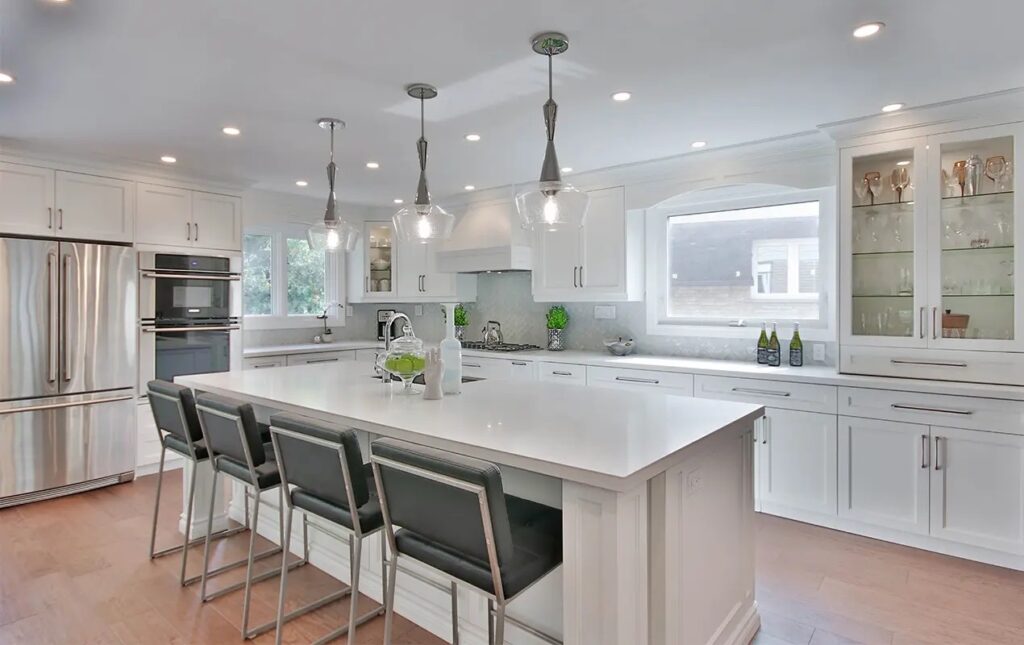
We’ve been remodeling kitchens and bathrooms in Stony Brook for years, and we know this community well. From the tree-lined streets near the university to the established neighborhoods around Christian Avenue and the waterfront homes along the harbor, Stony Brook features a mix of classic ranch homes, split-levels, and colonials that were largely built in the 1950s through 1970s. These homes have great bones, but their original kitchens and bathrooms often show their age with outdated layouts, worn cabinetry, and inefficient fixtures.
Homeowners here understand that thoughtful remodeling protects their investment. The strong school district and proximity to the university make Stony Brook a competitive market, and updated kitchens and bathrooms directly impact resale value. We also see many families who plan to stay long-term and simply want spaces that function better for modern living. Expanding a cramped galley kitchen, adding a second bathroom, or updating a master bath transforms how these homes live day to day. Our team brings the planning, craftsmanship, and local knowledge to handle projects of any scope, from straightforward updates to complete renovations.
**Meta Description:**
Kitchen and bathroom remodeling in Stony Brook, NY. Meigel Home Improvements updates ranch homes, colonials, and split-levels. Contact us for a consultation.
What does a kitchen remodel cost in Stony Brook, NY?
Kitchen remodeling costs in Stony Brook typically range from $35,000 to $85,000 depending on the size of your space, the materials you select, and the scope of work involved. A minor refresh with new cabinets, countertops, and appliances will fall on the lower end, while a full renovation that includes layout changes, custom cabinetry, and high-end finishes can reach the upper range or beyond. We provide detailed estimates after visiting your home and discussing your goals, so you understand exactly what your investment includes before any work begins.
How long does a bathroom remodel take in Stony Brook?
Most bathroom remodels in Stony Brook take between three and five weeks from start to finish, though the timeline depends on the complexity of your project and whether you’re reconfiguring plumbing or electrical systems. A straightforward update with new fixtures, tile, and vanity can be completed closer to three weeks, while a full gut renovation with custom tile work and layout changes may extend to six weeks. We establish a clear schedule during planning and keep you informed throughout the process so you know what to expect each week.
Do I need permits for kitchen or bathroom remodeling in Stony Brook?
Permits are required in Stony Brook for most kitchen and bathroom remodeling projects that involve plumbing, electrical work, or structural changes, and we handle the permit application process with the Town of Brookhaven Building Department on your behalf. Even cosmetic updates may require permits if they affect load-bearing walls or utility systems, so we review your project scope early to determine what approvals are needed. Working with proper permits protects you as the homeowner and ensures all work meets New York State building codes and local requirements.
How can I verify a contractor is licensed in Suffolk County?
You can verify a contractor’s license in Suffolk County by checking with the Suffolk County Department of Consumer Affairs, which maintains records of all registered home improvement contractors operating in the county. We hold a valid Suffolk County Home Improvement Contractor license and carry full liability insurance and workers’ compensation coverage, and we’re happy to provide our license number and proof of insurance before you sign any agreement. Taking a few minutes to confirm these credentials gives you confidence that you’re working with a legitimate, accountable company that stands behind its work.
Also Serving Near Stony Brook

Project Gallery



Why Choose US
Why Work With Meigel Home Improvements?
Expert Craftsmanship You Can Trust
Choosing the right remodeling contractor is essential for a successful project, and Meigel Home Improvements is proud to be a trusted name in the Hauppauge community. Our experienced team brings a keen eye for detail, ensuring that every project is completed to the highest standard. We combine timeless design with modern functionality to create spaces that truly enhance your home and lifestyle.
Reliable, Transparent, and Customer-Focused
When you work with Meigel Home Improvements, you can expect honesty, integrity, and clear communication every step of the way. We pride ourselves on delivering exceptional service and making the remodeling process as seamless as possible for our clients. From the initial consultation to the final walkthrough, we treat your home as if it were our own, ensuring you feel confident and comfortable throughout the project.
Check Out Our Recent Blogs
Occupying approximately 8.0 square miles in northwestern Suffolk County within the Town of Brookhaven along Long Island Sound roughly 55 miles east of Manhattan, Stony Brook represents something genuinely distinctive in Long Island’s suburban landscape—a hamlet of approximately 13,500-14,500 residents whose identity derives almost entirely from Stony Brook University (one of America’s leading public research universities, ranked among the top 100 globally) and the particular character that major research university presence creates—educated professional demographics, cultural programming, intellectual environment, medical employment anchoring local economy, and the curated Village Center that Nelson Rockefeller commissioned in the 1960s creating New England-style aesthetic unusual for Long Island—making Stony Brook simultaneously one of Long Island’s most distinctive communities whose university identity provides genuine differentiation from surrounding suburbs and a community whose character reflects deliberate curation rather than organic development, whose demographics reflect economic and educational filtering rather than authentic diversity, and whose quality of life advantages remain inaccessible to surrounding working-class communities whose residents work at the university without accessing the residential and cultural amenities that university proximity creates for those with sufficient means to establish residence in Stony Brook proper.
The name “Stony Brook” references the rocky stream flowing through the area toward Long Island Sound—one of Long Island’s more literally accurate place names where the designated natural feature actually exists and remains visible rather than having been eliminated by development. The brook, though modest, flows through preserved natural areas creating the environmental character that complements the community’s curated aesthetic.
The area’s transformation from modest North Shore hamlet to university community occurred through deliberate state planning rather than market-driven suburban development. Governor Nelson Rockefeller’s decision to develop Stony Brook as flagship campus of the State University of New York system in the early 1960s fundamentally transformed the community’s trajectory. The university’s establishment brought not just an educational institution but a comprehensive development philosophy—the commissioning of architect Richard Smotrich to design a Village Center replicating New England colonial aesthetic, the influx of faculty and staff requiring housing, and the creation of institutional infrastructure generating employment and cultural activity that transformed Stony Brook from undistinguished hamlet to distinctive university community.
The Stony Brook University Health System—including Stony Brook University Hospital (614 beds), numerous specialty centers, research facilities, and clinical operations—functions as one of Long Island’s largest employers, generating healthcare employment extending well beyond the academic workforce into nursing, allied health, administrative, and support positions creating economic anchor supplementing educational employment. The medical center’s presence creates healthcare economy supporting residential stability even as university enrollment fluctuates.
The Village Center—pedestrian-oriented commercial district designed with New England colonial architecture, centered on a village green with pond, surrounded by shops, restaurants, and professional offices—creates the distinctive aesthetic that photographs of Stony Brook universally feature. This curated commercial environment contrasts sharply with the strip commercial development defining most Long Island communities, creating walkable destination unusual for suburban Long Island while reflecting the deliberate planning that Rockefeller’s vision enabled.
Contemporary Stony Brook presents the particular character of university communities—intellectual energy, demographic diversity skewed toward educated professionals, cultural programming accessible beyond university enrollment, medical employment creating economic stability, and the curated environment that deliberate planning and institutional investment created—alongside the tensions between university-proximate affluence and surrounding working-class communities whose residents serve the university without accessing its residential benefits.
Demographics
Stony Brook’s demographic profile reveals educated, relatively affluent community whose characteristics reflect university employment and the economic filtering that proximity to major research institution creates.
The population of approximately 13,500-14,500 residents represents relatively stable community whose growth constraints derive from limited developable land, Long Island Sound waterfront limiting northern expansion, and the deliberate planning philosophy that has resisted intensive residential development threatening community character.
Population density approaches 1,688-1,813 persons per square mile—relatively low for Long Island and reflecting the substantial university campus (approximately 1,039 acres), preserved open space, and lower-density residential development that planning controls have maintained.
Racial and ethnic composition shows genuine diversity unusual for Long Island—the university’s international faculty, staff, and student populations creating demographic mix absent from typical suburban communities. White residents comprise approximately 62-65% of the population—majority but without the overwhelming dominance characterizing most Long Island suburbs. Asian residents represent approximately 22-25%—extraordinary concentration reflecting the university’s substantial Chinese, Indian, Korean, and other Asian faculty and graduate student populations. Hispanic or Latino residents comprise approximately 7-8%, Black or African American residents approximately 5-6%, demonstrating genuine diversity driven by international university community rather than immigration patterns characterizing other diverse Long Island communities.
The Asian population concentration—among Long Island’s highest—reflects the particular demographics of research university communities where STEM faculty, graduate students, and medical professionals from Asian countries establish residence in university-proximate communities, creating visible cultural presence through Asian grocery options, cultural organizations, and the achievement-oriented educational culture that academic families bring to local schools.
Age distribution shows diverse profile reflecting mixed community composition. Median age approaches 38-42 years—near national averages but reflecting the particular mix of young graduate students and families (lowering median), established faculty in peak career years (raising median), and some retirees attracted by community character and medical access creating varied age distribution unusual for communities dominated by single demographic group.
Household income statistics reveal educated professional affluence. Median household income approaches $90,000-105,000 annually—above Long Island averages and reflecting the university employment base where faculty salaries ($80,000-200,000+), medical professional compensation ($100,000-400,000+), and administrative positions create elevated income levels. Income distribution shows substantial representation in $75,000-175,000 range typical of educated professional communities, with meaningful percentages exceeding $200,000 among senior faculty, medical staff, and administrators.
However, the income statistics mask significant variation between tenured faculty and medical professionals earning high salaries and graduate students, postdoctoral researchers, and university support staff earning modest wages that challenge Long Island’s high cost environment. Graduate student stipends ($20,000-35,000 annually) create a population experiencing genuine economic stress despite proximity to institutional wealth.
Poverty rates remain relatively low—approximately 5-8%—though graduate student populations experiencing economic stress are often undercounted in official statistics. Housing costs demonstrate Stony Brook’s premium positioning. Single-family homes typically range from $500,000-700,000 for standard properties to $800,000-1.3 million for larger homes in desirable neighborhoods. Long Island Sound waterfront properties command $1.5-4 million+. The relatively high costs reflect both community desirability and the income levels that university employment enables.
Property taxes typically range from $12,000-20,000 for standard properties. Educational attainment reaches exceptional levels. Bachelor’s degree attainment likely exceeds 65-70%—among Long Island’s highest and reflecting the university employment base where advanced degrees represent near-universal credential for faculty and common among staff. Graduate and professional degrees are held by 45-50%+ of adults, creating one of Long Island’s most highly credentialed communities.
Education
Education in Stony Brook operates through Three Village Central School District, serving Stony Brook alongside East Setauket, Setauket, and Old Field—communities sharing the university’s demographic influence and creating one of Long Island’s stronger performing districts.
The district operates elementary schools, Paul J. Gelinas Junior High School, Earl L. Vandermeulen High School (Port Jefferson), and Ward Melville High School (the primary Stony Brook-area high school), enrolling approximately 6,500-7,000 students across all grades.
Student demographics show approximately 62-65% white enrollment, 22-25% Asian enrollment—substantial concentration reflecting university community demographics—8-10% Hispanic enrollment, 4-5% Black enrollment. Free and reduced-price lunch eligibility approaches 12-15%—low percentage indicating predominantly middle-class to affluent student body with minimal poverty concentration.
Academic performance demonstrates strong results reflecting the educated professional community served. SAT scores average approximately 1260-1300—substantially above national averages (1050) and ranking among Long Island’s stronger performers, approaching elite districts (Great Neck, Jericho 1300-1450) without reaching absolute top tier. Graduation rates approach 96-98%—virtually universal completion.
Per-pupil spending approximates $25,000-28,000 annually—above Long Island averages reflecting fiscal capacity and community investment priorities. The spending enables comprehensive programming, competitive teacher salaries, maintained facilities, and Advanced Placement course offerings spanning virtually all subjects.
The district benefits from extraordinary demographic advantages—students arriving from homes where both parents hold advanced degrees, where intellectual discourse is normative, where educational expectations are unambiguous, and where resources for enrichment, tutoring, and academic support are readily available. The university community creates educational environment where achievement expectations are exceptionally high and where the academic culture of faculty households permeates school culture broadly.
College attendance among graduates exceeds 93-95%—among Long Island’s highest rates. Students attend varied institutions including Ivy League universities (meaningful representation), top-tier public flagships (Stony Brook itself attracting substantial enrollment given convenient access and quality), elite liberal arts colleges, and competitive institutions nationally. The achievement culture—driven substantially by academic family backgrounds and Asian student populations—creates environment approaching elite district intensity without the extreme tutoring-industry dependence characterizing communities like Great Neck or Syosset.
Tourism
Tourism in Stony Brook operates at meaningful levels through university-generated cultural programming, historic sites, and the Village Center creating destination appeal beyond pure residential function.
The Stony Brook University campus generates visitor traffic through athletics (America East Conference athletics, Stony Brook Seawolves generating modest regional following), cultural programming (Staller Center for the Arts hosting performances, exhibitions, and events attracting regional audiences), and the general activity that major research university campus creates. University events—lectures, conferences, graduation ceremonies, sports competitions—bring thousands of visitors annually.
The Long Island Museum of American Art, History & Carriages—significant cultural institution housed in historic complex adjacent to Village Center—attracts visitors for American art collections, carriage collection (one of America’s most comprehensive), and historical exhibits documenting Long Island’s cultural history. The museum’s scope and collections exceed what communities of Stony Brook’s scale typically support, reflecting the cultural infrastructure that university proximity and Rockefeller-era investment created.
The Village Center—with its distinctive New England colonial architecture surrounding village green and pond—creates visual destination attracting photographers, visitors, and day-trippers seeking authentic small-town aesthetic unusual for Long Island. The commercial district’s restaurants, shops, and walkable character enable pleasant destination experiences that suburban strip commercial environments cannot replicate.
Stony Brook Harbor and waterfront provide scenic natural amenity attracting boaters, kayakers, and nature enthusiasts. The harbor’s preserved character and Long Island Sound access create recreation opportunities distinguishing Stony Brook from interior communities lacking comparable waterfront.
For Stony Brook’s approximately 13,500-14,500 residents, the community provides genuinely distinctive Long Island suburban quality of life—university cultural programming providing intellectual and artistic engagement, strong schools enabling educational success, diverse professional community creating social environment, waterfront and natural areas providing recreation access, curated Village Center creating walkable community character, medical employment providing economic stability, and the particular benefits that major research university proximity creates for communities fortunate enough to develop adjacent to institutional investment of Stony Brook’s scale, though confronting challenges of property costs reflecting desirability, graduate student economic stress contrasting with institutional wealth, surrounding working-class communities whose residents serve the university without accessing residential benefits, and the fundamental question of whether the curated distinctiveness that deliberate planning created can sustain authentic community character as development pressures mount and the quality that careful planning achieved attracts the growth that threatens to overwhelm the character making Stony Brook distinctive among Long Island’s otherwise relentlessly uniform suburban landscape.
- Bohemia NY
- Brentwood NY
- Centereach NY
- Center Islip NY
- Commack NY
- Deer Park NY
- Dix Hills NY
- East Islip NY
- East Meadow NY
- East Northport NY
- East Norwich NY
- East Patchogue NY
- East Setauket NY
- Farmingdale NY
- Farmingville NY
- Freeport NY
- Glen Head NY
- Great River NY
- Greenlawn NY
- Hauppauge NY
- Hicksville NY
- Holbrook NY
- Holtsville NY
- Huntington NY
- Huntington Station NY
- Islandia NY
- Islip NY
- Islip Terrace NY
- Jericho NY
- Kings Park NY
- Lake Grove NY
- Levittown NY
- Lindenhurst NY
- Massapequa NY
- Massapequa Park NY
- Mastic Beach NY
- Mastic NY
- Medford NY
- Melville NY
- Merrick NY
- Mid Island NY
- Middle Island NY
- Mill Neck NY
- Miller Place NY
- Mount Sinai NY
- Nesconset NY
- North Babylon NY
- North Bellmore NY
- Northport NY
- Oakdale NY
- Ocean Beach NY
- Old Bethpage NY
- Oyster Bay NY
- Patchogue NY
- Plainview NY
- Point Lookout NY
- Port Jefferson NY
- Port Jefferson Station NY
- Rocky Point NY
- Ronkonkoma NY
- Roosevelt NY
- Saint James NY
- Sayville NY
- Seaford NY
- Selden NY
- Shirley NY
- Shoreham NY
- Smithtown NY
- Sound Beach NY
- Stony Brook NY
- Syosset NY
- Uniondale NY
- Wantagh NY
- West Babylon NY
- West Islip NY
- West Sayville NY
- Westbury NY
- Woodbury NY
- Wyandanch NY
- Yaphank NY