
Professional Home Remodeling in Port Jefferson, NY
Meigel Home Improvements brings BBB A+ rated craftsmanship and three generations of family-owned remodeling expertise to every Port Jefferson project we complete.
Trusted Home Remodeling in Port Jefferson, NY
Meigel Home Improvements brings BBB A+ rated craftsmanship and three generations of family-owned reliability to every Port Jefferson remodeling project we complete.
We’ve been helping homeowners throughout Port Jefferson bring new life to their kitchens and bathrooms for years, and we understand what it takes to get the job done right. At Meigel Home Improvements, we treat every project with the same care and attention, whether we’re working on a home near the harbor or updating a kitchen in the Old Field area. Our team knows the local homes in neighborhoods like Belle Terre and understands the craftsmanship needed to deliver lasting results. We handle everything from design to installation, keeping the process straightforward and respectful of your home and schedule. If you’re ready to start your remodeling project, call us at (631) 430-5995 for a free estimate.
Remodeling Solutions for Port Jefferson
Remodeling Homes in Port Jefferson
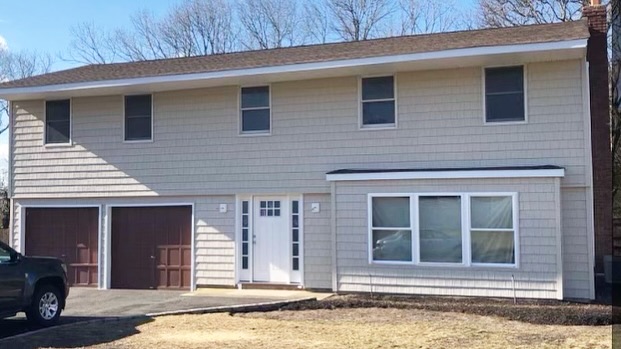
Port Jefferson’s character comes through in its mix of historic Victorians near the harbor, post-war ranches and split-levels throughout areas like Belle Terre and Old Field, and mid-century colonials lining the streets closer to Route 25A. Many of these homes still carry original kitchens and bathrooms from the 1950s through 1970s, with layouts that no longer match how families live today. We’ve worked in Port Jefferson for years and understand how these older homes were built, from the compact galley kitchens common in ranches to the compartmentalized bathrooms typical of split-levels.
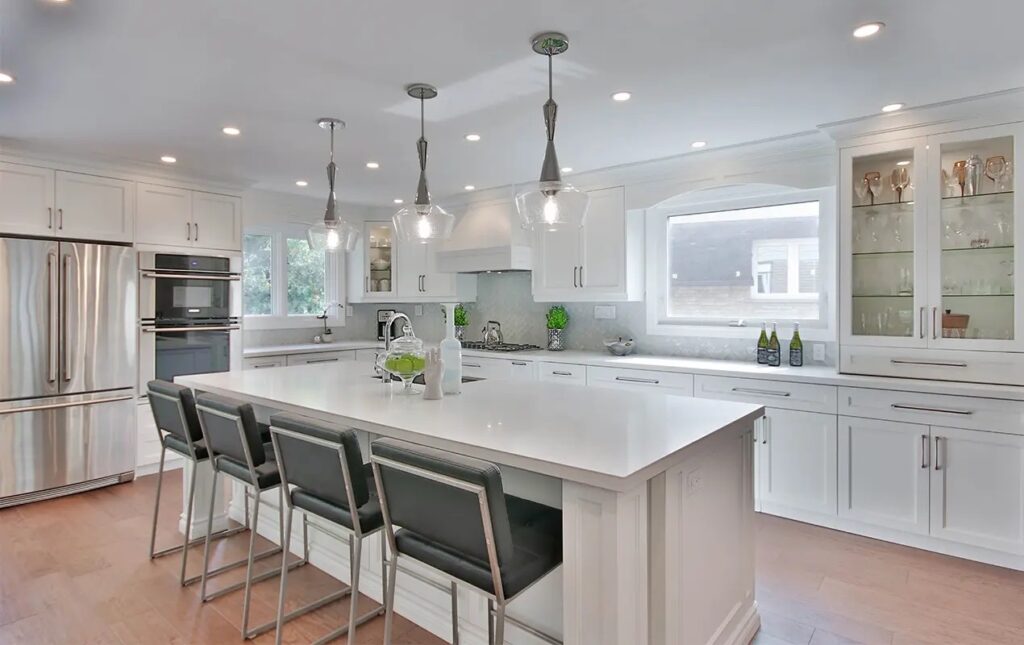
Remodeling makes practical sense here. Updated kitchens and bathrooms protect your investment in a community where homebuyers expect modern functionality alongside period charm. We’ve opened up cramped cooking spaces, replaced failing cast iron plumbing, and transformed dated bathrooms into efficient, comfortable rooms that respect the original architecture. Our familiarity with Port Jefferson’s housing stock means we anticipate the challenges these projects involve, from outdated electrical systems to structural quirks common in homes of this era. The result is remodeling work that lasts and adds real value to your home.
“`html
What does a kitchen remodel typically cost in Port Jefferson, NY?
Kitchen remodels in Port Jefferson generally range from $35,000 to $85,000 depending on the scope of work, materials selected, and the size of the space. A minor refresh with new cabinets, countertops, and appliances will fall on the lower end, while a full gut renovation with custom cabinetry, high-end finishes, and layout changes will be at the higher end. We provide detailed estimates after visiting your home to understand your specific needs and goals for the project.
How long does a bathroom remodel take in Port Jefferson?
Most bathroom remodels in Port Jefferson take between three and five weeks from start to finish. The timeline depends on factors like the extent of plumbing or electrical work, whether we’re moving fixtures, and the availability of materials you’ve selected. We coordinate all aspects of the project to minimize disruption to your daily routine and keep you informed throughout every phase of construction.
Are permits required for kitchen and bathroom remodeling in Port Jefferson?
Permits are required in Port Jefferson for most kitchen and bathroom remodels that involve plumbing, electrical, or structural work. The Village of Port Jefferson Building Department oversees permit applications and inspections to ensure all work meets New York State building codes. We handle the permit process for our clients, submit all necessary documentation, and schedule required inspections so you don’t have to navigate the municipal requirements on your own.
How can I verify a remodeling contractor is properly licensed in Suffolk County?
You can verify a contractor’s credentials by checking with the Suffolk County Department of Consumer Affairs and requesting their Home Improvement Contractor license number, which all legitimate contractors must display on contracts and advertising. We recommend also confirming they carry current liability insurance and workers’ compensation coverage by asking for certificates of insurance directly from their insurance provider. At Meigel Home Improvements, we maintain all required licensing in Suffolk County and provide proof of insurance to every client before starting work.
“`
Also Serving Near Port Jefferson
Project Gallery


Why Work With Meigel Home Improvements?
Expert Craftsmanship You Can Trust
Choosing the right remodeling contractor is essential for a successful project, and Meigel Home Improvements is proud to be a trusted name in the Hauppauge community. Our experienced team brings a keen eye for detail, ensuring that every project is completed to the highest standard. We combine timeless design with modern functionality to create spaces that truly enhance your home and lifestyle.
Reliable, Transparent, and Customer-Focused
When you work with Meigel Home Improvements, you can expect honesty, integrity, and clear communication every step of the way. We pride ourselves on delivering exceptional service and making the remodeling process as seamless as possible for our clients. From the initial consultation to the final walkthrough, we treat your home as if it were our own, ensuring you feel confident and comfortable throughout the project.
Check Out Our Recent Blogs
Occupying approximately 2.9 square miles in northwestern Suffolk County within the Town of Brookhaven along Long Island Sound roughly 60 miles east of Manhattan, Port Jefferson represents something genuinely distinctive in Long Island’s suburban landscape—an incorporated village of approximately 7,500-8,000 residents whose combination of working waterfront, ferry terminal connecting Long Island to Bridgeport Connecticut, historic downtown commercial district, Stony Brook University Hospital presence creating healthcare employment anchor, and the particular character that genuine maritime activity creates have established Port Jefferson as one of Long Island’s most authentic and livable small communities while simultaneously concealing tensions between the aspirational village identity celebrating nautical heritage and cultural vitality and the economic realities facing working-class populations, college students, and service workers sharing geography with increasingly affluent professionals and retirees whose property purchases reflect desirability that affordability once created but now threatens to eliminate.
The name “Port Jefferson” honors President Thomas Jefferson, with the “Port” designation accurately reflecting the harbor’s historic commercial maritime significance—unlike many Long Island place names referencing eliminated natural features or forgotten settlers, Port Jefferson’s name captures genuine functional character that persists in contemporary form through the ferry terminal, marina, and waterfront commercial activity maintaining maritime identity across centuries.
The harbor’s natural deep-water shelter enabled maritime commerce beginning in colonial era, with shipbuilding emerging as primary industry through the 19th century. Port Jefferson’s shipyards constructed hundreds of vessels during peak operations, with the maritime industry creating skilled craftsmen, merchant class, and the economic foundation supporting the historic architecture—Victorian commercial buildings, captain’s houses, maritime warehouses—that contemporary village character preserves. The shipbuilding industry’s decline created economic transition that the harbor’s continued utility for commercial and recreational purposes partially offset.
The establishment of the Bridgeport & Port Jefferson Steamboat Company ferry service—connecting Port Jefferson to Bridgeport, Connecticut across Long Island Sound—created transportation infrastructure enabling commerce, commuting, and eventually tourism that continues defining community identity and economic activity. The ferry terminal generates visitor traffic, creates employment, and provides transportation alternative to highway travel that Long Island communities without comparable infrastructure lack.
Stony Brook University Hospital—located approximately 4 miles west—creates substantial healthcare employment base generating professional populations choosing Port Jefferson for residence. The hospital’s presence as major employer creates economic stability and attracts educated healthcare professionals whose incomes support local restaurants, retail, and real estate values while contributing to the professional demographic character distinguishing Port Jefferson from purely working-class harbor towns.
The village government—incorporated since 1963—exercises local zoning control, design review authority, and planning capacity enabling Port Jefferson to maintain architectural standards, limit inappropriate development, and preserve the historic commercial district character that organic development without governance controls would likely have compromised. This governance capacity, combined with the natural assets of harbor and hillside topography, has created community character sustaining desirability across economic cycles.
Demographics
Port Jefferson’s demographic profile reveals genuinely mixed community—unusual combination of working-class longtime residents, college students (Stony Brook University draws students seeking off-campus housing), healthcare professionals, retirees, and seasonal populations creating demographic variety that purely residential suburbs lack.
The permanent population of approximately 7,500-8,000 residents represents relatively stable base, with seasonal population fluctuations as summer tourism and university academic calendar create population swells during peak periods. The small geographic area—2.9 square miles—creates density of approximately 2,586-2,758 persons per square mile, moderate suburban density reflecting the mix of historic residential neighborhoods, downtown commercial concentration, and harbor-adjacent development.
Racial and ethnic composition shows predominantly white community with modest diversity. White residents comprise approximately 82-85% of the population—substantial majority reflecting North Shore demographics. Asian residents represent approximately 6-8%—meaningful presence influenced by Stony Brook University academic populations and healthcare professional demographics. Hispanic or Latino residents comprise approximately 6-8%, Black or African American residents approximately 3-4%, demonstrating modest diversity somewhat exceeding typical North Shore communities.
The university student population—often uncounted in permanent resident statistics—creates de facto demographic diversity as students from varied backgrounds rent apartments and houses throughout the village, creating younger, more diverse temporary population that shapes commercial activity, restaurant culture, and neighborhood character.
Age distribution shows unusually diverse profile. The permanent resident median age approaches 42-45 years—above national averages—but the student and young professional populations create younger demographic presence invisible in permanent resident statistics. The mix of retirees attracted by waterfront quality of life, established families with children, healthcare professionals in career-building years, and university students creates unusually varied age distribution.
Median household income approaches $80,000-95,000 annually—below Long Island averages but reflecting genuine economic diversity where healthcare professionals earning $100,000-200,000+ coexist with service workers and students earning $25,000-40,000. Income distribution shows broader spread than homogeneous communities, with meaningful representation across economic levels creating the genuine diversity that affluent suburbs eliminate through economic filtering.
Housing costs demonstrate Port Jefferson’s growing desirability premium. Single-family homes typically range from $450,000-650,000 for standard properties to $800,000-1.5 million for larger homes in desirable hillside neighborhoods with Sound views. Waterfront properties command $1.5-4 million+. These prices—elevated but below most comparable North Shore communities—create affordability pressure that has historically enabled economic diversity while rising values increasingly threaten to eliminate it.
Rental housing serves the student and young professional market at $1,400-2,200 monthly for apartments—affordable by comparison to Manhattan but challenging for service workers. Property taxes typically range from $12,000-20,000 for standard properties.
Educational attainment shows mixed patterns reflecting community diversity. Bachelor’s degree attainment approaches 45-50%—above national averages and reflecting professional and academic populations, though the student population creates statistical complications.
Education
Education in Port Jefferson operates through Port Jefferson Union Free School District, a small independent district serving only village residents. The district operates Earl L. Vandermeulen High School (shared with the Three Village district), Scraggy Hill Elementary, and Edna Louise Spear Elementary, enrolling approximately 1,200-1,400 students—among Long Island’s smaller independent districts enabling intimate educational environment.
Student demographics show approximately 75-78% white enrollment, 10-12% Asian enrollment, 7-9% Hispanic enrollment, 4-5% Black enrollment—modest diversity reflecting village composition. Free and reduced-price lunch eligibility approaches 22-27%—meaningful percentage indicating genuine economic diversity, higher than wealthiest North Shore districts but reflecting Port Jefferson’s mixed-income character.
Academic performance demonstrates strong results. SAT scores average approximately 1180-1220—above national averages (1050) and solid by Long Island standards though below elite districts. Graduation rates approach 95-97%—strong completion. Per-pupil spending approximates $26,000-29,000 annually—above Long Island averages reflecting community investment in education.
The district’s small size creates genuine advantages—students know teachers and administrators personally, class sizes remain manageable, and educational community forms bonds impossible in large anonymous districts. However, limited enrollment constrains course offerings, with AP programming solid but not comprehensive, and extracurricular options narrower than larger districts.
College attendance among graduates likely approaches 82-87%—strong rates reflecting community educational expectations and solid preparation. Students attend varied institutions including SUNY schools (Stony Brook’s proximity making it particularly common), competitive private colleges, and out-of-state universities.
Tourism
Tourism represents genuine economic sector for Port Jefferson—unusual among Long Island communities—with the harbor, ferry terminal, downtown commercial district, and waterfront character creating authentic destination appeal generating visitor traffic and economic activity.
The Bridgeport & Port Jefferson Ferry terminal generates substantial visitor traffic as travelers crossing Long Island Sound arrive in Port Jefferson for day trips, restaurant visits, and exploration before returning to Connecticut or continuing eastward. The ferry—running frequently throughout daylight hours—brings visitors who might not otherwise discover the village, creating consistent tourism flow supporting downtown merchants and restaurants.
The downtown commercial district along Main Street, East Main Street, and waterfront streets provides genuine destination retail and dining experience unusual for Long Island suburbs. The concentration of locally-owned restaurants (seafood establishments, casual dining, ethnic variety), boutique retail, galleries, and entertainment creates pedestrian-friendly commercial environment that tourists and residents both appreciate. Weekend evenings particularly generate activity as visitors and locals fill restaurants and bars creating the street-level energy that suburban commercial strips cannot replicate.
The historic waterfront and marina provide scenic setting for walking, watercraft viewing, and the nautical atmosphere that maritime heritage creates. The Harborfront Park creates public waterfront access enabling visitors to experience the harbor setting without requiring boat ownership. Summer concerts, farmers markets, and community events create regular programming drawing regional visitors.
The Theatreworks/USA performances, art gallery openings, and cultural programming create modest cultural tourism supplementing the restaurant and waterfront appeal.
For Port Jefferson’s approximately 7,500-8,000 permanent residents, the village provides genuinely distinctive Long Island quality of life—authentic working waterfront creating visual and cultural character, walkable downtown enabling pedestrian engagement unusual for Long Island, ferry access providing transportation alternatives, strong small-district schools delivering quality education, healthcare employment creating economic stability, Sound waterfront providing natural beauty and recreation, village governance maintaining character through planning authority, and the particular energy that tourism generates creating commercial vibrancy that purely residential communities lack, though confronting challenges of affordability pressure as rising property values increasingly exclude the economic diversity enabling authentic community character, seasonal congestion straining village infrastructure during peak tourism periods, parking limitations creating visitor management challenges, and the fundamental tension between Port Jefferson’s success as destination and the character that success threatens to undermine when tourism transforms authentic working waterfront into curated heritage experience serving visitors rather than functioning maritime community serving residents.
- Deer Park NY
- Dix Hills NY
- East Islip NY
- East Meadow NY
- East Northport NY
- East Norwich NY
- East Patchogue NY
- East Setauket NY
- Farmingdale NY
- Farmingville NY
- Freeport NY
- Glen Head NY
- Great River NY
- Greenlawn NY
- Hauppauge NY
- Hicksville NY
- Holbrook NY
- Holtsville NY
- Huntington NY
- Huntington Station NY
- Islandia NY
- Islip NY
- Islip Terrace NY
- Jericho NY
- Kings Park NY
- Lake Grove NY
- Levittown NY
- Lindenhurst NY
- Massapequa NY
- Massapequa Park NY
- Mastic Beach NY
- Mastic NY
- Medford NY
- Melville NY
- Merrick NY
- Mid Island NY
- Middle Island NY
- Mill Neck NY
- Miller Place NY
- Mount Sinai NY
- Nesconset NY
- North Babylon NY
- North Bellmore NY
- Northport NY
- Oakdale NY
- Ocean Beach NY
- Old Bethpage NY
- Oyster Bay NY
- Patchogue NY
- Plainview NY
- Point Lookout NY
- Port Jefferson NY
- Port Jefferson Station NY
- Rocky Point NY
- Ronkonkoma NY
- Roosevelt NY
- Saint James NY
- Sayville NY
- Seaford NY
- Selden NY
- Shirley NY
- Shoreham NY
- Smithtown NY
- Sound Beach NY
- Stony Brook NY
- Syosset NY
- Uniondale NY
- Wantagh NY
- West Babylon NY
- West Islip NY
- West Sayville NY
- Westbury NY
- Woodbury NY
- Wyandanch NY
- Yaphank NY