
Trusted Home Remodeling in Bohemia, NY
Meigel Home Improvements brings BBB A+ rated, family-owned craftsmanship to every remodeling project in Bohemia, combining local expertise with proven results homeowners trust.
We’ve been transforming kitchens and bathrooms throughout Bohemia for years, and we understand what homeowners in neighborhoods like Greenbelt and along Sunrise Highway are looking for when it’s time to remodel. At Meigel Home Improvements, we bring careful planning, skilled craftsmanship, and honest communication to every project, whether you’re updating a dated bathroom or completely reimagining your kitchen layout. Our team works closely with you from the first conversation through final walkthrough, making sure the process feels manageable and the results reflect how you actually live. Families near Bohemia Manor and across town have trusted us to handle their remodeling projects with care and attention to detail. If you’re ready to start planning your kitchen or bathroom renovation, give us a call at (631) 430-5995 for a free estimate.
Available Services in Bohemia
Home Remodeling in Bohemia, NY
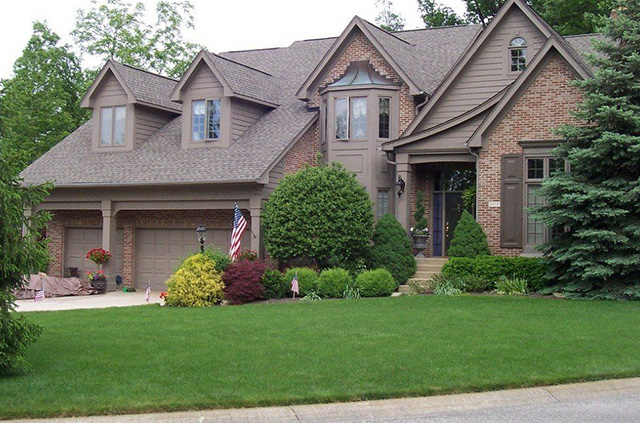
We’ve worked on homes throughout Bohemia for years, from the tree-lined streets around Greenbelt Parkway to the established neighborhoods near Connetquot High School and the quiet blocks off Lakeland Avenue. This community is defined by its post-war housing stock, with countless ranch homes and Cape Cods built during the 1950s and 1960s. Many of these properties still feature their original kitchens and bathrooms, complete with outdated layouts, worn cabinetry, and fixtures that have seen better days.
Homeowners in Bohemia consistently find that kitchen and bathroom remodeling delivers exceptional value because the bones of these homes are solid. The floor plans are straightforward, which makes renovations more predictable and cost-effective than working with newer, more complex construction. Updating a cramped galley kitchen into an open layout or replacing a pink-tiled bathroom transforms how families use these spaces daily. We understand the specific challenges these homes present, from low ceilings in some ranch models to limited storage in compact bathrooms. Our team knows how to maximize every square foot while respecting the character that makes Bohemia homes appealing to buyers and long-term residents alike.
What does a kitchen remodel cost in Bohemia, NY?
Kitchen remodeling costs in Bohemia typically range from $25,000 to $75,000 depending on the size of your kitchen, the materials you select, and the scope of work involved. A minor refresh with new cabinets, countertops, and appliances will cost less than a full gut renovation that includes moving plumbing, electrical upgrades, and structural changes. We provide detailed written estimates for every project so homeowners in Bohemia understand exactly what they’re investing in before any work begins.
How long does a bathroom remodel take in Bohemia?
Most bathroom remodels in Bohemia take between two and four weeks from start to finish, though the timeline depends on the complexity of your project and whether you’re doing a simple refresh or a complete renovation. Projects that involve moving plumbing fixtures, addressing structural issues, or waiting for custom materials may take longer. We work efficiently to minimize disruption to your daily routine while maintaining the quality craftsmanship our Suffolk County clients expect from us.
Do I need permits for kitchen and bathroom remodeling in Bohemia, NY?
Most kitchen and bathroom remodels in Bohemia require permits from the Town of Islip, especially when the work involves plumbing, electrical, or structural modifications. Even projects that seem minor may need permits if you’re relocating fixtures, upgrading electrical panels, or removing walls. We handle all permit applications and inspections for our Bohemia clients, working directly with local building departments to ensure your project meets all New York State and Suffolk County code requirements.
How do I verify a contractor is licensed in Suffolk County?
You can verify a contractor’s license in Suffolk County by checking with the Suffolk County Department of Consumer Affairs or by asking the contractor directly for their home improvement license number and proof of insurance. New York State requires home improvement contractors to be licensed, and reputable companies will provide this information without hesitation. We’re a licensed contractor based in Hauppauge, and we carry full liability insurance and workers’ compensation coverage to protect homeowners throughout Suffolk County, including Bohemia.
Also Serving Near Bohemia
Project Gallery



Why Choose US
Why Work With Meigel Home Improvements?
Expert Craftsmanship You Can Trust
Choosing the right remodeling contractor is essential for a successful project, and Meigel Home Improvements is proud to be a trusted name in the Hauppauge community. Our experienced team brings a keen eye for detail, ensuring that every project is completed to the highest standard. We combine timeless design with modern functionality to create spaces that truly enhance your home and lifestyle.
Reliable, Transparent, and Customer-Focused
When you work with Meigel Home Improvements, you can expect honesty, integrity, and clear communication every step of the way. We pride ourselves on delivering exceptional service and making the remodeling process as seamless as possible for our clients. From the initial consultation to the final walkthrough, we treat your home as if it were our own, ensuring you feel confident and comfortable throughout the project.
Check Out Our Recent Blogs
Occupying approximately 6.3 square miles in western Suffolk County within the Town of Islip roughly 45 miles east of Manhattan, Bohemia represents something genuinely unremarkable in Long Island’s suburban landscape—a hamlet of approximately 10,000-11,000 residents whose character combines light industrial and commercial development along major transportation corridors (Long Island Expressway, Sunrise Highway, Veterans Highway) with modest working-class residential neighborhoods housing families employed throughout western Suffolk County, whose identity derives from neither civic institutions nor cultural character nor waterfront amenity nor educational excellence but rather from functional utility as affordable residential location adjacent to employment centers, whose proximity to Long Island MacArthur Airport creates both employment opportunities and aircraft noise affecting residential quality, and whose particular position straddling major transportation infrastructure creates commercial and industrial character distinguishing Bohemia from purely residential suburbs while creating quality-of-life tradeoffs that more desirable communities avoid through exclusionary zoning and governance controls that unincorporated hamlet status prevents Bohemia from exercising.
The name “Bohemia” reportedly derives from early settlers from the Bohemia region of Central Europe (contemporary Czech Republic), though historical documentation remains uncertain and the romantic European association bears no relationship to contemporary character—typical for place names whose origins obscure through time while communities transform beyond recognition from founding conditions.
The area developed through multiple overlapping influences. Agricultural operations persisted through the early 20th century before post-war suburban expansion and industrial development transformed the landscape. The construction of Long Island Expressway (I-495) created transportation corridor enabling both commuter access and industrial/commercial development attracted by highway proximity. Long Island MacArthur Airport’s development brought aviation-related employment, industrial operations, and commercial activity creating economic anchor while generating noise and traffic impacts.
Bohemia’s status as unincorporated hamlet within Islip township means governance operates through town government rather than local control, limiting capacity for comprehensive planning, design review, or development regulation that incorporated villages exercise. This governance limitation contributed to the mixed-use character combining residential neighborhoods, light industrial facilities, commercial strips, warehousing operations, and airport-adjacent businesses in patterns that planning controls might have prevented or moderated.
Contemporary Bohemia presents functional working-class community serving regional employment needs—affordable housing enabling residence for service workers, tradespeople, and working-class families employed throughout western Suffolk County, commercial infrastructure serving local needs, industrial employment providing modest wages, and the particular utility that unglamorous communities provide within metropolitan geography without receiving recognition or resources that desirable communities command.
Demographics
Bohemia’s demographic profile reveals working-class to lower-middle-class population whose characteristics reflect the particular demographics attracted by affordable housing, industrial employment proximity, and transportation access rather than community quality or prestige.
The population of approximately 10,000-11,000 residents has remained relatively stable over recent decades, with modest demographic changes reflecting gradual Hispanic immigration and household turnover as economically mobile families depart for more desirable communities while working-class newcomers arrive attracted by comparative affordability.
Population density approaches 1,587-1,746 persons per square mile—relatively low for Long Island and reflecting the substantial industrial, commercial, and airport-adjacent land uses reducing residential density, alongside modest lot sizes in residential sections.
Racial and ethnic composition shows white majority with meaningful Hispanic presence. White residents comprise approximately 74-78% of the population—substantial majority though lower than many Long Island suburbs. Hispanic or Latino residents represent approximately 16-20%—meaningful presence reflecting immigration attracted by affordable housing, construction employment, and service sector opportunities throughout western Suffolk County. Black or African American residents comprise approximately 3-4%, Asian residents approximately 2-3%, demonstrating modest diversity typical of working-class Suffolk County communities.
The Hispanic population growth reflects broader patterns where Central American and Latin American immigrants seeking affordable Long Island residence and employment in landscaping, construction, restaurant, and service sectors concentrate in communities offering lower housing costs than more expensive alternatives.
Age distribution shows relatively balanced profile. Median age approaches 39-42 years—near national averages and reflecting mix of working-age families, older longtime residents aging in place, and younger households attracted by affordability.
Household income statistics reveal working-class to lower-middle-class character. Median household income approaches $70,000-80,000 annually—below Long Island averages ($100,000-115,000) and reflecting concentration of industrial, service, retail, construction, transportation, and airport-related employment offering modest wages insufficient for comfortable middle-class existence in expensive Long Island environment.
Poverty rates reach 8-11%—above Long Island averages indicating meaningful economic distress among working-class families where wages barely enable stability despite full-time employment. Housing costs demonstrate Bohemia’s comparative affordability. Single-family homes typically range from $280,000-370,000 for modest properties to $420,000-520,000 for larger houses—below surrounding community averages creating accessibility for working-class families.
Property taxes typically range from $8,500-13,000 annually—below Long Island averages reflecting modest property values. Educational attainment shows working-class patterns with bachelor’s degree attainment approaching 24-28%—below national averages (33%) and Long Island norms, reflecting populations where immediate employment needs supersede credential pursuit.
Education
Education in Bohemia operates through Connetquot Central School District, the same district serving Ronkonkoma and portions of surrounding communities. The district operates multiple elementary schools, Connetquot Middle School, and Connetquot High School, enrolling approximately 5,500-6,000 students across all grades.
Bohemia Elementary School serves the hamlet’s youngest students before feeding into shared middle and high school facilities. Student demographics across the district show approximately 72-76% white enrollment, 17-20% Hispanic enrollment, 4-5% Black enrollment, 3-4% Asian enrollment—modest diversity reflecting working-class community composition.
Free and reduced-price lunch eligibility approaches 28-33%—meaningful percentage indicating substantial working-class and lower-income student populations creating educational challenges that resources must address. The poverty concentration creates circumstances where students arrive with varying levels of preparation and support from home environments, requiring differentiated instructional approaches.
Academic performance shows adequate results typical of working-class Suffolk County districts. SAT scores average approximately 1070-1100—near national averages (1050) but substantially below Long Island’s stronger performers. Graduation rates approach 90-92%—respectable completion though below stronger districts. New York State Regents performance shows students meeting basic standards without distinguished achievement.
Per-pupil spending approximates $22,000-24,000 annually—below Long Island averages reflecting modest property tax base. The spending enables basic operations without comprehensive AP programming, extensive electives, or resources characterizing well-funded districts. The district serves genuinely diverse economic populations requiring varied support services while operating with constrained budgets limiting service comprehensiveness.
Advanced Placement offerings remain limited compared to affluent districts, with core subject AP courses available but lacking the comprehensive menu enabling substantial college credit accumulation. Athletics generate modest community engagement without championship traditions distinguishing more successful programs. College preparatory curriculum exists alongside vocational and technical pathways serving students whose career trajectories lead to trades and technical employment rather than four-year university attendance.
College attendance among graduates likely approaches 60-65%—below Long Island averages, with students predominantly attending Suffolk County Community College, SUNY schools, and regional institutions. Trade and technical program enrollment represents meaningful pathway for graduates pursuing construction, automotive, electrical, plumbing, and other skilled trades offering stable employment without requiring four-year degrees.
Tourism
Tourism in Bohemia operates at zero—the hamlet possesses no attractions, cultural institutions, historic sites, waterfront access, distinctive architecture, or features generating outside visitation. The industrial facilities, commercial strips, airport-adjacent businesses, and modest residential neighborhoods create community functioning purely for residents and regional commercial purposes without any visitor appeal.
Long Island MacArthur Airport proximity provides occasional transient traffic from travelers accessing the airport rather than visiting Bohemia itself. Airport-adjacent hotels serving aviation travelers create some hospitality activity, though guests relate to the airport rather than the community surrounding it.
For Bohemia’s approximately 10,000-11,000 residents, the hamlet provides affordable functional Long Island suburban existence—housing costs below surrounding community averages enabling working-class homeownership, adequate though unremarkable schools preparing students for regional employment rather than selective university admission, convenient transportation access via Long Island Expressway and Sunrise Highway enabling commutes throughout western Suffolk County, airport proximity creating employment opportunities in aviation-related industries, and the particular utility of unglamorous affordable communities providing essential metropolitan function housing the service workers, tradespeople, industrial employees, and working-class families whose labor supports regional economy while their residential needs concentrate in communities like Bohemia that absorb working-class populations through affordability rather than amenity, confronting ongoing challenges of aircraft noise affecting residential quality, industrial character limiting neighborhood appeal, modest schools constraining children’s educational advancement, property taxes consuming substantial portions of working-class income despite modest home values, limited community identity or civic institutions creating belonging, commercial traffic congestion along highway corridors affecting residential tranquility, and the fundamental reality that communities serving working-class functions within affluent metropolitan areas receive neither the recognition nor the resources commensurate with their essential role, remaining invisible in metropolitan geography except when their problems—poverty, gang activity, school failure, housing deterioration—generate attention that comfortable communities prefer avoiding.
- Bohemia NY
- Brentwood NY
- Centereach NY
- Center Islip NY
- Commack NY
- Deer Park NY
- Dix Hills NY
- East Islip NY
- East Meadow NY
- East Northport NY
- East Norwich NY
- East Patchogue NY
- East Setauket NY
- Farmingdale NY
- Farmingville NY
- Freeport NY
- Glen Head NY
- Great River NY
- Greenlawn NY
- Hauppauge NY
- Hicksville NY
- Holbrook NY
- Holtsville NY
- Huntington NY
- Huntington Station NY
- Islandia NY
- Islip NY
- Islip Terrace NY
- Jericho NY
- Kings Park NY
- Lake Grove NY
- Levittown NY
- Lindenhurst NY
- Massapequa NY
- Massapequa Park NY
- Mastic Beach NY
- Mastic NY
- Medford NY
- Melville NY
- Merrick NY
- Mid Island NY
- Middle Island NY
- Mill Neck NY
- Miller Place NY
- Mount Sinai NY
- Nesconset NY
- North Babylon NY
- North Bellmore NY
- Northport NY
- Oakdale NY
- Ocean Beach NY
- Old Bethpage NY
- Oyster Bay NY
- Patchogue NY
- Plainview NY
- Point Lookout NY
- Port Jefferson NY
- Port Jefferson Station NY
- Rocky Point NY
- Ronkonkoma NY
- Roosevelt NY
- Saint James NY
- Sayville NY
- Seaford NY
- Selden NY
- Shirley NY
- Shoreham NY
- Smithtown NY
- Sound Beach NY
- Stony Brook NY
- Syosset NY
- Uniondale NY
- Wantagh NY
- West Babylon NY
- West Islip NY
- West Sayville NY
- Westbury NY
- Woodbury NY
- Wyandanch NY
- Yaphank NY