
Professional Home Remodeling in Kings Park, NY
Meigel Home Improvements brings BBB A+ rated craftsmanship and three generations of family-owned remodeling expertise to every Kings Park project we complete.
Expert Home Remodeling in Kings Park, NY
Meigel Home Improvements brings BBB A+ rated craftsmanship and three generations of family expertise to every Kings Park remodeling project we complete.
We’ve been helping homeowners throughout Kings Park bring their kitchens and bathrooms to life for years, and we understand what it takes to make a remodel both beautiful and functional. From the tree-lined streets near Indian Head Road to the quiet neighborhoods around Pulaski Road, our team at Meigel Home Improvements has worked in homes across the community. We take pride in delivering quality craftsmanship, honest communication, and results that last. Our approach is straightforward: we listen to what you want, respect your home and your time, and complete the work right. If you’re considering a kitchen or bathroom renovation, we’d be happy to discuss your project and provide a free estimate. Give us a call at (631) 430-5995.
What We Offer in Kings Park
Why Kings Park Homeowners Choose Meigel
**Body Copy:**
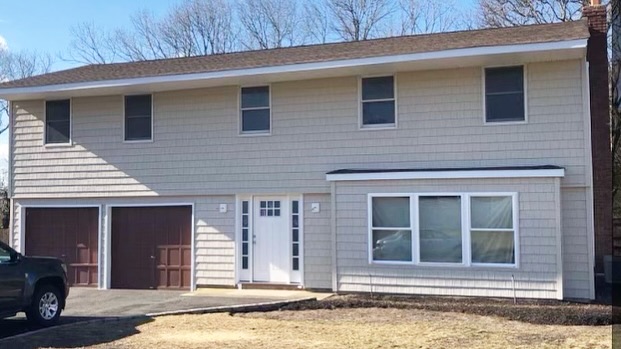
We’ve been remodeling kitchens and bathrooms in Kings Park for years, and we know this community well. Homes throughout neighborhoods like Indian Head and along the streets near Kings Park Bluff reflect the post-war building boom, with many classic ranch homes, split levels, and cape-style houses dating back to the 1950s and 1960s. These homes were built with solid bones but often retain original layouts and finishes that no longer meet how families live today.
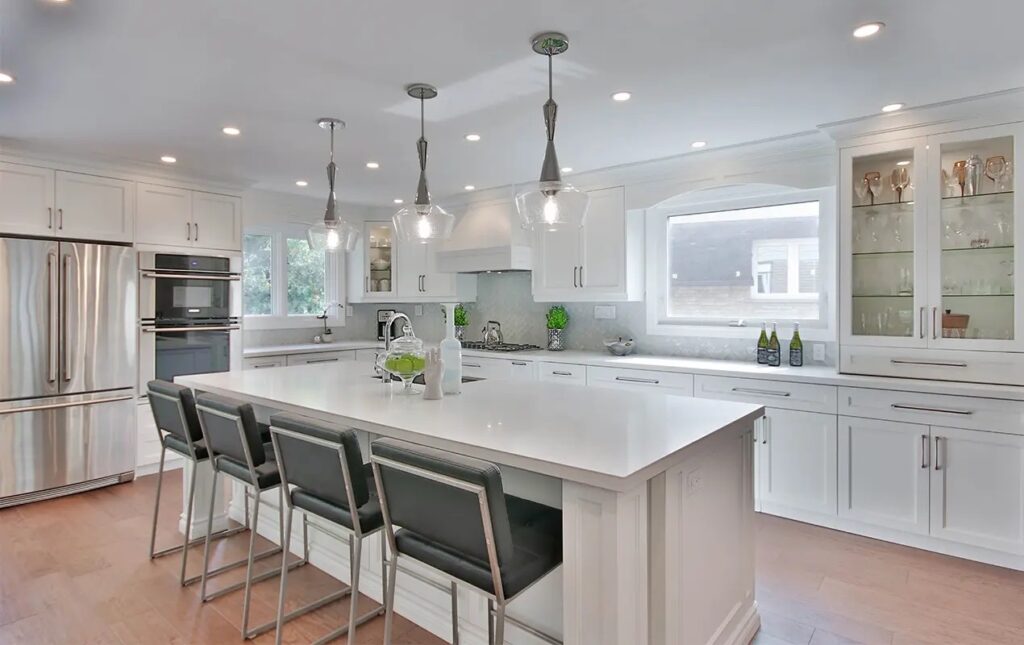
Homeowners in Kings Park benefit significantly from kitchen and bathroom updates because these improvements directly address the limitations of mid-century design. Original kitchens tend to be small and closed off, while bathrooms often lack storage and feature outdated tile and fixtures. We regularly open up cramped kitchen layouts, add functional islands, and modernize bathrooms with improved lighting and storage solutions. The housing stock here responds well to thoughtful remodeling, and because Kings Park remains a desirable community with strong schools and waterfront access, these investments hold their value. Our team understands the typical floor plans and construction methods used in these homes, which allows us to work efficiently while respecting the character that makes Kings Park properties appealing.
“`html
What does a kitchen remodel cost in Kings Park, NY?
Kitchen remodels in Kings Park typically range from $30,000 to $75,000 depending on the size of the space and the materials you select. A minor refresh with new cabinets, countertops, and appliances will fall on the lower end, while a full renovation with custom cabinetry, high-end finishes, and layout changes can reach the upper range. We provide detailed estimates after visiting your home and discussing your specific goals for the project.
How long does a bathroom remodel take in Kings Park?
Most bathroom remodels in Kings Park take between two and four weeks from start to finish. The timeline depends on the scope of work, whether you’re replacing fixtures only or reconfiguring plumbing and electrical systems. We coordinate all trades and inspections to keep your project moving efficiently while maintaining the quality our clients expect from us.
Do I need permits for a kitchen or bathroom remodel in Kings Park?
Permits are required in Kings Park for any remodeling work that involves plumbing, electrical, or structural changes. The Town of Smithtown Building Department oversees permit applications and inspections for properties in Kings Park. We handle all permit applications and coordinate inspections as part of our remodeling services, so you don’t need to navigate the process yourself.
How do I verify a contractor is licensed in Suffolk County?
You can verify a contractor’s license through the Suffolk County Department of Consumer Affairs, which maintains records of all licensed home improvement contractors operating in the county. We hold Suffolk County Home Improvement Contractor License #48686-H1 and carry full liability insurance and workers’ compensation coverage. Always ask to see a contractor’s license number and insurance certificates before signing any contract.
“`
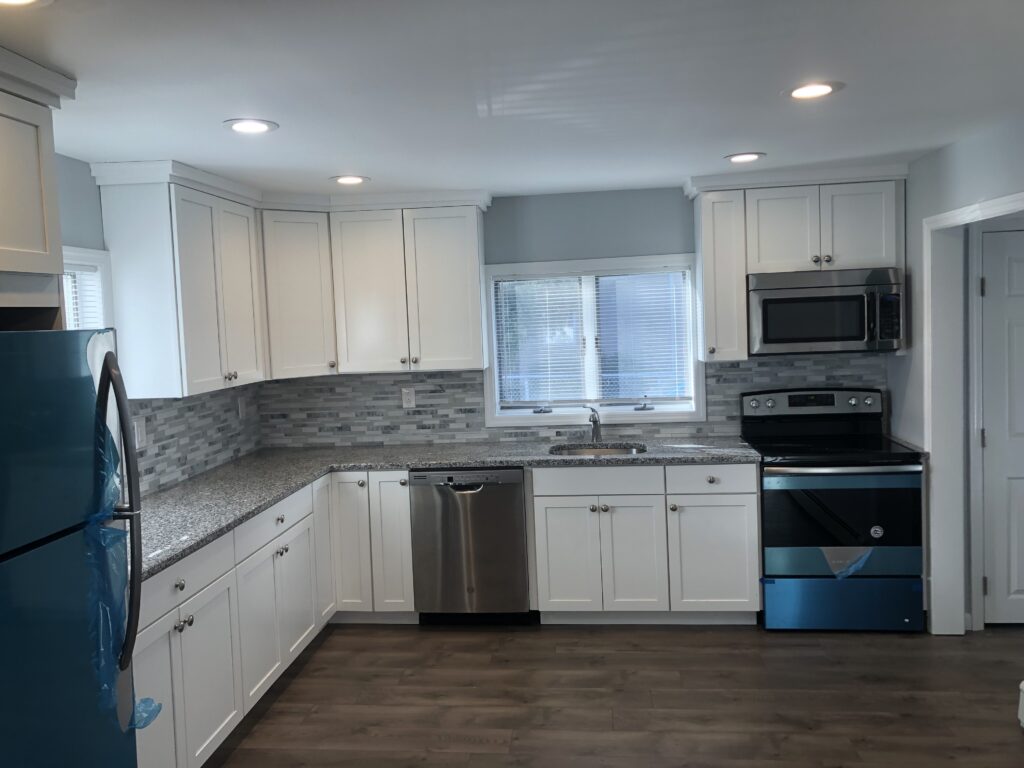
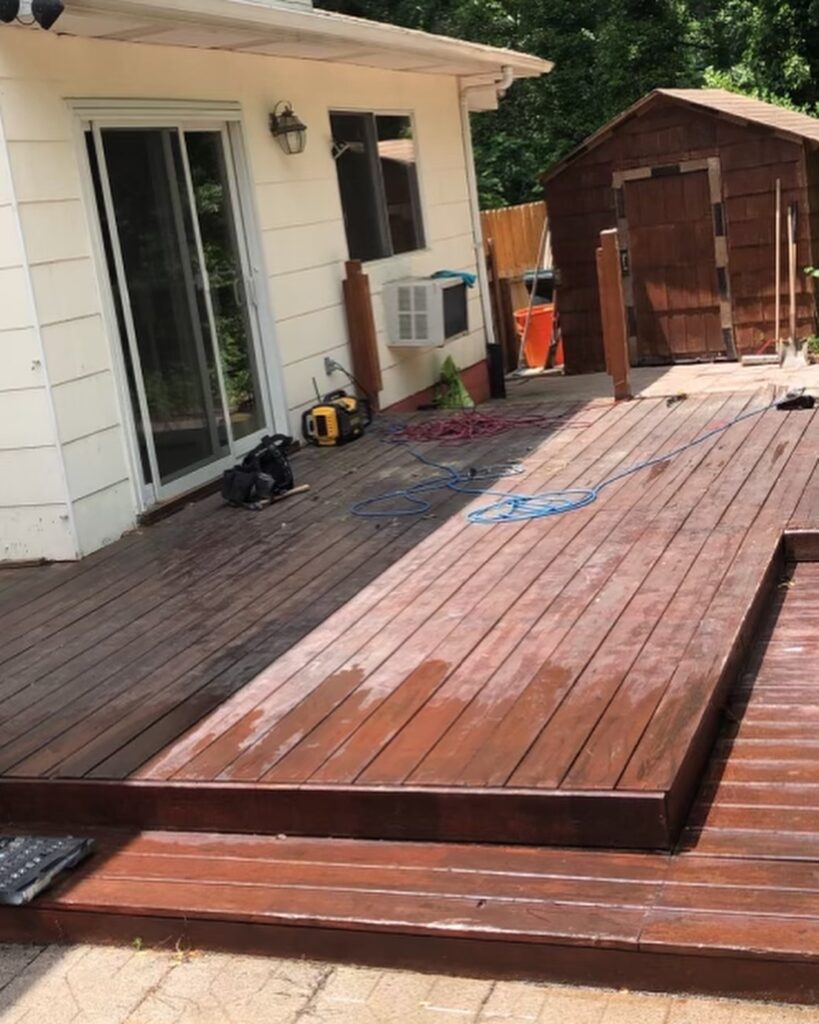
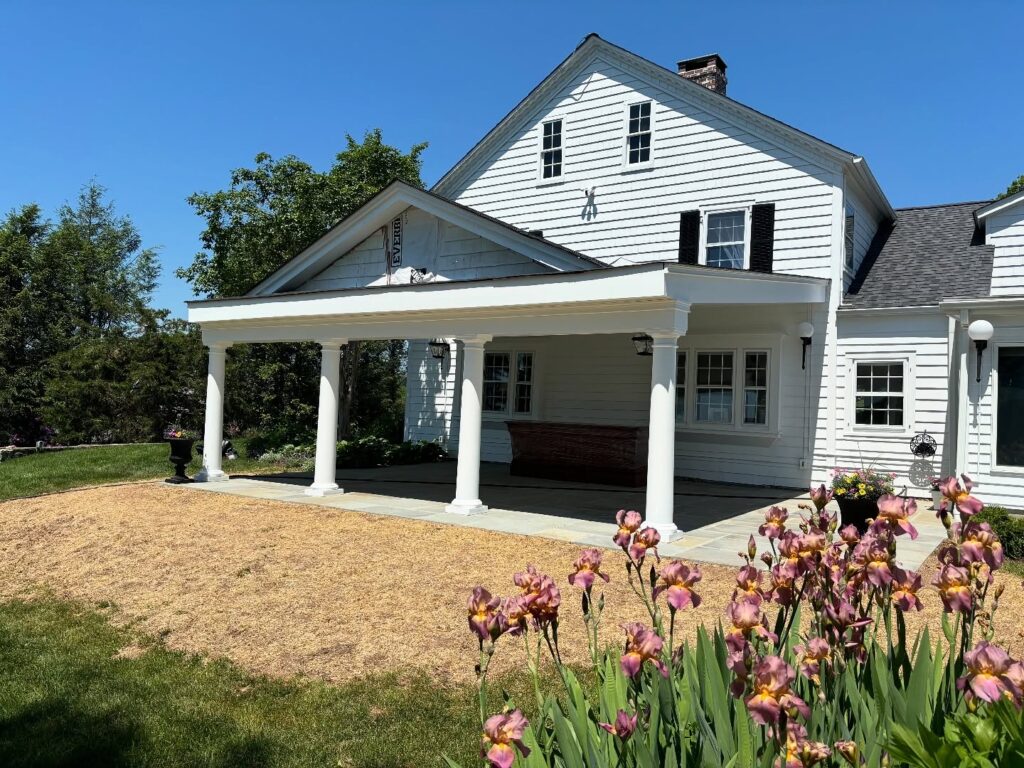
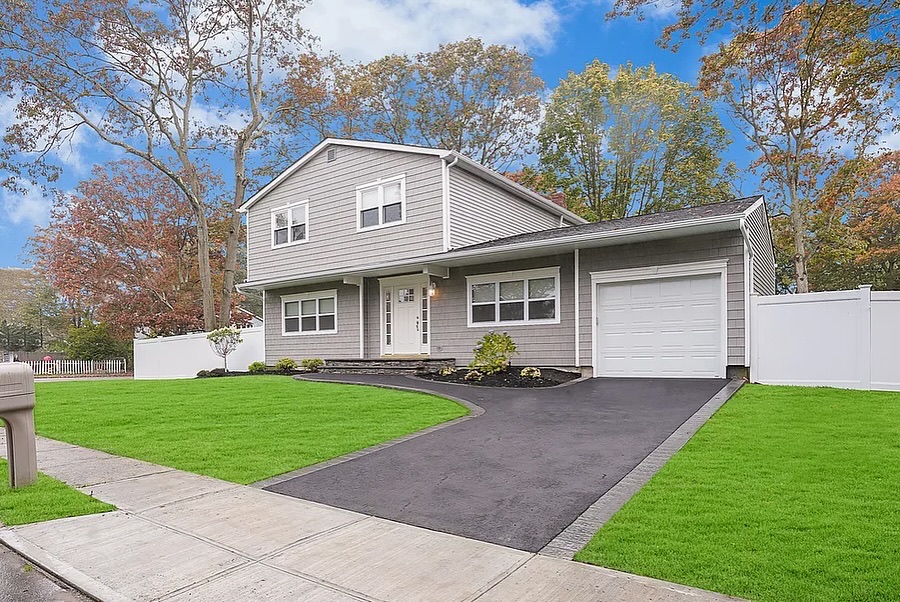
Project Gallery



Why Choose US
Why Work With Meigel Home Improvements?
Expert Craftsmanship You Can Trust
Choosing the right remodeling contractor is essential for a successful project, and Meigel Home Improvements is proud to be a trusted name in the Hauppauge community. Our experienced team brings a keen eye for detail, ensuring that every project is completed to the highest standard. We combine timeless design with modern functionality to create spaces that truly enhance your home and lifestyle.
Reliable, Transparent, and Customer-Focused
When you work with Meigel Home Improvements, you can expect honesty, integrity, and clear communication every step of the way. We pride ourselves on delivering exceptional service and making the remodeling process as seamless as possible for our clients. From the initial consultation to the final walkthrough, we treat your home as if it were our own, ensuring you feel confident and comfortable throughout the project.
Check Out Our Recent Blogs
Occupying approximately 5.5 square miles in northwestern Suffolk County within the Town of Smithtown along Long Island Sound roughly 50 miles east of Manhattan, Kings Park represents something genuinely complex in Long Island’s suburban landscape—a hamlet of approximately 17,000-18,000 residents whose identity remains inseparable from Kings Park Psychiatric Center, the massive state mental institution whose 150-building campus occupied 800+ acres defining community character, providing thousands of jobs, and creating institutional economy from 1885 until closure in 1996, whose abandoned buildings—particularly the iconic 13-story Kirkbride building visible from miles—create haunting presence simultaneously blighting landscape and generating worldwide urban exploration tourism attracting thousands annually despite (and because of) official prohibition, whose waterfront position along Long Island Sound provides natural amenity creating property premium and recreation access that interior Suffolk communities lack, and whose working-class to middle-class character reflects the particular demographics that institutional employment historically attracted—civil servants, healthcare workers, trades—whose descendants remain while institutional economy disappeared leaving community navigating post-asylum identity without clear replacement narrative.
The name “Kings Park” derives from the Kings Park branch of the Long Island Rail Road serving the community, with the railroad name itself referencing the king’s park (royal land) designation from colonial era. The area remained agricultural through the 19th century, with farming and modest residential development defining character until the state asylum’s establishment transformed community identity permanently.
The Kings Park State Hospital (later Psychiatric Center) opened in 1885 as farm colony for Brooklyn’s mentally ill patients, following the prevailing therapeutic theory that agricultural labor and rural environment benefited mental health. The institution grew dramatically through the early 20th century, eventually housing 9,000+ patients at peak capacity in the 1950s, employing 3,500-4,000 staff, and creating essentially company town where substantial portions of Kings Park’s population depended directly on institutional employment. The campus—eventually encompassing 800+ acres with 150+ buildings including patient wards, staff housing, power plant, farm buildings, and administrative facilities—functioned as self-contained community within community.
The deinstitutionalization movement beginning in the 1960s gradually reduced patient populations as psychiatric treatment philosophy shifted toward community-based care, outpatient treatment, and pharmaceutical management rather than institutional confinement. Patient populations declined from 9,000+ peak to hundreds by the 1980s, creating enormous underutilized campus requiring maintenance costs that reduced patient census couldn’t justify. The formal closure in 1996 eliminated remaining jobs and left the vast campus abandoned—buildings deteriorating, equipment rusting, patient records scattered, and the physical presence of institutional abandonment creating both blight and peculiar attraction.
The abandoned campus has generated international urban exploration community fascination. The 13-story Kirkbride building—massive Art Deco structure dominating the landscape—became globally recognized urban exploration destination attracting photographers, adventurers, and curiosity seekers from throughout America and internationally. YouTube videos, photography websites, and social media have spread images of the decaying institutional buildings worldwide, creating tourism phenomenon that authorities simultaneously attempt to prevent through fencing and prosecution while lacking resources for comprehensive security. Thousands visit annually, creating both economic activity and safety, liability, and trespassing concerns.
Partial campus redevelopment has converted some buildings and land to Kings Park Psychiatric Center campus serving Suffolk County mental health programs, Nissequogue River State Park (1,733 acres encompassing former farm land, waterfront, and preserved natural areas), and residential development consuming portions of former campus land. However, vast portions remain abandoned and deteriorating, with the state lacking clear comprehensive redevelopment plan and resources for either restoration or demolition of the remaining structures.
Contemporary Kings Park presents community navigating institutional legacy without clear successor identity—the asylum defined the community for over a century, its closure left economic and social void, and the abandoned campus creates both burden and bizarre tourist attraction that official policy neither embraces nor effectively prevents.
Demographics
Kings Park’s demographic profile reveals predominantly white, working-class to middle-class population whose characteristics reflect both historical institutional employment patterns and contemporary suburban demographics.
The population of approximately 17,000-18,000 residents has remained relatively stable over recent decades, showing minimal growth after the suburban expansion during the 1950s-1970s when residential development accommodated institutional workers and commuter families. Current stability reflects build-out conditions and limited developable land given the large asylum campus footprint.
Population density approaches 3,090-3,270 persons per square mile—moderate suburban density reflecting single-family home subdivisions on modest lots (typically 0.2-0.4 acres) characteristic of Long Island development, with the large institutional campus and state park significantly reducing overall density.
Racial and ethnic composition shows overwhelming white majority typical of Long Island Sound communities. White residents comprise approximately 89-92% of the population—extraordinary predominance reflecting historical settlement patterns and limited diversity. Hispanic or Latino residents represent approximately 5-7%, Asian residents approximately 2-3%, Black or African American residents approximately 1-2%, demonstrating minimal diversity characteristic of North Shore working-class communities.
This homogeneity reflects both historical patterns where institutional employment attracted predominantly white civil service populations and contemporary economic filtering where housing costs, while modest by North Shore standards, still create barriers. The community has seen limited immigration compared to southern Suffolk County communities where lower costs and different employment opportunities attract Hispanic populations.
Age distribution shows mature suburban profile. Median age approaches 43-46 years—substantially above national averages (38 years) and reflecting aging demographic patterns where longtime residents age in place while younger families face affordability challenges. The population shows substantial empty-nester presence alongside working families.
Household income statistics reveal working-class to middle-class character. Median household income approaches $95,000-108,000 annually—near Long Island averages though below wealthy North Shore communities. Income distribution shows substantial representation in $70,000-140,000 range reflecting working-class and middle-class employment patterns—civil servants, healthcare workers, teachers, tradespeople, and service sector workers comprising significant population portions.
Many residents work in healthcare (numerous Suffolk County medical facilities), education, civil service, trades, and service sectors rather than the professional and managerial positions dominating wealthier communities. The historical institutional employment created culture of civil service work—stable employment with benefits, pensions, and union protection—that persists even without the asylum providing those jobs directly.
Poverty rates remain relatively low—approximately 5-7%—indicating most residents experience economic security, though housing costs create financial stress for working-class families earning $65,000-85,000 annually.
Housing costs demonstrate Kings Park’s positioning as moderately affordable North Shore option. Single-family homes typically range from $380,000-500,000 for modest properties to $575,000-750,000 for larger homes in desirable neighborhoods near waterfront. Waterfront and Sound-view properties command $800,000-1.5 million+, creating premium tier. These prices exceed southern Suffolk County significantly while remaining below most Nassau County communities.
Property taxes typically range from $11,000-16,000 annually for standard properties—substantial burden for working-class families but moderate by Long Island standards.
Educational attainment shows working-class to middle-class patterns. Bachelor’s degree attainment approaches 35-40%—near national averages (33%) but below most affluent Long Island communities, reflecting the historical institutional employment culture where civil service and trades provided middle-class living without college requirements.
Education
Education in Kings Park operates through Kings Park Central School District, an independent district serving only Kings Park residents—governance structure enabling local control over educational priorities and resource allocation.
The district operates elementary schools (Parkview, RJ O’Brien, Commack Road), Kings Park Middle School, and Kings Park High School, enrolling approximately 3,200-3,500 students across all grades—relatively small enrollment enabling intimate educational environment.
Student demographics show approximately 86-90% white enrollment, 5-7% Hispanic enrollment, 2-3% Asian enrollment, 1-2% Black enrollment—minimal diversity reflecting the hamlet’s overwhelming homogeneity. Free and reduced-price lunch eligibility approaches 12-16%—modest percentage indicating predominantly middle-class student body with limited poverty concentration, though somewhat higher than wealthiest Long Island districts reflecting working-class population portions.
Academic performance demonstrates solid results exceeding state averages without reaching elite district levels. SAT scores average approximately 1160-1190—above national averages (1050) and New York State averages, demonstrating adequate college preparation though falling below Long Island’s stronger performers (Commack 1220-1250, elite districts 1300-1450). Graduation rates approach 94-96%—strong completion showing virtually all students finish high school.
New York State Regents examination performance shows students meeting standards at solid rates, with meaningful percentages earning advanced diplomas indicating rigorous course completion. Per-pupil spending approximates $23,000-25,000 annually—somewhat below Long Island averages reflecting the more modest property tax base from working-class housing values.
The district offers standard programming including Advanced Placement courses in core subjects (though not the comprehensive AP menu of wealthiest districts), competitive athletics generating community engagement (Kings Park football, wrestling, and other sports create school identity), arts programs, and college preparatory curriculum. The district’s small size enables community feel where students know teachers and administrators personally, creating educational environment contrasting with large anonymous districts.
College attendance among graduates likely approaches 75-80%—solid rates reflecting adequate preparation and middle-class family expectations for higher education. Students predominantly attend SUNY schools (Stony Brook, a 20-minute drive, being particularly common), regional private colleges, Suffolk County Community College, and varied four-year institutions. Selective university admission occurs in modest percentages rather than the substantial Ivy League and elite college attendance characterizing wealthiest districts.
The schools reflect and reinforce community character—solid working-class to middle-class preparation creating pathway to stable employment and moderate prosperity without the extreme achievement pressure or resource abundance characterizing affluent districts, creating graduates equipped for stable careers without necessarily reaching elite professional positions.
Tourism
Tourism in Kings Park operates through perhaps the most unusual mechanism in Long Island’s suburban landscape—the abandoned psychiatric center campus attracting urban exploration visitors despite official prohibition and active law enforcement efforts.
The Kings Park Psychiatric Center ruins—particularly the massive 13-story Kirkbride building visible from miles and containing hundreds of deteriorating patient wards, administrative offices, and institutional spaces—have achieved worldwide recognition through urban exploration community. Photography websites, YouTube channels with millions of views, Instagram accounts, and social media have disseminated images of the haunting decaying buildings internationally, creating pilgrimage destination for urban explorers, photographers, paranormal enthusiasts, and curiosity seekers.
Thousands attempt to access the campus annually despite fencing, no-trespassing signs, periodic police patrols, and prosecution of trespassers. The forbidden nature enhances appeal—the combination of haunting architecture, institutional history, deteriorating spaces, and transgression creates powerful draw that official discouragement paradoxically amplifies. The buildings appear in countless photography portfolios, documentary films, YouTube videos, and media coverage generating ongoing attention.
The state has not developed comprehensive plan for the campus, lacking resources for either meaningful restoration or complete demolition. Some buildings have been demolished; others deteriorate further annually, creating ongoing safety concerns and liability exposure. The situation represents failed institutional abandonment where state responsibility without adequate resources creates permanent limbo—buildings too dangerous to ignore, too expensive to remediate, creating ongoing management challenge without resolution.
Nissequogue River State Park—encompassing former asylum farmland and waterfront territory—provides legitimate recreation access including hiking, kayaking, fishing, and nature observation along the Long Island Sound and Nissequogue River. The park attracts Suffolk County residents for outdoor recreation without generating significant tourism beyond regional visitors.
Long Island Sound waterfront access through various parks and beach areas provides recreation amenity distinguishing Kings Park from interior Suffolk communities. The waterfront creates quality of life advantage supporting property values above communities without Sound access.
For Kings Park’s approximately 17,000-18,000 residents, the hamlet provides working-class to middle-class North Shore Long Island lifestyle—adequate schools enabling children’s educational advancement without elite pressure, safe neighborhoods supporting family life, waterfront access creating recreation and quality of life premium, modest housing costs by North Shore standards enabling working-class homeownership, proximity to Nissequogue River State Park providing natural amenity, and genuine community identity rooted in institutional history even after the institution’s departure, though confronting challenges of property tax burden, asylum campus creating blight without resolution, limited economic development replacing institutional employment, aging demographics, and the particular questions facing communities where primary identity derived from institution now absent—whether community built around asylum can develop authentic successor identity or remains permanently defined by what departed rather than finding purpose in what remains, making Kings Park both example of working-class suburban stability demonstrating functional adequacy and cautionary tale about community vulnerability when foundational economic institutions disappear without replacement.
- Bohemia NY
- Brentwood NY
- Centereach NY
- Center Islip NY
- Commack NY
- Deer Park NY
- Dix Hills NY
- East Islip NY
- East Meadow NY
- East Northport NY
- East Norwich NY
- East Patchogue NY
- East Setauket NY
- Farmingdale NY
- Farmingville NY
- Freeport NY
- Glen Head NY
- Great River NY
- Greenlawn NY
- Hauppauge NY
- Hicksville NY
- Holbrook NY
- Holtsville NY
- Huntington NY
- Huntington Station NY
- Islandia NY
- Islip NY
- Islip Terrace NY
- Jericho NY
- Kings Park NY
- Lake Grove NY
- Levittown NY
- Lindenhurst NY
- Massapequa NY
- Massapequa Park NY
- Mastic Beach NY
- Mastic NY
- Medford NY
- Melville NY
- Merrick NY
- Mid Island NY
- Middle Island NY
- Mill Neck NY
- Miller Place NY