
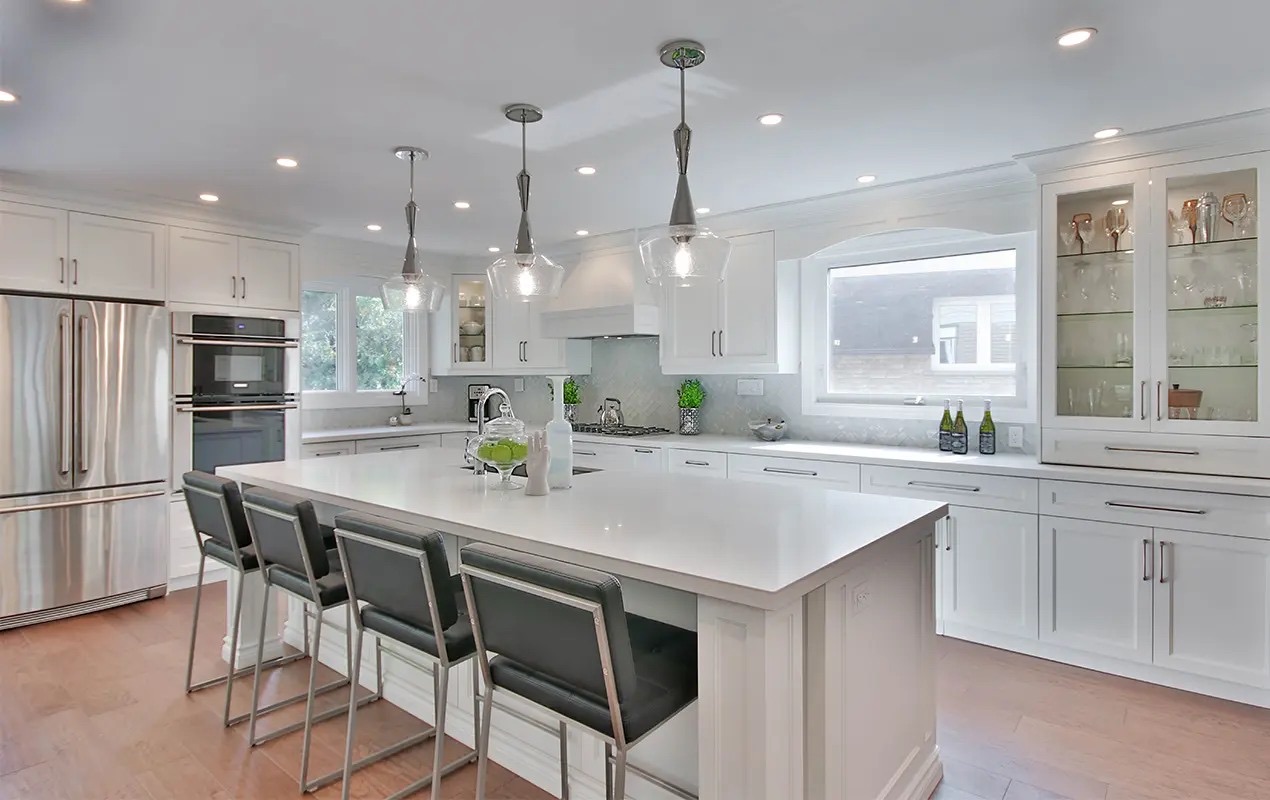
A kitchen that feels too small presents two distinct paths: a bump-out that pushes one wall outward by 3 to 5 feet, or a full extension that adds an entirely new section to the home. The right choice depends on how much space you actually need, what your lot allows, and whether your kitchen problem is a square footage issue or a layout issue. Many homeowners who assume they need a full extension discover that a targeted bump-out solves the problem at a fraction of the cost.
Here is how to tell the difference.
What Qualifies as a Bump-Out vs. a Full Extension
Kitchen bump-out: A cantilevered or foundation-supported projection that extends one exterior wall by 2 to 5 feet across part or all of the kitchen’s width. Bump-outs add 40 to 120 square feet and typically do not require major structural changes to the rest of the home.
Full kitchen extension: A ground-floor addition that extends the home by 8 feet or more, adding 150 to 400+ square feet. Full extensions require new foundation work, full structural framing, and often involve rerouting mechanical systems.
The line between the two is roughly at the 5-foot mark. Below 5 feet, the project qualifies as a bump-out and can often be cantilevered (extended from the existing floor joists without a new foundation). Beyond 5 feet, the project requires its own foundation, footings, and independent structural support — entering full extension territory.
When a Bump-Out Is Enough
A bump-out solves the problem when the kitchen’s core issue is one or two specific constraints rather than an overall square footage deficit.
A bump-out makes sense when:
- You need 3 to 4 additional feet of counter space along one wall
- The dining area within the kitchen is too tight for a table and chairs
- You want to add a window seat, breakfast nook, or banquette along an exterior wall
- The refrigerator or pantry needs to move to a wall that currently has no room for them
- Island clearance is too tight — adding 3 feet of depth to the room solves the circulation problem
Typical bump-out cost on Long Island: $15,000 to $45,000
Cantilevered bump-outs (supported by extended floor joists, no new foundation) fall at the lower end. Foundation-supported bump-outs with new footings, insulated subfloor, and matching exterior finishes land at the higher end.
Permit requirements: Most towns require a building permit for any bump-out, even small cantilevered projections. Zoning review confirms the extension stays within rear-yard setback limits.
When You Need a Full Extension
A full extension becomes necessary when the kitchen’s problems go beyond a single wall or a few missing feet.
A full extension makes sense when:
- The kitchen is fundamentally undersized (under 100 square feet) and no amount of reconfiguration creates a functional layout
- You want to combine the kitchen with an adjacent dining room into one open-concept space and the combined area still falls short
- The goal includes adding a mudroom, pantry room, or laundry connection adjacent to the kitchen
- The existing kitchen location in the home makes a simple bump-out geometrically impractical (corner lot constraints, utility locations, or structural obstructions)
- The addition needs to accommodate a bathroom, half bath, or utility room alongside the expanded kitchen
Typical full kitchen extension cost on Long Island: $80,000 to $200,000+
The wide range reflects the difference between a straightforward 10×15-foot addition and a larger L-shaped extension that reconfigures the entire rear of the home. Foundation work, HVAC extension, and roof tie-in complexity are the primary cost drivers.
Cost Comparison at a Glance
| Factor | Kitchen Bump-Out | Full Extension |
| Added space | 40–120 sq ft | 150–400+ sq ft |
| Cost range (Long Island) | $15,000–$45,000 | $80,000–$200,000+ |
| Foundation required | Sometimes (over 4–5 ft) | Always |
| Typical timeline | 4–8 weeks | 3–6 months |
| Permit complexity | Standard permit | Standard permit + potential variance |
| Zoning sensitivity | Moderate (setback check) | High (FAR, lot coverage, setbacks) |
| Disruption level | Moderate — kitchen partially usable | Significant — temporary kitchen setup likely needed |
Permit Differences Between the Two
Bump-outs and full extensions both require building permits, but the zoning review process differs in scope.
Bump-out permits typically involve a straightforward setback check. If the bump-out stays within rear and side-yard setback requirements, the permit proceeds through standard plan review without a zoning variance.
Full extension permits trigger a more thorough zoning analysis. The building department reviews total lot coverage, floor area ratio (FAR), and setback compliance for the entire addition footprint. Extensions on smaller lots or in tighter zoning districts frequently require a variance from the Zoning Board of Appeals — adding 2 to 4 months to the timeline.
How to Self-Qualify Before Calling a Contractor
You can narrow down which option fits your situation before scheduling a consultation.
Step 1: Measure your kitchen. Note the total square footage and identify the specific constraint — is it counter space, storage, dining area, island clearance, or overall room size?
Step 2: Measure the gap. How many additional feet would solve the specific problem? If the answer is under 5 feet along one wall, a bump-out is likely sufficient.
Step 3: Check your rear setback. Look at your property survey or your town’s GIS mapping tool. Measure the distance from your home’s rear wall to the rear property line. If you have 30+ feet of rear-yard depth, both options are likely available. Under 20 feet, the bump-out may be the only option that avoids a variance.
Step 4: Define the full scope. If the project includes adding rooms beyond the kitchen (mudroom, pantry, half bath), you are in full extension territory regardless of kitchen size.
Red Flags in Either Type of Project
Watch for these warning signs during contractor consultations:
- A recommendation for a full extension when your described needs point to a bump-out problem (this upsizes the project and the cost unnecessarily)
- A bump-out proposal that does not address how the new roof section ties into the existing roofline and gutter system
- No mention of matching exterior materials (siding, trim, roofing) to the existing home
- A cantilevered bump-out proposed at more than 4 feet without engineering review — cantilever limits depend on joist size and spacing
- No discussion of how kitchen mechanicals (plumbing, electrical, ventilation) will be extended or relocated
The Bottom Line
Choose a bump-out when the problem is specific and solvable with 2 to 5 additional feet of space along one wall. Choose a full extension when the kitchen is fundamentally undersized or the project scope includes adjacent rooms. The cost difference between the two is substantial — $15,000 to $45,000 versus $80,000 to $200,000+ — making accurate self-assessment the most valuable step you can take before engaging a contractor.
Next Steps
Sketch your current kitchen layout on graph paper with approximate measurements. Mark the specific areas where space runs short. Then measure the distance from that wall to your rear property line. Bring that sketch and those two measurements to any contractor consultation — it gives them enough information to recommend the right scope in the first meeting.
Meigel Home Improvements builds both kitchen bump-outs and full extensions for homeowners who need their kitchen to work harder. Call (631) 430-5995 or visit meigelhomeimprovements.com to talk through your options.