
Professional Home Remodeling in Lake Grove, NY
Meigel Home Improvements brings BBB A+ rated craftsmanship and three generations of family-owned remodeling expertise to every Lake Grove project we complete.
Trusted Home Remodeling in Lake Grove, NY
Meigel Home Improvements brings BBB A+ rated craftsmanship and three generations of family expertise to every Lake Grove remodeling project we complete.
We’ve been helping homeowners throughout Lake Grove create beautiful, functional kitchens and bathrooms for years, and we understand what it takes to transform the spaces you use every day. At Meigel Home Improvements, our team brings careful attention to detail and quality craftsmanship to every project, whether you’re in the quiet streets near Lake Grove Elementary or closer to the shops along Hawkins Avenue. We work closely with you from the first consultation through final installation, making sure your remodeling experience is straightforward and the results exceed your expectations. If you’re ready to start planning your kitchen or bathroom renovation, give us a call at (631) 430-5995 for a free estimate and let’s discuss how we can help.
Available Services in Lake Grove
Serving Lake Grove Homeowners
Lake Grove homeowners know the value of updating older homes to match how families live today. We’ve worked throughout the community, from the tree-lined streets near Lake Grove Elementary to the established neighborhoods around Strathmore Village and the homes along Moriches Road. The housing stock here reflects the post-war building boom, with many ranch homes, split-levels, and colonials dating back to the 1950s and 1960s. These homes were built with smaller kitchens and compartmentalized layouts that no longer serve modern needs.
We regularly help Lake Grove residents open up cramped galley kitchens, replace outdated bathroom fixtures, and reconfigure spaces to improve flow and functionality. Many homes in this area still have original cabinetry, laminate countertops, and tile work that show their age. A thoughtfully planned kitchen or bathroom remodel not only makes daily life more comfortable but also protects your investment in a community where well-maintained homes hold strong value. We understand the specific challenges these mid-century homes present, from updating plumbing and electrical systems to maximizing storage in compact footprints. Our team brings decades of experience transforming Lake Grove homes while respecting their original character and the needs of the families who live in them.
What does a kitchen remodel typically cost in Lake Grove, NY?
Kitchen remodeling costs in Lake Grove generally range from $25,000 to $75,000 depending on the scope of work, materials selected, and the size of your kitchen. A minor refresh with new cabinets, countertops, and appliances typically starts around $25,000, while a full renovation involving layout changes, custom cabinetry, and high-end finishes can exceed $60,000. We provide detailed estimates after visiting your home to assess the existing conditions and discuss your specific goals for the space.
How long does a bathroom remodel take in Lake Grove?
Most bathroom remodels in Lake Grove take between two to four weeks from start to finish, though the timeline depends on the complexity of the project and material availability. A straightforward update involving new fixtures, tile, and vanity can often be completed in two weeks, while a complete gut renovation with plumbing relocation or custom elements may require four weeks or slightly longer. We establish a clear timeline during the planning phase and keep you informed of progress throughout the project.
Are permits required for kitchen and bathroom remodeling in Lake Grove?
Permits are required in Lake Grove for most kitchen and bathroom remodels that involve plumbing, electrical work, or structural changes, as the Town of Brookhaven enforces New York State building codes. Simple cosmetic updates like painting or replacing cabinets without altering utilities typically do not require permits, but any work involving moving walls, relocating fixtures, or upgrading electrical panels does. We handle all permit applications and inspections with the Town of Brookhaven on your behalf to ensure your project meets all local requirements.
How can I verify a contractor is properly licensed in Suffolk County?
You can verify a contractor’s license in Suffolk County by checking with the Suffolk County Department of Consumer Affairs, which maintains records of all registered home improvement contractors operating in the county. Every legitimate contractor should provide you with their Suffolk County Home Improvement Contractor license number, and you can confirm their status online or by calling the department directly. We are a fully licensed home improvement contractor in Suffolk County and carry all required insurance, and we are always happy to provide our credentials and references from Lake Grove homeowners we have worked with.
Also Serving Near Lake Grove
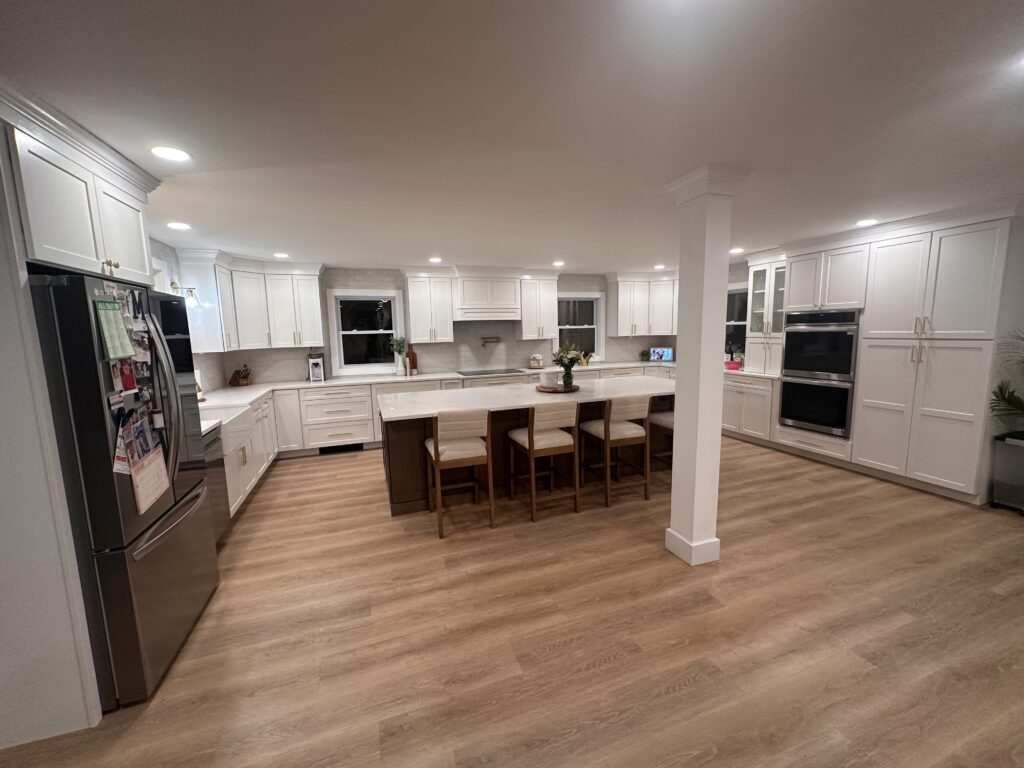
Project Gallery



Why Choose US
Why Work With Meigel Home Improvements?
Expert Craftsmanship You Can Trust
Choosing the right remodeling contractor is essential for a successful project, and Meigel Home Improvements is proud to be a trusted name in the Hauppauge community. Our experienced team brings a keen eye for detail, ensuring that every project is completed to the highest standard. We combine timeless design with modern functionality to create spaces that truly enhance your home and lifestyle.
Reliable, Transparent, and Customer-Focused
When you work with Meigel Home Improvements, you can expect honesty, integrity, and clear communication every step of the way. We pride ourselves on delivering exceptional service and making the remodeling process as seamless as possible for our clients. From the initial consultation to the final walkthrough, we treat your home as if it were our own, ensuring you feel confident and comfortable throughout the project.
Check Out Our Recent Blogs
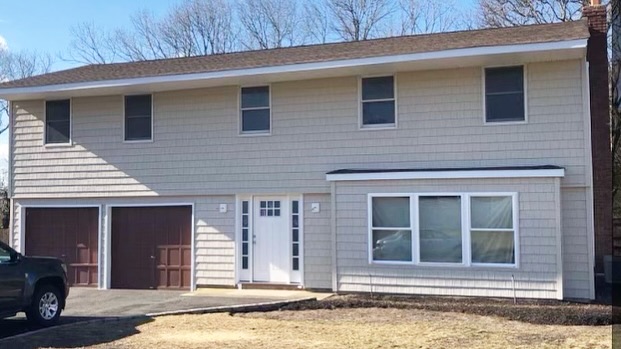
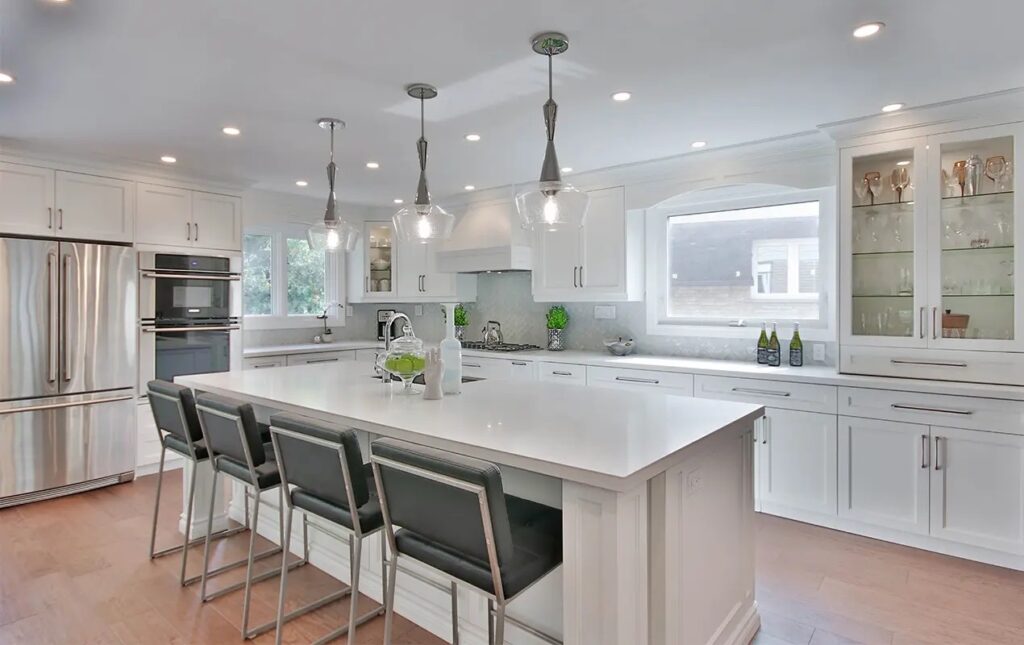
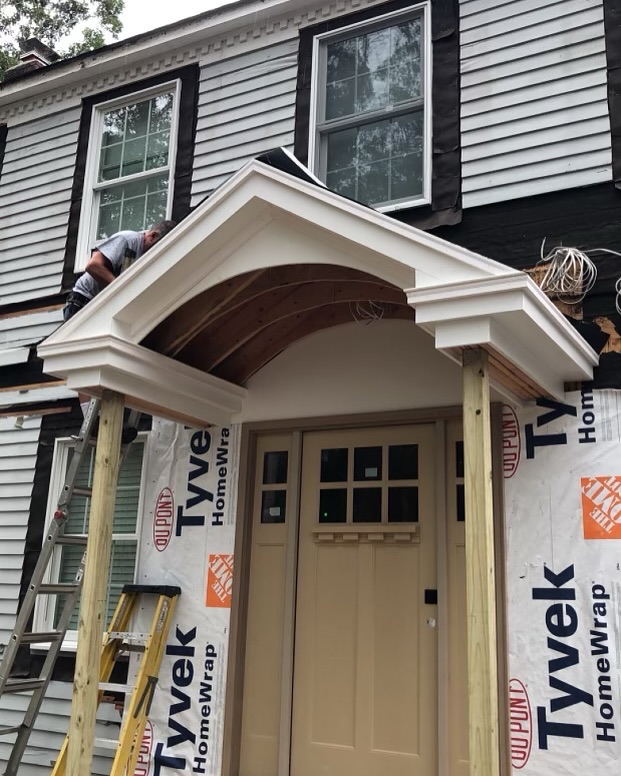
Occupying approximately 3.3 square miles in central Suffolk County within the Town of Brookhaven roughly 55 miles east of Manhattan, Lake Grove represents something distinctly minor in Long Island’s suburban landscape—a hamlet of approximately 11,000-12,000 residents whose identity derives almost entirely from the Smith Haven Mall anchoring its commercial core rather than from civic institutions, historic character, cultural distinctiveness, or community cohesion, whose residential areas consist of modest post-war subdivisions housing working-class to lower-middle-class families attracted by affordable housing costs relative to surrounding communities, whose governance as unincorporated hamlet within Brookhaven township limits local control over development patterns and service quality, and whose particular position—adjacent to the Smithtown border, served by Smithtown Central School District despite lying within Brookhaven, straddling the commercial corridor connecting Stony Brook University and regional employment centers—creates community without coherent identity beyond the retail destination that draws regional shoppers while residents themselves remain largely invisible in the metropolitan geography, making Lake Grove the quintessential Long Island hamlet that exists primarily as residential backdrop to commercial activity rather than as community in any meaningful civic sense.
The name “Lake Grove” references a small lake and grove of trees that once characterized the landscape before development eliminated both—a pattern where place names preserve memory of natural features that progress subsequently destroyed. The area remained agricultural and sparsely populated through the mid-20th century, with farming operations and rural character persisting until post-war suburban expansion reached central Suffolk County.
The establishment of Smith Haven Mall in 1969—one of Long Island’s first enclosed shopping malls—fundamentally defined Lake Grove’s commercial identity and regional significance. The mall created retail destination attracting shoppers from throughout central and western Suffolk County, generating tax revenue and employment that shaped Lake Grove’s fiscal position while simultaneously creating traffic, congestion, and commercial character that residential neighborhoods must accommodate.
The proximity to Stony Brook University (approximately 3 miles north) creates some demographic influence through graduate student housing, university employee residence, and the general quality-of-life improvements that major research university presence generates in surrounding communities, though Lake Grove’s modest housing stock and limited amenities attract primarily working-class populations rather than the professional families and academics that Stony Brook proximity might suggest.
Contemporary Lake Grove presents hamlet reality where commercial activity dominates identity while residential character remains modest and largely unremarked upon, where the Smith Haven Mall represents the community’s primary regional recognition while residents inhabit quiet subdivisions that commercial activity surrounds.
Demographics
Lake Grove’s demographic profile reveals working-class to lower-middle-class population whose characteristics reflect the particular demographics attracted by modest housing costs and convenient location rather than community quality or school excellence.
The population of approximately 11,000-12,000 residents has remained relatively stable over recent decades, with limited growth reflecting built-out conditions and modest housing stock attracting replacement households rather than population expansion.
Population density approaches 3,333-3,636 persons per square mile—moderate suburban density reflecting modest lot sizes and relatively dense post-war development patterns.
Racial and ethnic composition shows white majority with increasing diversity. White residents comprise approximately 75-79% of the population—substantial majority though lower than many Long Island suburbs. Hispanic or Latino residents represent approximately 12-15%—meaningful presence reflecting immigration attracted by affordable housing. Asian residents comprise approximately 6-8%—modest concentration influenced by Stony Brook University proximity. Black or African American residents approximately 3-4%, demonstrating modest diversity.
Age distribution shows mature suburban profile. Median age approaches 41-44 years—above national averages reflecting aging demographics typical of mature Long Island suburbs where younger families face affordability challenges and aging residents remain in place.
Household income statistics reveal working-class to lower-middle-class character. Median household income approaches $75,000-85,000 annually—below Long Island averages ($100,000-115,000) and reflecting concentration of retail, service, construction, and modest professional employment. Income distribution shows limited representation at high levels with substantial percentages earning $50,000-80,000 creating financial stress in expensive Long Island environment.
Poverty rates reach 7-10%—above Long Island averages indicating meaningful economic distress. Housing costs demonstrate Lake Grove’s relative affordability. Single-family homes typically range from $320,000-420,000 for modest properties to $480,000-580,000 for larger houses—below surrounding community averages and creating accessibility for working-class families priced out of more expensive neighboring communities.
Property taxes typically range from $9,000-14,000 annually—below Long Island averages reflecting modest property values. Educational attainment shows working-class patterns with bachelor’s degree attainment approaching 28-32%—near national averages (33%) but below Long Island norms.
Education
Education in Lake Grove operates through two school districts creating geographic complexity. The Smithtown Central School District serves portions of Lake Grove despite the hamlet lying within Brookhaven township—an administrative quirk creating school district boundaries crossing town governance boundaries. The Middle Country Central School District serves additional Lake Grove portions.
Smithtown Central School District serves the majority of Lake Grove students, enrolling them in district schools alongside Smithtown hamlet students. The district’s performance metrics (SAT averages approximately 1180-1210, graduation rates 96-97%) represent solid middle-class results, providing Lake Grove students educational quality somewhat exceeding what the hamlet’s modest demographics might otherwise support.
Middle Country Central School District serves remaining Lake Grove portions alongside Centereach, Selden, and other Brookhaven communities. The district enrolls approximately 9,000-9,500 students with more economically diverse demographics—free and reduced-price lunch eligibility approaching 35-40%, SAT averages approximately 1060-1090, graduation rates 90-92%—demonstrating adequate but unremarkable performance typical of working-class Suffolk County districts.
Student demographics across both districts serving Lake Grove students show white majority (68-74%) with meaningful Hispanic (15-18%), Asian (6-9%), and modest Black (3-5%) enrollment reflecting the hamlet’s composition. Free and reduced-price lunch eligibility varies substantially between districts—Smithtown portions showing 8-10% while Middle Country portions approach 35-40%—demonstrating how district boundary placement rather than geography determines educational resource access.
Per-pupil spending approximates $22,000-25,000 in Smithtown portions and $21,000-23,000 in Middle Country—typical for central Suffolk County and enabling basic operations without the comprehensive programming characterizing wealthiest Long Island districts.
College attendance among Lake Grove graduates likely approaches 68-74%—near Long Island working-class community averages, with students attending Suffolk County Community College, SUNY schools (Stony Brook being particularly convenient), and regional institutions. Stony Brook University proximity provides accessible four-year option that some graduates pursue, representing genuine advantage unavailable to communities more distant from research university campuses.
The unusual dual-district situation creates community division where neighbors attending different schools have different educational experiences and outcomes, reinforcing the hamlet’s lack of unified identity and the administrative complexity that unincorporated status within Brookhaven creates.
Tourism
Tourism in Lake Grove operates almost entirely through Smith Haven Mall attracting regional shoppers rather than through any community-specific attractions.
Smith Haven Mall—enclosed regional shopping center opened 1969, renovated multiple times—contains approximately 160 stores including anchor department stores (Macy’s, JCPenney), specialty retailers, restaurants, and entertainment (movie theater). The mall attracts shoppers from throughout central and western Suffolk County seeking retail variety unavailable in smaller commercial strips. Annual visitation likely reaches 8-10 million—extraordinary numbers making Smith Haven one of Long Island’s most-visited commercial destinations while generating zero tourism interest in Lake Grove itself.
Mall visitors arrive, shop, and depart without engaging with surrounding residential community, creating commercial activity that benefits Lake Grove’s tax base without creating community tourism or visitor interest in the hamlet beyond the mall’s boundaries.
For Lake Grove’s approximately 11,000-12,000 residents, the hamlet provides modest affordable Long Island suburban existence—housing costs below surrounding community averages enabling working-class homeownership, adequate schools (particularly for Smithtown district portions) providing reasonable educational opportunities, convenient location along Route 347 commercial corridor enabling access to employment and services, proximity to Stony Brook University providing cultural and educational resources, and the particular appeal of unassuming functionality where residents access suburban amenities without premium costs, though confronting challenges of limited community identity beyond mall proximity, working-class economic constraints creating financial stress in expensive Long Island environment, property taxes consuming substantial income portions despite modest values, aging housing stock requiring expensive maintenance, commercial traffic creating congestion along Route 347 affecting quality of life, and fundamental questions about whether hamlets lacking governance capacity, civic institutions, distinctive character, or economic advantages can maintain even modest suburban quality as Long Island’s affordability crisis intensifies and the working-class populations that Lake Grove serves find even relatively modest housing costs increasingly challenging to sustain on wages that commercial, service, and working-class employment provides.
- Bohemia NY
- Brentwood NY
- Centereach NY
- Center Islip NY
- Commack NY
- Deer Park NY
- Dix Hills NY
- East Islip NY
- East Meadow NY
- East Northport NY
- East Norwich NY
- East Patchogue NY
- East Setauket NY
- Farmingdale NY
- Farmingville NY
- Freeport NY
- Glen Head NY
- Great River NY
- Greenlawn NY
- Hauppauge NY
- Hicksville NY
- Holbrook NY
- Holtsville NY
- Huntington NY
- Huntington Station NY
- Islandia NY
- Islip NY
- Islip Terrace NY
- Jericho NY
- Kings Park NY
- Lake Grove NY
- Levittown NY
- Lindenhurst NY
- Massapequa NY
- Massapequa Park NY
- Mastic Beach NY
- Mastic NY
- Medford NY
- Melville NY
- Merrick NY
- Mid Island NY
- Middle Island NY
- Mill Neck NY
- Miller Place NY
- Mount Sinai NY
- Nesconset NY
- North Babylon NY
- North Bellmore NY
- Northport NY
- Oakdale NY
- Ocean Beach NY
- Old Bethpage NY
- Oyster Bay NY
- Patchogue NY
- Plainview NY
- Point Lookout NY
- Port Jefferson NY
- Port Jefferson Station NY
- Rocky Point NY
- Ronkonkoma NY
- Roosevelt NY
- Saint James NY
- Sayville NY
- Seaford NY
- Selden NY
- Shirley NY
- Shoreham NY
- Smithtown NY
- Sound Beach NY
- Stony Brook NY
- Syosset NY
- Uniondale NY
- Wantagh NY
- West Babylon NY
- West Islip NY
- West Sayville NY
- Westbury NY
- Woodbury NY
- Wyandanch NY
- Yaphank NY