
Expert Home Remodeling in Central Islip, NY
Meigel Home Improvements brings BBB A+ rated, family-owned remodeling expertise to Central Islip homeowners who expect quality craftsmanship and dependable service from a trusted local company.
Reliable Home Remodeling in Central Islip, NY
Meigel Home Improvements brings BBB A+ rated, family-owned craftsmanship to every Central Islip remodeling project with trusted local expertise.
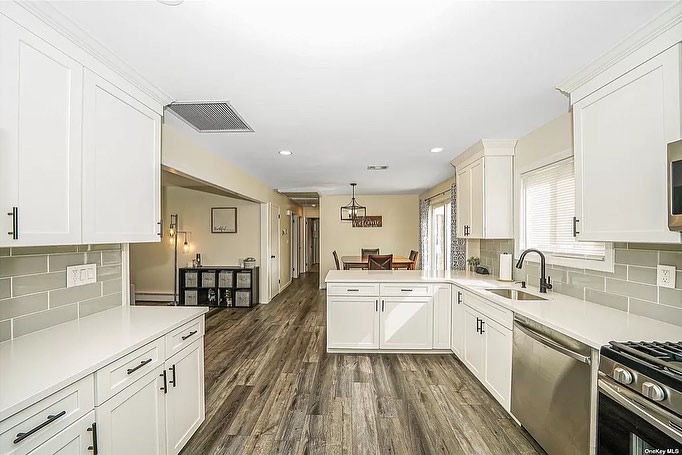
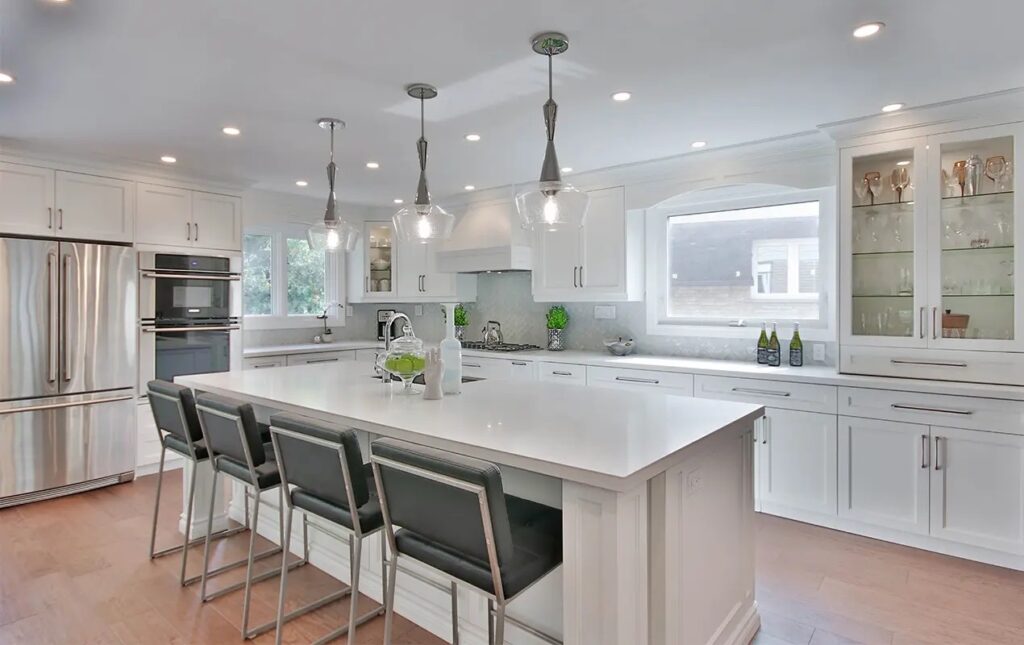
We’ve been helping homeowners throughout Central Islip bring their kitchens and bathrooms back to life for years, and we understand what it takes to get the job done right. At Meigel Home Improvements, we treat every project with the same care and attention, whether we’re working near the shops along Carleton Avenue or updating a home in the quiet streets around Brentwood Road. Our team handles everything from cabinet installations and countertop replacements to full bathroom renovations, and we make sure the process stays straightforward from start to finish. If you’re ready to move forward with your remodeling project, give us a call at (631) 430-5995 for a free estimate and let’s talk about what you have in mind.
Remodeling Solutions for Central Islip
Remodeling Homes in Central Islip
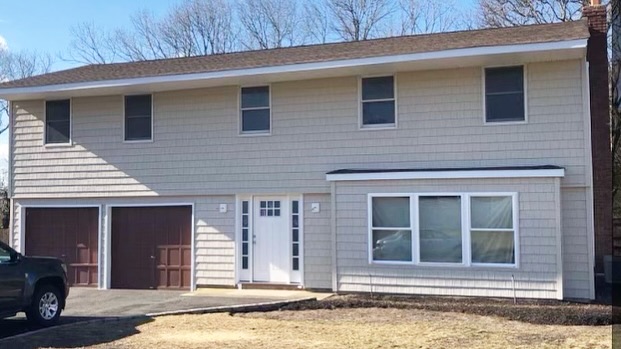
We’ve worked in Central Islip for years, and we understand the homes here. The neighborhoods around Carleton Avenue, the tree-lined streets near Lowell Avenue, and the residential blocks surrounding the Central Islip State Park area are filled with post-war Cape Cods, ranch homes, and split-levels that were built between the 1950s and 1970s. These homes have solid bones, but many still have their original kitchens and bathrooms that no longer meet the needs of modern families.
Outdated layouts, worn cabinetry, and old plumbing fixtures don’t just look tired. They make daily life less efficient and can hold back your home’s value in a competitive market. We’ve helped countless Central Islip homeowners open up cramped galley kitchens, replace pink and blue tile bathrooms, and add storage where there was none. The homes in this community respond well to thoughtful updates because the structure is there. It just needs the right improvements to make it functional and appealing again. Our team knows how to work within the footprint of these homes while delivering results that last and add real value.
What does a kitchen remodel cost in Central Islip, NY?
A kitchen remodel in Central Islip typically ranges from $25,000 to $75,000 depending on the size of the space and the materials you select. We’ve worked on projects throughout Suffolk County where homeowners invest around $35,000 to $50,000 for a mid-range update that includes new cabinets, countertops, appliances, and flooring. The final cost depends on factors like whether you’re keeping the existing layout or moving plumbing and electrical, which scope of finishes you prefer, and how much custom work is involved.
How long does a bathroom remodel take in Central Islip?
Most bathroom remodels in Central Islip take between two and four weeks from start to finish. A straightforward update with new fixtures, tile, and vanity usually falls on the shorter end, while a full gut renovation with layout changes or custom features can extend closer to four weeks or slightly longer. We schedule our projects carefully and keep you informed throughout so you know exactly what to expect at each stage.
Do I need permits for a kitchen or bathroom remodel in Central Islip, NY?
Permits are required in Central Islip and throughout New York when your remodel involves electrical work, plumbing changes, or structural modifications. The Town of Islip Building Department oversees permit applications and inspections for projects in Central Islip, and we handle this process for our clients to ensure everything meets local codes. Simple cosmetic updates like painting or replacing cabinets without moving plumbing may not require permits, but we always verify what’s needed for your specific project before we begin.
How do I verify a contractor is licensed in Suffolk County or Nassau County?
You can verify a contractor’s license in Suffolk County by contacting the Suffolk County Department of Consumer Affairs or checking their online database, while Nassau County maintains its own licensing records through the Nassau County Department of Consumer Affairs. We’re a licensed home improvement contractor based in Hauppauge, and we’re always happy to provide our license number and proof of insurance before starting any work. It’s important to confirm that any contractor you hire carries both liability insurance and workers’ compensation coverage to protect you during the project.
Also Serving Near Center Islip
Project Gallery



Why Choose US
Why Work With Meigel Home Improvements?
Expert Craftsmanship You Can Trust
Choosing the right remodeling contractor is essential for a successful project, and Meigel Home Improvements is proud to be a trusted name in the Hauppauge community. Our experienced team brings a keen eye for detail, ensuring that every project is completed to the highest standard. We combine timeless design with modern functionality to create spaces that truly enhance your home and lifestyle.
Reliable, Transparent, and Customer-Focused
When you work with Meigel Home Improvements, you can expect honesty, integrity, and clear communication every step of the way. We pride ourselves on delivering exceptional service and making the remodeling process as seamless as possible for our clients. From the initial consultation to the final walkthrough, we treat your home as if it were our own, ensuring you feel confident and comfortable throughout the project.
Check Out Our Recent Blogs
Occupying approximately 4.2 square miles in central Suffolk County roughly 45 miles east of Manhattan, Central Islip represents something profoundly tragic in Long Island’s community landscape—a hamlet of approximately 34,000-36,000 residents whose identity and trajectory remain inseparable from the Central Islip Psychiatric Center (1889-1996), whose 1,000-acre institutional complex employed thousands and defined community character for over a century before closure devastated the local economy eliminating thousands of jobs without replacement, whose population transformation through Central American immigration (particularly El Salvador and Honduras) has created majority-minority community experiencing concentrated poverty, gang violence, failing schools, and social problems that affluent Long Island suburbs exclude through property values, and where the question becomes whether Central Islip can overcome the accumulated disadvantages of institutional abandonment, concentrated poverty, MS-13 gang presence, educational catastrophe, and the particular challenges facing communities that regional systems use as dumping grounds for populations and problems that exclusive suburbs refuse to accommodate, or whether current conditions represent permanent crisis requiring interventions that political will and resource allocation seem unlikely to provide.
The name “Central Islip” references geographic position in central Long Island, though the designation obscures the reality that the asylum—officially Central Islip State Hospital, later Central Islip Psychiatric Center—defined community identity more powerfully than geography. The institution’s founding in 1889 as New York City’s “farm colony” for mentally ill patients created the employment base and institutional infrastructure around which Central Islip developed. At peak operation, the asylum complex sprawled across 1,000 acres with over 100 buildings, housed 10,000+ patients, and employed 5,000-6,000 staff, making it one of America’s largest psychiatric facilities and creating economy where substantial portions of the community depended directly or indirectly on institutional employment.
The asylum closure in 1996—driven by deinstitutionalization movement, budget pressures, and changing mental health treatment approaches—devastated Central Islip’s economy virtually overnight. Thousands of jobs disappeared, with former employees facing unemployment in community offering limited alternative employment. The massive institutional campus stood largely abandoned for years before partial redevelopment for community college, government offices, and housing, though vast portions remain unused creating blighted landscape of deteriorating buildings.
The economic collapse coincided with demographic transformation as Central American immigrants—many fleeing civil wars and violence in El Salvador and Honduras—settled in Central Islip attracted by affordable housing, established immigrant networks, and proximity to employment in service sectors, landscaping, construction, and day labor throughout Long Island. This immigration created cultural and linguistic transformation where Spanish became dominant language in many neighborhoods, Latino-oriented businesses replaced previous commercial establishments, and the community’s character changed fundamentally within two decades.
However, this transformation occurred without the economic base or social infrastructure supporting integration and opportunity. The combination of asylum closure eliminating stable employment, immigration creating populations facing language barriers and limited skills transferable to Long Island’s economy, and the concentration of poverty created conditions enabling gang infiltration. MS-13 (Mara Salvatrucha)—violent transnational gang originating in Los Angeles but with Central American roots—established significant presence in Central Islip, recruiting among immigrant youth experiencing poverty, family dysfunction, limited opportunity, and the particular vulnerabilities that concentrated disadvantage creates.
Contemporary Central Islip represents crisis conditions more typical of struggling cities than Long Island suburbs—gang violence generating national headlines, failing schools, concentrated poverty, deteriorated housing stock, limited economic opportunity—creating community that affluent Long Island largely ignores while containing the populations and problems that property values elsewhere exclude.
Demographics
Central Islip’s demographic profile reveals extraordinary transformation creating majority-Hispanic, working-class to poor community experiencing concentrated disadvantage unusual for Long Island geography.
The population of approximately 34,000-36,000 residents has remained relatively stable over recent decades, with immigration offsetting out-migration as economic decline drove populations able to leave elsewhere while newcomers arrived seeking affordable housing despite limited opportunities.
Population density approaches 8,095-8,570 persons per square mile—extraordinarily high for Long Island and reflecting the apartment complexes, subdivided houses, illegal conversions, and overcrowding that affordable housing scarcity combined with immigrant settlement patterns creates. The density creates urban conditions in suburban setting, with infrastructure designed for lower densities strained by actual populations.
Racial and ethnic composition shows dramatic transformation from predominantly white community to majority-Hispanic. Hispanic or Latino residents comprise approximately 70-75% of the population—overwhelming majority and representing one of Long Island’s highest Hispanic concentrations. The Hispanic population derives predominantly from Central America, particularly El Salvador and Honduras, with substantial representation from other Latin American countries. Black or African American residents represent approximately 15-18%, white residents approximately 8-12%, demonstrating how comprehensively demographic change transformed the community within two decades.
This concentration reflects both the affordable housing attracting working-class immigrant populations and the particular dynamics where initial settlement creates networks attracting additional immigration from same origin countries, creating ethnic enclaves where language, culture, and social networks enable community formation while potentially limiting integration with broader Long Island society.
Age distribution shows relatively young character typical of immigrant communities. Median age approaches 28-31 years—substantially below national averages (38 years) and reflecting the young families and working-age populations characteristic of recent immigration. The population includes substantial presence of children and adolescents, creating enormous demand for educational and social services.
Household income statistics reveal working-class to poor character. Median household income approaches $58,000-68,000 annually—below Long Island averages and dramatically below affluent Nassau County suburbs ($100,000-120,000+), reflecting concentration of service sector, landscaping, construction, day labor, retail, and hospitality employment offering modest wages. Income distribution shows limited representation at high levels, with few households exceeding $100,000 annually, while substantial percentages fall below $40,000 creating economic stress.
Poverty rates reach 20-25%—among Long Island’s highest and approaching levels typical of struggling urban areas rather than suburbs. Child poverty approaches 30-35%, indicating families with children experience severe economic hardship where parental employment offers insufficient wages for stability despite full-time work.
Housing costs demonstrate Central Islip’s role as affordable alternative while revealing concerning patterns. Single-family homes typically range from $250,000-350,000 for modest properties to $400,000-550,000 for larger houses—substantially below Long Island averages but increasingly challenging for working-class families. However, severe overcrowding, illegal basement and attic conversions, multiple families sharing single-family homes, and deteriorated conditions create housing quality concerns where affordability comes at cost of safety, space, and dignity.
Rental housing approaches $1,400-1,900 monthly for legal apartments, though illegal conversions and informal arrangements create unregulated market where landlords exploit vulnerable populations unable to access formal housing.
Educational attainment shows concerning patterns. Bachelor’s degree attainment approaches only 15-18%—dramatically below Long Island averages (40-45%) and national levels (33%), reflecting immigrant populations where immediate economic survival needs superseded educational credential pursuit and limited English proficiency created barriers. High school completion rates approach 65-70%, indicating extraordinary dropout rates where 30-35% of adults lack secondary credentials severely limiting economic prospects.
Education
Education in Central Islip operates through Central Islip Union Free School District, serving the hamlet and surrounding areas. The district operates elementary schools, Andrew T. Morrello Middle School, and Central Islip High School, enrolling approximately 6,500-7,000 students across all grades.
Student demographics show approximately 82-86% Hispanic enrollment, 12-15% Black enrollment, 2-4% white enrollment—extraordinary concentration. English Language Learner percentages reach 25-30%, indicating substantial portions of students arrive with limited or no English proficiency requiring intensive language instruction. Free and reduced-price lunch eligibility reaches 85-90%—among Long Island’s highest and indicating overwhelming majority of students experience poverty creating educational challenges before entering classrooms.
Academic performance demonstrates catastrophic failure by virtually all metrics. Standardized test proficiency rates fall dramatically below state and Long Island averages—approximately 35-40% meeting standards in reading and 30-35% in mathematics. These abysmal results indicate 60-70% of students fail to achieve grade-level proficiency, virtually guaranteeing limited futures regardless of effort or aspirations.
SAT scores average approximately 850-880 out of 1600—dramatically below national averages (1050) and Long Island benchmarks (typically 1100-1200 in decent districts, 1300-1450 in elite districts), indicating students graduate fundamentally unprepared for college-level work. Graduation rates approach 72-76%—among Long Island’s lowest and showing meaningful dropout rates where 24-28% of students fail to complete high school, eliminating viable economic prospects in contemporary economy.
Per-pupil spending approximates $24,000-26,000 annually—comparable to Long Island averages and demonstrating that money alone cannot overcome concentrated poverty, limited English proficiency, family instability, housing insecurity, food insecurity, trauma exposure, and accumulated disadvantages that students bring to schools regardless of district resources.
The district confronts challenges exceeding educational solutions: students arriving years behind grade level, limited English proficiency requiring extensive ESL instruction, chronic absenteeism reflecting family instability and survival priorities, high mobility as families move frequently seeking housing or employment, gang presence and violence affecting student safety and focus, and community dysfunction creating circumstances where educational success becomes nearly impossible regardless of school quality.
College attendance among graduates likely approaches 35-40%—predominantly community college enrollment, with four-year university attendance remaining rare given preparation gaps, financial barriers, and limited family experience with higher education. Even community college completion rates remain low as students face ongoing economic pressures requiring work conflicting with studies.
Tourism
Tourism in Central Islip operates at zero—the hamlet possesses no attractions, destinations, cultural institutions, or features generating outside visitation. The abandoned asylum buildings create blight rather than heritage tourism, gang violence and poverty create safety perceptions deterring visitors, and the community functions purely as residential area without any visitor appeal.
For Central Islip’s approximately 34,000-36,000 residents, life involves navigating concentrated poverty, gang violence (MS-13 presence creating legitimate safety concerns and occasional high-profile murders generating national media attention), failing schools condemning children to limited futures, limited economic opportunity beyond low-wage service employment, language barriers isolating Spanish-speaking populations, deteriorated housing stock, and the particular challenges of community experiencing crisis conditions that affluent Long Island ignores while policies and systems concentrate disadvantaged populations in communities like Central Islip lacking resources or capacity to address needs, raising profound questions about regional equity, whether geographic proximity to prosperity creates any obligation toward struggling neighbors, and whether societies can maintain extreme inequality where Third World and First World conditions exist miles apart indefinitely without moral and practical consequences that current arrangements seem designed to avoid confronting.
- Bohemia NY
- Brentwood NY
- Centereach NY
- Center Islip NY
- Commack NY
- Deer Park NY
- Dix Hills NY
- East Islip NY
- East Meadow NY
- East Northport NY
- East Norwich NY
- East Patchogue NY
- East Setauket NY
- Farmingdale NY
- Farmingville NY
- Freeport NY
- Glen Head NY
- Great River NY
- Greenlawn NY
- Hauppauge NY
- Hicksville NY
- Holbrook NY
- Holtsville NY
- Huntington NY
- Huntington Station NY
- Islandia NY
- Islip NY
- Islip Terrace NY
- Jericho NY
- Kings Park NY
- Lake Grove NY
- Levittown NY
- Lindenhurst NY
- Massapequa NY
- Massapequa Park NY
- Mastic Beach NY
- Mastic NY
- Medford NY
- Melville NY
- Merrick NY
- Mid Island NY
- Middle Island NY
- Mill Neck NY
- Miller Place NY
- Mount Sinai NY
- Nesconset NY
- North Babylon NY
- North Bellmore NY
- Northport NY
- Oakdale NY
- Ocean Beach NY
- Old Bethpage NY
- Oyster Bay NY
- Patchogue NY
- Plainview NY
- Point Lookout NY
- Port Jefferson NY
- Port Jefferson Station NY
- Rocky Point NY
- Ronkonkoma NY
- Roosevelt NY
- Saint James NY
- Sayville NY
- Seaford NY
- Selden NY
- Shirley NY
- Shoreham NY
- Smithtown NY
- Sound Beach NY
- Stony Brook NY
- Syosset NY
- Uniondale NY
- Wantagh NY
- West Babylon NY
- West Islip NY
- West Sayville NY
- Westbury NY
- Woodbury NY
- Wyandanch NY
- Yaphank NY