
Expert Home Remodeling in Smithtown, NY
Meigel Home Improvements brings three generations of craftsmanship and an A+ BBB rating to every Smithtown remodeling project we complete for our neighbors.
Expert Home Remodeling in Smithtown, NY
Meigel Home Improvements brings BBB A+ rated, family-owned craftsmanship to every remodeling project we complete throughout Smithtown and Suffolk County.
We’ve been serving homeowners throughout Smithtown with kitchen and bathroom remodeling for years, and we understand what it takes to transform your home into a space that works for the way you live. Whether your project is in Kings Park, along the historic streets near the Village of the Branch, or in the Nesconset area, our team brings the same careful attention to detail and quality craftsmanship to every job. At Meigel Home Improvements, we handle everything from design and permits to the final installation, so you can trust the process from start to finish. If you’re ready to explore what’s possible for your home, give us a call at (631) 430-5995 for a free estimate.
Available Services in Smithtown
Remodeling Homes in Smithtown
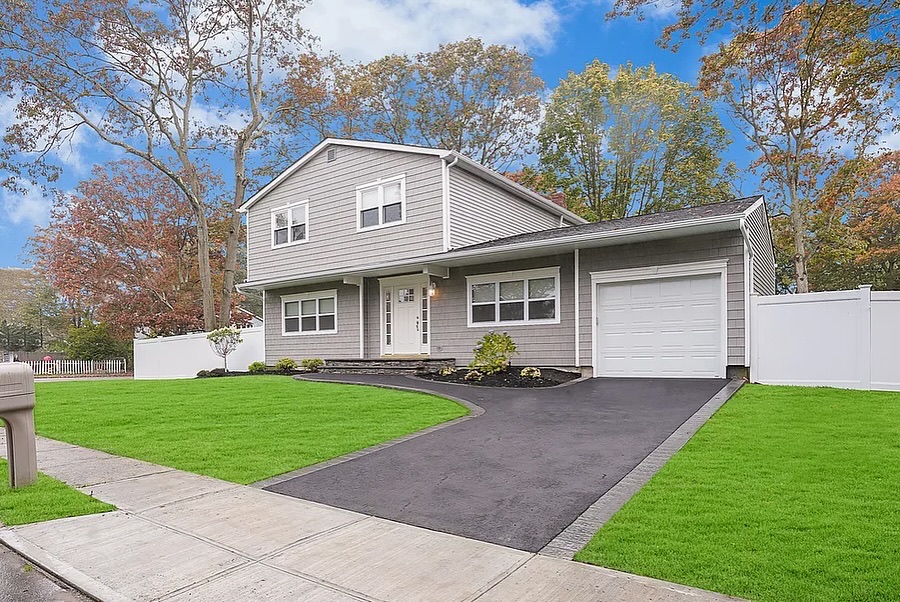
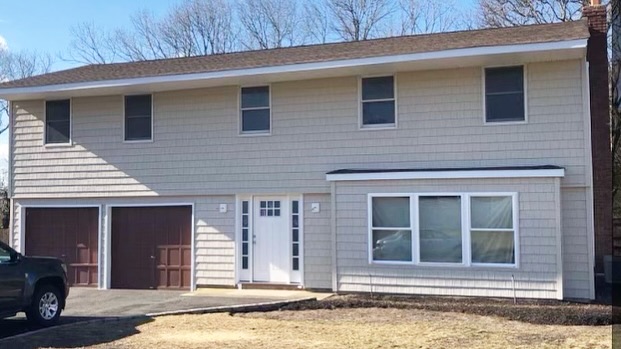
We’ve worked in Smithtown for years, and we know the homes here well. From the tree-lined streets of Landing Avenue to the established neighborhoods around Brooksite Drive and the family-friendly blocks near Edgewood, this community is filled with post-war ranches, split-levels, and colonials that have stood the test of time. Many of these homes were built in the 1950s and 1960s with original kitchens and bathrooms that no longer meet the needs of modern families.
The housing stock in Smithtown is solid, but the layouts and finishes often reflect the era when they were constructed. Galley kitchens with limited counter space, small bathrooms with outdated fixtures, and compartmentalized floor plans are common. We help homeowners open up these spaces, improve functionality, and update the style to match how people actually live today. A thoughtful remodel not only makes daily life more comfortable but also protects your investment. Smithtown remains a desirable place to live, and homes with updated kitchens and bathrooms consistently perform better when it comes time to sell. We bring local knowledge and careful craftsmanship to every project we take on in this community.
What does a kitchen remodel typically cost in Smithtown, NY?
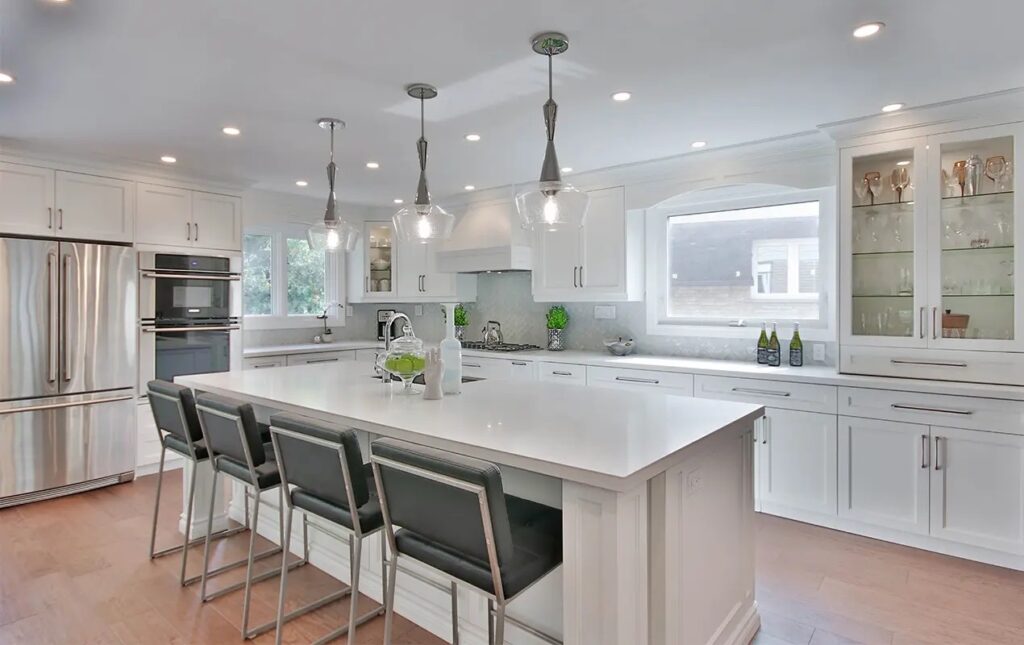
Kitchen remodeling costs in Smithtown generally range from $30,000 to $80,000 depending on the scope of work, materials selected, and the size of your space. A minor refresh with new cabinets, countertops, and appliances might fall on the lower end, while a full gut renovation with custom cabinetry, high-end appliances, and layout changes can reach the upper range or beyond. We provide detailed estimates after visiting your home and understanding exactly what you want to accomplish with your kitchen.
How long does a bathroom remodel take in Smithtown?
Most bathroom remodels in Smithtown take between three and six weeks from start to finish, though the timeline depends on the complexity of your project and material availability. A straightforward update with new fixtures, tile, and vanity typically stays closer to three weeks, while a complete reconfiguration with plumbing relocation and custom features may extend closer to six weeks or slightly longer. We establish a clear schedule during our planning phase and keep you updated throughout the entire process so you know what to expect each week.
Do I need permits for kitchen or bathroom remodeling in Smithtown, NY?
Permits are required in Smithtown for most kitchen and bathroom remodeling projects that involve plumbing, electrical work, or structural changes. The Town of Smithtown Building Department oversees permit applications and inspections to ensure all work meets New York State building codes and local requirements. We handle the entire permit process for our clients, including submitting plans, coordinating inspections, and ensuring everything is properly documented so your project stays compliant and on schedule.
How can I verify a contractor is properly licensed in Suffolk County?
In Suffolk County, home improvement contractors must be registered with the county and carry proper liability insurance and workers’ compensation coverage. You can verify a contractor’s registration status by contacting the Suffolk County Department of Consumer Affairs or visiting their office in Hauppauge. We maintain all required registrations and insurance coverage, and we’re always happy to provide copies of our credentials and references from other Smithtown homeowners before you make your decision.
Also Serving Near Smithtown
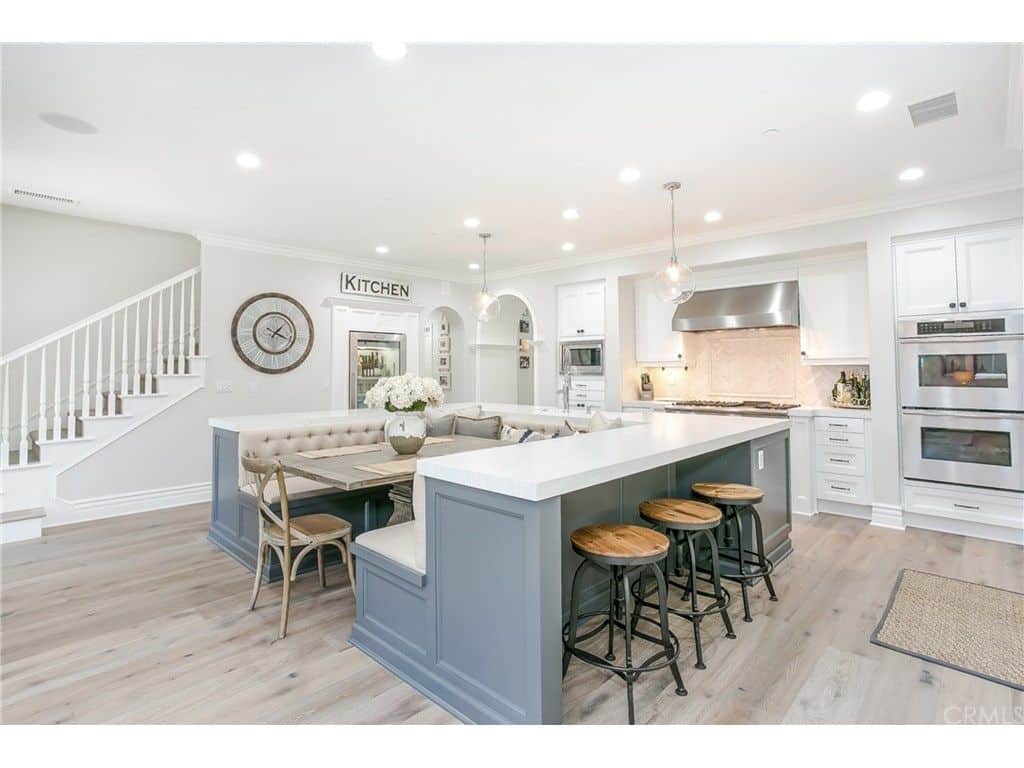
Project Gallery


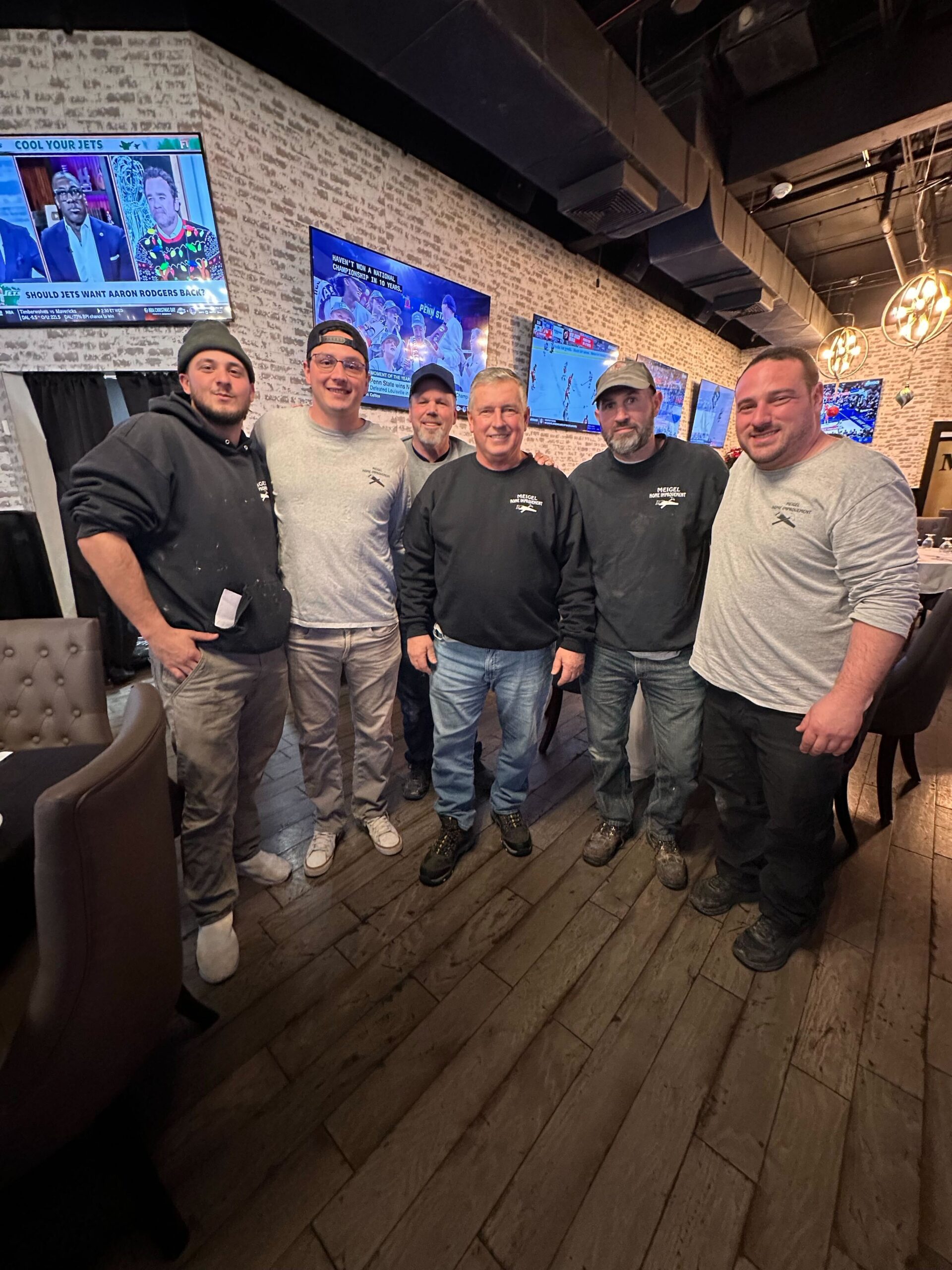
Why Choose US
Why Work With Meigel Home Improvements?
Expert Craftsmanship You Can Trust
Choosing the right remodeling contractor is essential for a successful project, and Meigel Home Improvements is proud to be a trusted name in the Hauppauge community. Our experienced team brings a keen eye for detail, ensuring that every project is completed to the highest standard. We combine timeless design with modern functionality to create spaces that truly enhance your home and lifestyle.
Reliable, Transparent, and Customer-Focused
When you work with Meigel Home Improvements, you can expect honesty, integrity, and clear communication every step of the way. We pride ourselves on delivering exceptional service and making the remodeling process as seamless as possible for our clients. From the initial consultation to the final walkthrough, we treat your home as if it were our own, ensuring you feel confident and comfortable throughout the project.
Check Out Our Recent Blogs
Occupying approximately 54 square miles across central Long Island’s North Shore in Suffolk County roughly 50 miles east of Manhattan, Smithtown represents something distinctly amorphous in Long Island’s community landscape—a town of approximately 115,000-118,000 residents whose governmental structure as township containing multiple hamlets (Smithtown itself, Kings Park, Nesconset, Hauppauge, Commack, St. James) creates fragmented identity where “Smithtown” functions primarily as administrative designation rather than coherent community, where post-war suburban development transformed agricultural land into sprawling subdivisions and commercial strips creating automobile-dependent landscape lacking downtown focal points or pedestrian-friendly centers, where school district boundaries rather than civic institutions define community belonging, and where the tension between North Shore cachet suggesting affluence and Long Island Sound waterfront access versus inland reality of middle-class subdivisions, corporate office parks in Hauppauge, and strip commercial development creates marketing disconnect between promoted image and lived experience for most residents inhabiting interior sections far from the waterfront privileges that “North Shore” designation implies.
The name “Smithtown” derives from Richard Smith, reportedly receiving land grant in 1665 with boundaries determined by how far he could ride a bull in a single day—a colorful founding legend creating the bull statue that serves as town symbol despite historical accuracy remaining disputed. The area remained agricultural through the 19th century and early 20th century, with farming, estate properties along the Sound, and small hamlet centers serving local populations.
The post-World War II suburban explosion transformed Smithtown through residential development creating subdivisions housing tens of thousands seeking affordable Long Island living with easier access than crowded Nassau County while maintaining reasonable commuting distance to Manhattan employment. However, unlike incorporated villages exercising local control over development, Smithtown’s status as township with unincorporated hamlets meant limited planning coordination, resulting in sprawling development patterns following market forces rather than comprehensive vision.
The construction of Long Island Expressway (I-495) and Northern State Parkway created transportation infrastructure enabling commuter access to Manhattan and regional employment centers, fundamentally changing Smithtown’s position from rural area to suburban frontier absorbing population overflow from Nassau County. The development of Hauppauge as major office and industrial center created daytime employment concentration, though the corporate campus character creates minimal community identity or pedestrian activity.
Contemporary Smithtown presents challenges of sprawl without centers, fragmented governance without unified identity, automobile dependence without walkable alternatives, and questions about whether the collection of hamlets sharing town government constitutes community or merely administrative convenience grouping geographically proximate but socially disconnected populations.
Demographics
Smithtown’s demographic profile reveals predominantly white, middle-class to upper-middle-class population whose characteristics reflect Long Island suburban development patterns with modest diversity increasing gradually through immigration.
The population of approximately 115,000-118,000 residents has remained relatively stable over recent decades, showing minimal growth after explosive expansion during the 1950s-1970s suburban boom. Current stagnation reflects build-out conditions where limited remaining developable land prevents significant expansion, though teardown-rebuild activity continues in established neighborhoods.
Population density approaches 2,130-2,185 persons per square mile—moderate suburban density reflecting single-family home subdivisions on quarter-acre to half-acre lots characteristic of mid-20th century Long Island development, with commercial areas, office parks, and preserved open space reducing overall density.
Racial and ethnic composition shows substantial white majority with gradually increasing diversity. White residents comprise approximately 85-88% of the population—overwhelming predominance though declining from near-total homogeneity decades ago. Asian residents represent approximately 6-8%—meaningful presence concentrated in certain subdivisions and reflecting professional populations employed in healthcare, technology, and business services. Hispanic or Latino residents comprise approximately 5-7%, and Black or African American residents approximately 2-3%, demonstrating limited diversity characteristic of Long Island suburbs where economic barriers and self-selection create relatively homogeneous communities.
Geographic sorting within the township creates variation where different hamlets show somewhat different compositions, though all remain predominantly white with modest diversity. Hauppauge, as corporate employment center, shows somewhat greater Asian presence reflecting technology and business professional populations.
Age distribution shows mature suburban profile with aging population. Median age approaches 44-47 years—substantially above national averages (38 years) and reflecting the demographic pattern where families who purchased homes during 1960s-1980s suburban boom have aged in place while younger families face affordability challenges limiting new family formation. The population includes substantial empty-nester and retiree presence alongside established middle-aged families.
Household income statistics reveal middle-class to upper-middle-class character. Median household income approaches $105,000-115,000 annually—substantially above national median ($75,000) though typical for Long Island suburbs where high costs of living require elevated incomes for middle-class existence. Income distribution shows substantial representation in $75,000-150,000 range—the broad middle-class spectrum, with meaningful percentages exceeding $150,000 but limited extreme wealth concentration.
Occupations span professional fields—healthcare (numerous hospitals and medical facilities employ thousands), education, business services, technology, trades—with many residents commuting to Manhattan, Nassau County, or employed locally in Hauppauge corporate campuses or throughout Suffolk County.
Poverty rates remain relatively low—approximately 4-6%—indicating most residents experience economic security, though housing costs create financial stress even for middle-class families earning solid incomes.
Housing costs demonstrate Long Island’s expensive reality. Single-family homes typically range from $425,000-575,000 for modest ranch or cape properties to $650,000-950,000 for larger colonials in desirable neighborhoods. Waterfront properties along Long Island Sound command $1.2-3 million+, though only small percentage of Smithtown residents access waterfront given limited Sound frontage. These prices create affordability challenges where middle-class incomes struggle to achieve homeownership that previous generations accessed easily.
Property taxes typically range from $12,000-20,000 annually for standard properties to $25,000-35,000+ for expensive homes—creating ongoing financial burden that only sustained middle-class or higher income enables managing. The high taxes fund schools, town services, and special districts.
Educational attainment shows middle-class patterns. Bachelor’s degree attainment approaches 42-46%—above national averages (33%) though below most affluent Long Island communities, reflecting mix of professional populations and working-class families where college attendance remains less universal. High school graduation rates exceed 93%, indicating virtually universal secondary completion.
Education
Education in Smithtown operates through multiple school districts serving different geographic sections, creating complexity where hamlet location determines school quality as powerfully as any other factor.
Smithtown Central School District serves the largest portion, operating elementary schools, middle schools, and high schools (Smithtown High School East and West), enrolling approximately 10,000-11,000 students. Student demographics show approximately 82-85% white enrollment, 7-9% Asian, 4-6% Hispanic, 2-3% Black—modest diversity. Free and reduced-price lunch eligibility approaches 8-10%, indicating predominantly middle-class student body.
Academic performance shows solid results. SAT scores average approximately 1180-1210—above national averages (1050) though below elite Long Island districts (Great Neck, Jericho 1300-1450). Graduation rates approach 96-97%—strong completion. Per-pupil spending approximates $26,000-28,000 annually—typical for Long Island and reflecting both the high costs and comprehensive programming.
Hauppauge Union Free School District serves Hauppauge hamlet, enrolling approximately 4,000-4,400 students. Performance shows similar patterns—SAT scores approximately 1180-1220, graduation rates 96-98%, demonstrating solid middle-class district outcomes.
Kings Park Central School District serves Kings Park hamlet, enrolling approximately 3,200-3,500 students, with comparable performance metrics.
Commack Union Free School District serves Commack hamlet, enrolling approximately 6,000-6,500 students. This district demonstrates somewhat stronger performance—SAT scores approaching 1220-1250, reflecting affluent demographics in portions of Commack.
The districts offer comprehensive programming including Advanced Placement courses (though not the extensive offerings of wealthiest districts), competitive athletics (Long Island takes high school sports seriously, particularly football and lacrosse), and college preparatory curriculum. College attendance among graduates likely approaches 80-85%, with students attending SUNY schools (Stony Brook, Binghamton, Albany), private colleges, and varied institutions.
The schools benefit from middle-class demographics providing adequate resources and parental engagement while serving more economic diversity than exclusive suburbs, creating environments where most students receive solid preparation without the extreme achievement pressure or resource abundance characterizing wealthiest districts.
Tourism
Tourism in Smithtown operates at virtually nonexistent levels, with the town functioning as residential community without attractions, destinations, or features generating outside visitation.
The town lacks cohesive downtown (hamlets have modest commercial centers but nothing creating destination appeal), cultural institutions of significance, entertainment venues, or distinctive features attracting tourists. The waterfront access along Long Island Sound remains limited and largely privatized through residential ownership, preventing public access that might create beach tourism.
Caleb Smith State Park Preserve provides 543 acres of trails, nature center, and preserved ecosystems serving primarily local residents and Long Island nature enthusiasts rather than tourists. Blydenburgh County Park offers trails and recreation facilities with similar local rather than tourist appeal.
The bull statue in downtown Smithtown hamlet provides photo opportunity for those interested in local history, though this generates minimal actual tourism.
Hauppauge’s corporate office parks and industrial facilities function as employment centers, not tourist attractions, with businesses generally prohibiting public access.
For Smithtown’s approximately 115,000-118,000 residents, the town provides middle-class Long Island suburban lifestyle—decent schools enabling children’s educational opportunities, safe neighborhoods supporting family life, proximity to employment in Hauppauge and throughout Long Island, reasonable (75-90 minute) commutes to Manhattan via LIRR, though confronting challenges of high property taxes consuming significant income portions, housing costs creating affordability stress, automobile dependence where all activities require driving, traffic congestion on Jericho Turnpike and other major corridors, aging infrastructure requiring investment, fragmented identity where hamlet rather than town creates belonging, and fundamental questions about whether Long Island’s suburban model built on affordable homeownership for middle-class families remains sustainable when housing costs, property taxes, and cost of living increasingly exclude the working and middle-class populations for whom suburbs were originally developed.
- Bohemia NY
- Brentwood NY
- Centereach NY
- Center Islip NY
- Commack NY
- Deer Park NY
- Dix Hills NY
- East Islip NY
- East Meadow NY
- East Northport NY
- East Norwich NY
- East Patchogue NY
- East Setauket NY
- Farmingdale NY
- Farmingville NY
- Freeport NY
- Glen Head NY
- Great River NY
- Greenlawn NY
- Hauppauge NY
- Hicksville NY
- Holbrook NY
- Holtsville NY
- Huntington NY
- Huntington Station NY
- Islandia NY
- Islip NY
- Islip Terrace NY
- Jericho NY
- Kings Park NY
- Lake Grove NY
- Levittown NY
- Lindenhurst NY
- Massapequa NY
- Massapequa Park NY
- Mastic Beach NY
- Mastic NY
- Medford NY
- Melville NY
- Merrick NY
- Mid Island NY
- Middle Island NY
- Mill Neck NY
- Miller Place NY
- Mount Sinai NY
- Nesconset NY
- North Babylon NY
- North Bellmore NY
- Northport NY
- Oakdale NY
- Ocean Beach NY
- Old Bethpage NY
- Oyster Bay NY
- Patchogue NY
- Plainview NY
- Point Lookout NY
- Port Jefferson NY
- Port Jefferson Station NY
- Rocky Point NY
- Ronkonkoma NY
- Roosevelt NY
- Saint James NY
- Sayville NY
- Seaford NY
- Selden NY
- Shirley NY
- Shoreham NY
- Smithtown NY
- Sound Beach NY
- Stony Brook NY
- Syosset NY
- Uniondale NY
- Wantagh NY
- West Babylon NY
- West Islip NY
- West Sayville NY
- Westbury NY
- Woodbury NY
- Wyandanch NY
- Yaphank NY