
Reliable Home Remodeling in Huntington, NY
Meigel Home Improvements brings over three decades of A+ rated craftsmanship to Huntington homeowners who expect quality remodeling backed by local expertise and accountability.
Professional Home Remodeling in Huntington, NY
Meigel Home Improvements brings BBB A+ rated craftsmanship and three generations of family expertise to every remodeling project in Huntington, NY.
We’ve been helping homeowners throughout Huntington transform their kitchens and bathrooms for years, and we understand what it takes to get the job done right. From older homes near Huntington Village to properties in Halesite and along the waterfront in Huntington Bay, our team at Meigel Home Improvements brings careful planning and skilled craftsmanship to every project. We handle everything from cabinet installations and countertop replacements to full-scale renovations, always working closely with you to respect your budget and timeline. Our approach is straightforward and built on clear communication, quality materials, and attention to detail. If you’re ready to start your remodeling project, give us a call at (631) 430-5995 for a free estimate.
What We Offer in Huntington
Why Huntington Homeowners Choose Meigel
**Body Copy:**
We’ve completed kitchen and bathroom remodels throughout Huntington for homeowners in Huntington Bay, Halesite, and the Flower Hill area who want to update their homes while preserving the character that makes this community special. The housing stock here includes a substantial number of mid-century ranch homes, classic colonials, and split-levels built during the postwar expansion, and many of these properties still feature original kitchens and bathrooms from the 1950s and 1960s. While these homes were built with quality craftsmanship, their layouts and fixtures no longer match how families live today.
Kitchens in older Huntington homes often have limited counter space, closed-off layouts, and outdated appliances that make meal preparation frustrating. Bathrooms frequently suffer from poor lighting, inadequate storage, and worn tile that’s difficult to keep clean. We approach each remodeling project by respecting the bones of these well-built homes while modernizing the spaces that matter most to daily life. Our work focuses on functional improvements like better storage solutions, improved lighting, and durable materials that will serve your family for decades. Homeowners who invest in thoughtful kitchen and bathroom updates see immediate improvements in comfort and long-term value in a market where buyers appreciate move-in ready homes.
“`html
What does a kitchen remodel cost in Huntington, NY?
Kitchen remodeling costs in Huntington typically range from $30,000 to $80,000 depending on the scope of work, materials selected, and the size of your space. A minor refresh with new cabinets, countertops, and appliances usually falls on the lower end, while full-scale renovations involving layout changes, custom cabinetry, and high-end finishes can exceed that range. We provide detailed estimates after visiting your home and understanding exactly what you want to accomplish with your kitchen.
How long does a bathroom remodel take in Huntington?
Most bathroom remodels in Huntington take between three and six weeks from start to finish. The timeline depends on whether you’re doing a straightforward update or reconfiguring plumbing and electrical systems, and whether custom elements like tile work or vanities require additional lead time. We work efficiently to minimize disruption to your household while maintaining the quality standards our Suffolk County clients expect from us.
Do I need permits for kitchen or bathroom remodeling in Huntington?
Permits are required in Huntington for most kitchen and bathroom remodels that involve plumbing, electrical work, or structural changes. The Town of Huntington Building Department reviews plans and conducts inspections to ensure all work meets New York State building codes. We handle the permit application process for our clients and coordinate all required inspections so your project stays compliant and on schedule.
How do I verify a contractor is licensed in Suffolk County?
You can verify a contractor’s license through the Suffolk County Consumer Affairs office, which maintains records of registered home improvement contractors operating in the county. New York State also requires contractors to carry liability insurance and workers’ compensation coverage, and you should always ask to see proof of both before signing any contract. We maintain all required licenses and insurance as a family-owned company based right here in Hauppauge, and we’re happy to provide documentation to homeowners in Huntington and throughout Suffolk County.
“`
Also Serving Near Huntington
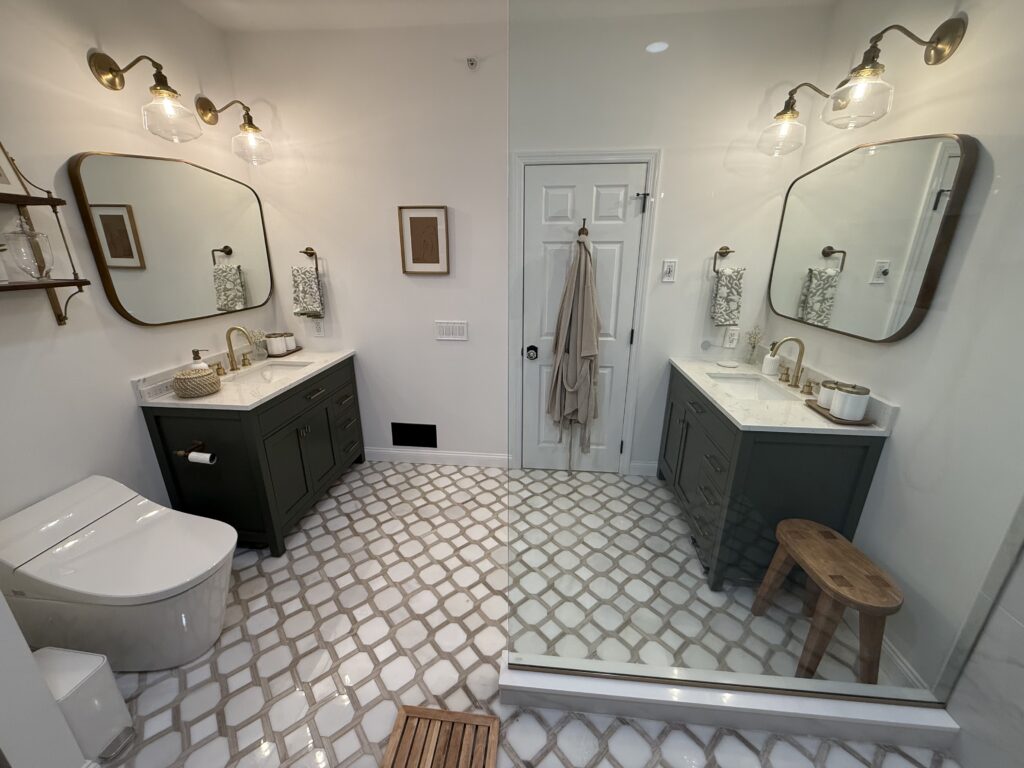
Project Gallery



Why Choose US
Why Work With Meigel Home Improvements?
Expert Craftsmanship You Can Trust
Choosing the right remodeling contractor is essential for a successful project, and Meigel Home Improvements is proud to be a trusted name in the Hauppauge community. Our experienced team brings a keen eye for detail, ensuring that every project is completed to the highest standard. We combine timeless design with modern functionality to create spaces that truly enhance your home and lifestyle.
Reliable, Transparent, and Customer-Focused
When you work with Meigel Home Improvements, you can expect honesty, integrity, and clear communication every step of the way. We pride ourselves on delivering exceptional service and making the remodeling process as seamless as possible for our clients. From the initial consultation to the final walkthrough, we treat your home as if it were our own, ensuring you feel confident and comfortable throughout the project.
Check Out Our Recent Blogs
Occupying approximately 7 square miles as the incorporated village and surrounding hamlet area within the Town of Huntington in Suffolk County roughly 35 miles east of Manhattan, Huntington represents something genuinely multifaceted in Long Island’s suburban landscape—a community of approximately 18,000-19,000 residents in the village and hamlet core whose historic downtown, cultural institutions, waterfront access, diverse economic character, and the particular energy that genuine mixed-use environments create have established Huntington as one of Long Island’s most desirable and livable communities while simultaneously concealing internal tensions between the affluent professionals and established families defining Huntington’s aspirational image and the working-class, immigrant, and economically stressed populations sharing the same geography but accessing fundamentally different versions of Huntington’s quality of life, making Huntington simultaneously Long Island’s most successful example of downtown revitalization creating genuine pedestrian-oriented community character and a community whose success increasingly prices out the economic diversity that authentic community requires.
The name “Huntington” honors the English town in Cambridgeshire from which early settlers emigrated, reflecting the colonial settlement patterns that brought English Puritans to Long Island’s North Shore in 1653—making Huntington one of Long Island’s oldest European settlements with history predating American independence by over a century. This historical depth creates the architectural heritage, institutional continuity, and accumulated civic identity distinguishing Huntington from post-war suburban hamlets lacking comparable historical foundations.
The colonial settlement established the physical framework—Main Street commercial corridor, harbor waterfront, surrounding residential neighborhoods—that contemporary Huntington preserves and builds upon. The subsequent centuries brought agricultural development, maritime commerce through Cold Spring Harbor and Huntington Harbor, the arrival of Long Island Rail Road service enabling Manhattan commuter access, and the gradual transformation from working agricultural and maritime community to bedroom suburb without eliminating the downtown commercial character that planning would have to deliberately create in communities developed without historical precedent.
The revitalization of Huntington’s downtown beginning in the 1980s-1990s—driven by private investment, village governance exercising planning authority, and the organic commercial evolution reflecting demographic demand—created the restaurant, entertainment, retail, and cultural concentration that distinguishes Huntington from suburban communities lacking comparable pedestrian-oriented environments. The concentration of restaurants (50+ dining establishments), bars, live music venues, galleries, boutiques, and services along Main Street and adjacent streets created genuine destination appeal attracting visitors from throughout Long Island and generating the street-level activity that urban planners celebrate and suburban communities struggle to replicate without historical commercial foundations.
The Paramount Theater—historic venue restored to active performance status hosting national touring acts—provides cultural anchor generating regional visitation. Heckscher Museum of Art provides cultural institution creating intellectual gravity. The International Film Festival draws regional attention. These institutions combine with the restaurant and entertainment concentration to create cultural ecosystem unusual for communities of Huntington’s scale.
Contemporary Huntington presents the success and tensions of genuine mixed-use community—downtown vitality creating quality of life and economic activity, waterfront access providing natural amenity, cultural institutions providing intellectual engagement, but property values reflecting desirability increasingly excluding populations without substantial means, demographic tensions between affluent professionals and working-class immigrant populations sharing geography without genuine integration, and governance challenges as village government balances growth accommodation with character preservation.
Demographics
Huntington’s demographic profile requires distinguishing between the incorporated village (approximately 18,000-19,000 residents) and the broader hamlet area, as the geographic designation encompasses both affluent village neighborhoods and more modest surrounding communities.
The village and immediate hamlet population of approximately 18,000-19,000 residents demonstrates the demographic complexity of communities whose success attracts diverse populations seeking different things—affluent professionals seeking cultural amenity and suburban quality, working-class families seeking affordable housing near employment, and immigrant populations seeking affordable Long Island residence with service sector employment access.
Population density in the village core approaches 2,570-2,710 persons per square mile—moderate density reflecting the mix of established residential neighborhoods on generous lots, downtown commercial concentration, and surrounding areas with varied development patterns.
Racial and ethnic composition shows majority white community with meaningful diversity. White residents comprise approximately 72-76% of the population—substantial majority reflecting North Shore demographics while incorporating meaningful diversity. Hispanic or Latino residents represent approximately 15-18%—substantial presence concentrated particularly in portions of the hamlet area rather than affluent village neighborhoods. Black or African American residents comprise approximately 5-7%, Asian residents approximately 4-5%, demonstrating genuine diversity unusual for North Shore communities.
The Hispanic population concentration reflects both the affordable housing portions of the hamlet attracting immigrant workers employed throughout the region and the particular pattern where working-class immigrant populations establish presence in communities where affluent core coexists with affordable peripheral areas—accessing the employment and transit advantages of desirable communities without accessing the quality-of-life amenities that property values reflect.
Age distribution shows relatively diverse profile. Median age approaches 42-45 years—above national averages and reflecting the established family demographics that North Shore communities attract alongside aging longtime residents.
Household income statistics reveal substantial variation within Huntington’s geography. Overall median household income approaches $95,000-110,000 annually—above Long Island averages reflecting affluent village neighborhoods while masking substantial variation between affluent professionals ($200,000+) and working-class immigrant households ($45,000-65,000) sharing the same geographic designation.
Poverty rates reach 7-9% overall—somewhat above North Shore averages—reflecting the economic diversity that mixed-income communities contain. Housing costs demonstrate Huntington’s premium positioning. Single-family homes in desirable village neighborhoods typically range from $600,000-900,000 for standard properties to $1.2-2.5 million for larger estates. Peripheral hamlet areas offer more modest options at $400,000-600,000. Waterfront properties command $2-5 million+.
Property taxes typically range from $12,000-20,000 for standard properties to $30,000-50,000+ for the most valuable estates. Educational attainment shows relatively high levels with bachelor’s degree attainment approaching 48-52%—above Long Island averages and reflecting affluent professional populations, though internal variation where working-class and immigrant populations show substantially lower attainment.
Education
Education in Huntington operates through multiple school districts creating complexity where hamlet location determines school quality as powerfully as any other factor.
Huntington Union Free School District serves the incorporated village and portions of the hamlet, operating elementary schools, J. Taylor Finley Middle School, and Huntington High School, enrolling approximately 3,600-4,000 students. Student demographics show approximately 55-59% white enrollment, 32-35% Hispanic enrollment, 8-10% Black enrollment, 4-5% Asian enrollment—substantial diversity reflecting Huntington’s mixed demographics. Free and reduced-price lunch eligibility approaches 38-43%—meaningful percentage indicating significant economic diversity with substantial working-class and immigrant student populations.
Academic performance shows mixed results reflecting demographic complexity. SAT scores average approximately 1080-1120—above national averages (1050) but substantially below Long Island’s elite districts, reflecting the economic diversity that the district serves. Graduation rates approach 90-93%—near Long Island averages. Per-pupil spending approximates $26,000-29,000 annually—above Long Island averages reflecting the district’s fiscal capacity from affluent property values combined with the needs of economically diverse student population.
South Huntington Union Free School District serves adjacent portions, enrolling approximately 4,500-5,000 students with somewhat higher poverty concentration—free and reduced-price lunch eligibility approaching 52-57%, SAT scores averaging approximately 1000-1030, graduation rates approaching 86-89%—demonstrating weaker performance reflecting greater economic challenges.
Cold Spring Harbor Central School District serves portions of the Huntington area with dramatically stronger performance—SAT scores approaching 1280-1320, graduation rates 97-98%, serving affluent populations with minimal poverty. This stark contrast between districts sharing geographic proximity demonstrates how school district boundaries create educational inequality within single communities.
College attendance among Huntington district graduates likely approaches 78-83%—above working-class district averages but below elite North Shore districts, with students attending varied institutions from community colleges to selective universities.
Tourism
Tourism in Huntington operates at meaningful levels—unusual for Long Island suburban communities—with downtown commercial concentration, cultural institutions, and waterfront access creating genuine destination appeal.
The Paramount Theater anchors cultural tourism, hosting national touring acts in restored 1,500-seat historic venue attracting concertgoers from throughout Long Island. The venue’s booking quality—national acts, comedy shows, tribute concerts—creates regular visitation exceeding what purely local audience would generate.
Main Street restaurant and entertainment concentration creates destination dining appeal, with 50+ restaurants representing varied cuisines generating regional visitation for dining experiences. Weekend evenings bring visitors from throughout western Suffolk and Nassau counties seeking restaurant and nightlife options exceeding what smaller communities provide. The street-level activity creates the urban energy that Long Island’s automobile-dependent suburbs typically lack.
Heckscher Museum of Art provides cultural institution attracting art enthusiasts for rotating exhibitions and permanent collection featuring American art. The museum’s programming—lectures, educational events, community engagement—creates ongoing activity beyond gallery visitation.
Huntington Harbor and Cold Spring Harbor provide waterfront access, boating, and maritime recreation attracting outdoor enthusiasts. The harbors create scenic amenity and recreational opportunity distinguishing Huntington from interior communities lacking comparable natural features.
The International Film Festival generates regional cultural attention through screenings, events, and filmmaker appearances creating temporary tourism concentration during festival periods.
For Huntington’s approximately 18,000-19,000 village and hamlet core residents, the community provides one of Long Island’s genuinely superior quality-of-life environments—walkable downtown creating community gathering space and destination entertainment, cultural institutions providing intellectual engagement, waterfront access offering natural amenity, North Shore positioning providing scenic environment, LIRR access enabling Manhattan commuting, and the particular community character that genuine mixed-use environments with historical depth create, though confronting challenges of escalating property values threatening economic diversity, school district performance varying dramatically across geographic boundaries creating educational inequality, working-class and immigrant populations sharing geography without genuine integration into community quality of life that property values reflect, property tax burdens creating financial stress even for middle-class families, and the fundamental tension between Huntington’s success as desirable destination and the exclusivity that success generates when property values reflecting desirability ultimately filter populations who access community benefits, raising questions about whether genuinely mixed-income communities can sustain economic diversity as success generates property appreciation that eventually excludes the economic range that authentic community requires.
- Bohemia NY
- Brentwood NY
- Centereach NY
- Center Islip NY
- Commack NY
- Deer Park NY
- Dix Hills NY
- East Islip NY
- East Meadow NY
- East Northport NY
- East Norwich NY
- East Patchogue NY
- East Setauket NY
- Farmingdale NY
- Farmingville NY
- Freeport NY
- Glen Head NY
- Great River NY
- Greenlawn NY
- Hauppauge NY
- Hicksville NY
- Holbrook NY
- Holtsville NY
- Huntington NY
- Huntington Station NY
- Islandia NY
- Islip NY
- Islip Terrace NY
- Jericho NY
- Kings Park NY
- Lake Grove NY
- Levittown NY
- Lindenhurst NY
- Massapequa NY
- Massapequa Park NY
- Mastic Beach NY
- Mastic NY
- Medford NY
- Melville NY
- Merrick NY
- Mid Island NY
- Middle Island NY
- Mill Neck NY
- Miller Place NY
- Mount Sinai NY
- Nesconset NY
- North Babylon NY
- North Bellmore NY
- Northport NY
- Oakdale NY
- Ocean Beach NY
- Old Bethpage NY
- Oyster Bay NY
- Patchogue NY
- Plainview NY
- Point Lookout NY
- Port Jefferson NY
- Port Jefferson Station NY
- Rocky Point NY
- Ronkonkoma NY
- Roosevelt NY
- Saint James NY
- Sayville NY
- Seaford NY
- Selden NY