
Expert Home Remodeling in Farmingville, NY
Meigel Home Improvements brings BBB A+ rated craftsmanship and three generations of family expertise to every remodeling project we complete in Farmingville.
Reliable Home Remodeling in Farmingville, NY
Meigel Home Improvements brings BBB A+ rated, family-owned remodeling expertise to Farmingville homeowners who expect quality craftsmanship and dependable service.
We’ve been helping homeowners throughout Farmingville transform their kitchens and bathrooms for years, and we understand what it takes to get the job done right. At Meigel Home Improvements, we bring careful planning, skilled craftsmanship, and honest communication to every project, whether you’re near Waverly Avenue or closer to the neighborhoods around Portion Road. Our team works closely with you from the first consultation through final walkthrough, making sure your remodeling experience reflects the quality and attention to detail your home deserves. We’re a licensed, family-owned company that treats your project with the same care we’d bring to our own homes. If you’re ready to start your kitchen or bathroom renovation, give us a call at (631) 430-5995 for a free estimate.
What We Offer in Farmingville
Home Remodeling in Farmingville, NY
# Body Copy
We’ve worked in Farmingville for years, and we know the housing stock here well. The neighborhoods around Waverly Avenue, portions of Horseblock Road, and the streets near Artist Lake feature predominantly ranch homes, split levels, and Cape Cods built during the post-war housing boom of the 1950s and 1960s. These homes have solid bones, but their original kitchens and bathrooms often show their age with outdated layouts, worn cabinetry, and old plumbing fixtures that waste water and drive up utility costs.
Remodeling these spaces delivers real returns for Farmingville homeowners. Updated kitchens with improved workflow and modern appliances make daily life easier, while renovated bathrooms add comfort and functionality that families actually use. Many of the homes in this community still have small, compartmentalized kitchens and bathrooms with just one sink, which doesn’t work for how people live today. We approach every project with an understanding of how these mid-century homes were built, and we know how to update them properly while respecting their structure. Our team handles everything from design through final installation, and we maintain clear communication throughout the process so you know exactly what to expect.
—
# Meta Description
Kitchen and bathroom remodeling in Farmingville, NY from Meigel Home Improvements. Trusted local contractors serving your neighborhood. Call today for a consultation.
“`html
What does a kitchen remodel cost in Farmingville, NY?
Kitchen remodeling costs in Farmingville typically range from $25,000 to $75,000 depending on the scope of work, materials selected, and the size of your kitchen. A minor refresh with new cabinets, countertops, and appliances usually falls on the lower end, while a full gut renovation with custom cabinetry, high-end finishes, and layout changes will be closer to the upper range. We provide detailed estimates after visiting your home to understand your specific goals and existing conditions.
How long does a bathroom remodel take in Farmingville?
Most bathroom remodels in Farmingville take between two to four weeks from start to finish, though the timeline depends on the project’s complexity and whether we’re working with the existing layout or reconfiguring plumbing and fixtures. A straightforward update with new tile, vanity, and fixtures typically stays closer to two weeks, while a complete renovation involving moving walls or upgrading electrical and plumbing systems may extend to four weeks or slightly longer. We coordinate all trades and maintain consistent communication so you know exactly where we are in the process.
Do I need permits for kitchen or bathroom remodeling in New York?
Permits are required in New York for most kitchen and bathroom remodels that involve plumbing, electrical work, or structural changes, and we handle the entire permit process with the Town of Brookhaven for projects in Farmingville. Even cosmetic updates may trigger permit requirements if they involve relocating fixtures or upgrading service panels. We pull all necessary permits as part of our service and ensure that inspections are scheduled and passed so your project is fully compliant with local building codes.
How can I verify a contractor is licensed in Suffolk County?
You can verify a contractor’s license in Suffolk County by checking with the Suffolk County Department of Consumer Affairs, which maintains records of registered home improvement contractors and their license status. We are fully licensed and insured in Suffolk County, and we’re happy to provide our license number and proof of insurance before any work begins. It’s always smart to confirm that your contractor carries both liability insurance and workers’ compensation coverage to protect you from potential issues during the project.
“`
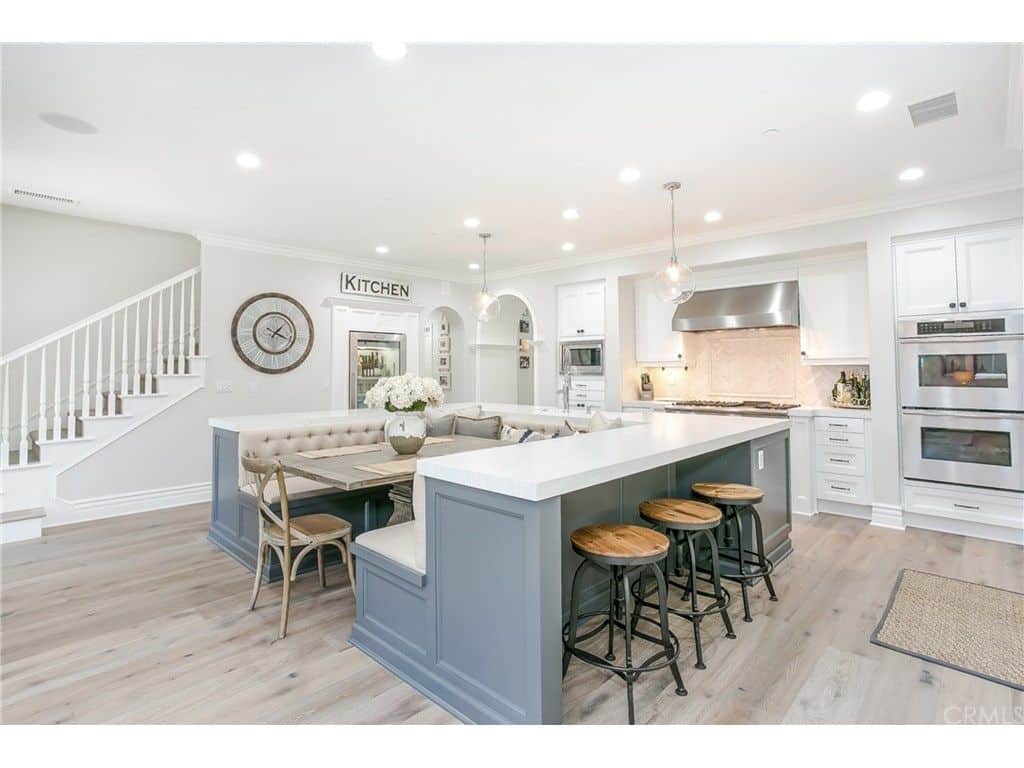
Project Gallery


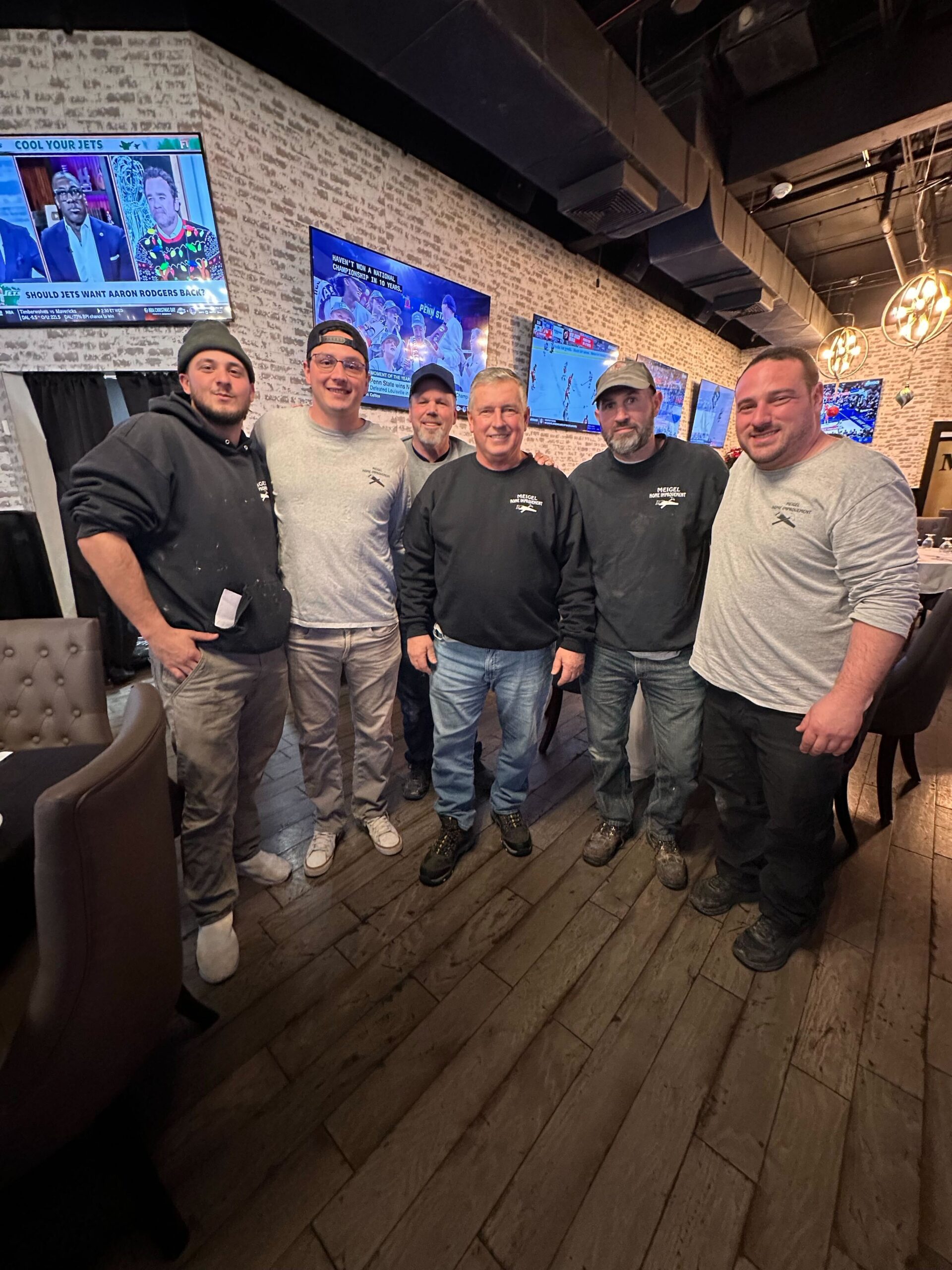
Why Choose US
Why Work With Meigel Home Improvements?
Expert Craftsmanship You Can Trust
Choosing the right remodeling contractor is essential for a successful project, and Meigel Home Improvements is proud to be a trusted name in the Hauppauge community. Our experienced team brings a keen eye for detail, ensuring that every project is completed to the highest standard. We combine timeless design with modern functionality to create spaces that truly enhance your home and lifestyle.
Reliable, Transparent, and Customer-Focused
When you work with Meigel Home Improvements, you can expect honesty, integrity, and clear communication every step of the way. We pride ourselves on delivering exceptional service and making the remodeling process as seamless as possible for our clients. From the initial consultation to the final walkthrough, we treat your home as if it were our own, ensuring you feel confident and comfortable throughout the project.
Check Out Our Recent Blogs
Occupying approximately 9.8 square miles in central Suffolk County within the Town of Brookhaven roughly 55 miles east of Manhattan, Farmingville represents something genuinely significant in American immigration history—a hamlet of approximately 16,000-17,000 residents whose early 2000s emergence as national flashpoint for anti-immigration sentiment, day laborer conflicts, hate crimes, and community polarization generated documentary film (“Farmingville,” 2004), congressional hearings, national media coverage, and the particular notoriety that communities acquire when local tensions crystallize broader national debates, whose subsequent trajectory from crisis to uneasy demographic accommodation demonstrates how communities navigate immigration-driven change without resolving underlying tensions about belonging, economic competition, cultural transformation, and the fundamental question of who American suburbs serve, and whose contemporary character as working-class community with substantial Hispanic presence, modest schools, limited amenities, and the particular wariness that communities develop after traumatic public conflicts create conditions where Farmingville exists in uncomfortable equilibrium—neither the immigration battleground that national media depicted nor the successfully integrated diverse community that optimistic narratives suggest, but rather working-class hamlet where different populations share geography without achieving the genuine community that shared civic life requires.
The name “Farmingville” reflects the agricultural heritage that characterized central Suffolk County through most of its history before post-war suburban development transformed farmland into residential subdivisions, retail corridors, and light industrial facilities that contemporary Farmingville encompasses. The area remained rural and sparsely populated through the mid-20th century, with farming operations, nurseries, and agricultural businesses defining the economic and physical landscape.
The post-war suburban boom brought residential subdivision development creating the modest ranch, cape, and split-level homes on modest lots (typically 0.15-0.25 acres) housing working-class families employed throughout central Suffolk County during the 1950s-1970s. The construction of Long Island Expressway (I-495) nearby created transportation access enabling commuter connections while simultaneous commercial and light industrial development along Horseblock Road and other corridors created local employment and commercial infrastructure.
The dramatic demographic transformation beginning in the 1990s brought large-scale Central American immigration—particularly from Mexico and El Salvador—as day laborers and construction workers arrived seeking employment in Long Island’s booming construction, landscaping, and service industries. Day laborers congregating at Farmingville corners seeking work became visible presence generating conflict with established residents concerned about neighborhood character, overcrowding in residential properties, and the cultural changes immigration brought to previously homogeneous community.
The crisis escalated dramatically in September 2000 when two Mexican day laborers were lured to an abandoned building and brutally attacked by two men posing as contractors—a hate crime generating national outrage and bringing national media, civil rights organizations, and congressional attention to Farmingville. The attack crystallized existing tensions, with established residents organizing anti-immigration groups (Sachem Quality of Life organization) while immigrant advocates responded with pro-immigrant organizing, creating public polarization documented in the award-winning 2004 documentary “Farmingville” that brought international attention to the community’s struggles.
The subsequent two decades have brought gradual normalization without resolution—day laborer gathering has dispersed somewhat, national media attention has moved elsewhere, population has stabilized with substantial Hispanic presence, and the acute crisis has subsided into chronic tension where different populations coexist without genuine integration, where established residents maintain wariness toward demographic change, and where immigrant populations have established sufficient community to remain while facing persistent economic marginalization and social exclusion.
Contemporary Farmingville presents the complicated reality of post-crisis normalization—neither the acute emergency that national attention depicted nor successful integration that optimistic narratives suggest, but rather working-class hamlet navigating demographic change without the resources, institutions, or political will enabling genuine community formation across cultural lines.
Demographics
Farmingville’s demographic profile reveals working-class community with substantial Hispanic presence achieving demographic stability following the acute crisis period while maintaining the economic limitations and social tensions that post-crisis normalization leaves unresolved.
The population of approximately 16,000-17,000 residents has remained relatively stable over the past decade following the dramatic changes of the 1990s-2000s immigration period, with the acute population influx moderating into more gradual demographic change through household formation, family reunification, and continued modest immigration.
Population density approaches 1,633-1,735 persons per square mile—moderate for central Suffolk County and reflecting single-family home subdivisions on modest lots with commercial areas, light industrial facilities, and undeveloped parcels moderating overall density.
Racial and ethnic composition shows white majority with substantial Hispanic presence reflecting the immigration-driven transformation. White residents comprise approximately 62-66% of the population—declining from near-total dominance in 1990 but maintaining majority status. Hispanic or Latino residents represent approximately 28-32%—substantial presence reflecting sustained immigration and community establishment over three decades. Black or African American residents comprise approximately 4-5%, Asian residents approximately 2-3%, demonstrating modest diversity.
The Hispanic population concentration reflects both the particular history where Farmingville became destination for day laborers and construction workers and the network effects where established communities attract additional immigration from same origin countries. However, the visible day laborer presence that characterized the early 2000s has diminished as employment networks matured, enforcement increased, and workers dispersed to other communities, reducing the acute visibility that generated initial conflicts.
Geographic sorting within Farmingville creates variation where different neighborhoods show somewhat different compositions—established residential sections maintaining higher white percentages while areas near commercial corridors and rental housing concentrations show greater Hispanic presence. This internal sorting creates parallel communities within the hamlet sharing geographic boundaries without achieving social integration.
Age distribution shows working-class suburban profile. Median age approaches 37-40 years—near national averages and reflecting mix of aging white longtime residents, working-age Hispanic families with children, and younger households across communities.
Household income statistics reveal working-class character. Median household income approaches $72,000-82,000 annually—below Long Island averages ($100,000-115,000) and reflecting concentration of construction, landscaping, service sector, retail, and trades employment for both white working-class and Hispanic immigrant populations. Many Hispanic households work multiple low-wage jobs to maintain suburban residence despite wages insufficient for comfortable Long Island existence.
Poverty rates reach 9-12%—above Long Island averages indicating meaningful economic distress concentrated particularly among Hispanic immigrant families. Child poverty approaches 14-18%, demonstrating families with children face particular economic vulnerability. Housing costs demonstrate Farmingville’s comparative affordability. Single-family homes typically range from $290,000-390,000 for modest properties to $430,000-540,000 for larger houses—below Long Island averages creating affordability for working-class families.
Property taxes typically range from $8,500-13,000 annually. Educational attainment shows working-class patterns with bachelor’s degree attainment approaching 24-28%—below national averages reflecting populations where financial constraints and immigration circumstances limit credential pursuit.
Education
Education in Farmingville operates through Sachem Central School District, one of Suffolk County’s largest districts serving Farmingville alongside Holbrook, Lake Ronkonkoma portions, and surrounding communities. The district operates numerous elementary schools feeding into Sachem High School North and East, enrolling approximately 12,000-13,000 students across all grades.
Student demographics show approximately 60-64% white enrollment, 28-32% Hispanic enrollment, 4-5% Black enrollment, 2-3% Asian enrollment. Free and reduced-price lunch eligibility approaches 35-42%—substantial percentage indicating significant economic diversity with many students experiencing disadvantage. English Language Learner populations approach 15-20% in some Farmingville-area schools—meaningful concentrations requiring intensive language instruction and specialized resources.
Academic performance shows below-average results by Long Island standards. SAT scores average approximately 1030-1060—near national averages (1050) but substantially below Long Island’s stronger performers. Graduation rates approach 88-91%—below Long Island averages indicating meaningful completion challenges particularly among Hispanic immigrant-background students facing language barriers and economic pressures.
The district faces challenges serving substantial ELL populations, addressing poverty impacts on learning, managing large geographic area with numerous schools, and maintaining educational quality across diverse student needs. Per-pupil spending approximates $21,000-23,000 annually—below Long Island averages reflecting modest property tax base.
Teacher recruitment and retention creates ongoing challenges as educators seek positions in less challenging districts offering comparable salaries. Advanced Placement offerings remain limited, with core subject courses available without the comprehensive menus characterizing affluent districts. College attendance among graduates likely approaches 62-67%—below Long Island averages, with students predominantly attending Suffolk County Community College and SUNY schools.
The schools reflect and reinforce community divisions—white and Hispanic students attending same buildings without necessarily achieving meaningful integration, academic tracking creating de facto racial sorting, and the particular tensions that diverse schools serving polarized communities navigate without institutional resolution of underlying conflicts.
Tourism
Tourism in Farmingville operates at virtually zero despite the hamlet’s historical national significance—the 2004 documentary film generating awareness among academic, policy, and immigration advocacy communities without creating visitor interest in the community itself.
The hamlet possesses no conventional tourist attractions, cultural institutions, historic sites, waterfront access, or distinctive features generating visitation. Locations featured in the documentary—day laborer gathering corners, community meeting halls, residential neighborhoods—exist as ordinary suburban spaces without interpretive infrastructure or visitor services.
Bald Hill Cultural Center and Amphitheater, located adjacent to Farmingville along the Long Island Expressway, provides concert venue and cultural programming attracting regional visitors for performances rather than Farmingville specifically. The facility serves as regional entertainment venue without connection to surrounding community.
For Farmingville’s approximately 16,000-17,000 residents, the hamlet provides working-class Long Island suburban existence shaped by the particular history of immigration crisis and uneasy normalization—housing costs below surrounding community averages enabling working-class homeownership, adequate though below-average schools providing educational foundation without excellence, commercial services along Horseblock Road meeting functional needs, light industrial and construction employment providing modest wages for both established residents and immigrant populations, and the uncomfortable equilibrium that communities achieve following acute conflict without resolving underlying tensions, confronting ongoing challenges of persistent cultural divisions between established residents and immigrant populations who share geography without achieving genuine community, schools navigating demographic complexity without sufficient resources, economic stress affecting both white working-class populations experiencing wage competition and Hispanic immigrant families working multiple jobs for survival, limited governance capacity as unincorporated hamlet preventing local policy responses to community-specific needs, and the particular psychological legacy of national crisis creating wariness and defensiveness that colors community interactions long after acute emergency subsides, making Farmingville both important historical case study in immigration conflict dynamics and cautionary tale about how communities absorb demographic change without achieving integration, maintaining uncomfortable coexistence that serves neither established residents’ desires for community stability nor immigrant populations’ needs for genuine belonging and opportunity.
- Bohemia NY
- Brentwood NY
- Centereach NY
- Center Islip NY
- Commack NY
- Deer Park NY
- Dix Hills NY
- East Islip NY
- East Meadow NY
- East Northport NY
- East Norwich NY
- East Patchogue NY
- East Setauket NY
- Farmingdale NY
- Farmingville NY
- Freeport NY
- Glen Head NY
- Great River NY
- Greenlawn NY
- Hauppauge NY
- Hicksville NY
- Holbrook NY
- Holtsville NY
- Huntington NY
- Huntington Station NY
- Islandia NY
- Islip NY
- Islip Terrace NY
- Jericho NY
- Kings Park NY
- Lake Grove NY
- Levittown NY
- Lindenhurst NY
- Massapequa NY
- Massapequa Park NY
- Mastic Beach NY
- Mastic NY
- Medford NY
- Melville NY
- Merrick NY
- Mid Island NY
- Middle Island NY
- Mill Neck NY
- Miller Place NY
- Mount Sinai NY
- Nesconset NY
- North Babylon NY
- North Bellmore NY
- Northport NY
- Oakdale NY
- Ocean Beach NY
- Old Bethpage NY
- Oyster Bay NY
- Patchogue NY
- Plainview NY
- Point Lookout NY
- Port Jefferson NY
- Port Jefferson Station NY
- Rocky Point NY
- Ronkonkoma NY
- Roosevelt NY
- Saint James NY
- Sayville NY
- Seaford NY
- Selden NY
- Shirley NY
- Shoreham NY
- Smithtown NY
- Sound Beach NY
- Stony Brook NY
- Syosset NY
- Uniondale NY
- Wantagh NY
- West Babylon NY
- West Islip NY
- West Sayville NY
- Westbury NY
- Woodbury NY
- Wyandanch NY
- Yaphank NY