
Professional Home Remodeling in Holbrook, NY
Meigel Home Improvements brings BBB A+ rated, family-owned craftsmanship to every Holbrook remodeling project with the experience and care your home deserves.
Trusted Home Remodeling in Holbrook, NY
Meigel Home Improvements brings BBB A+ rated craftsmanship and trusted family values to every remodeling project we complete in Holbrook, NY.
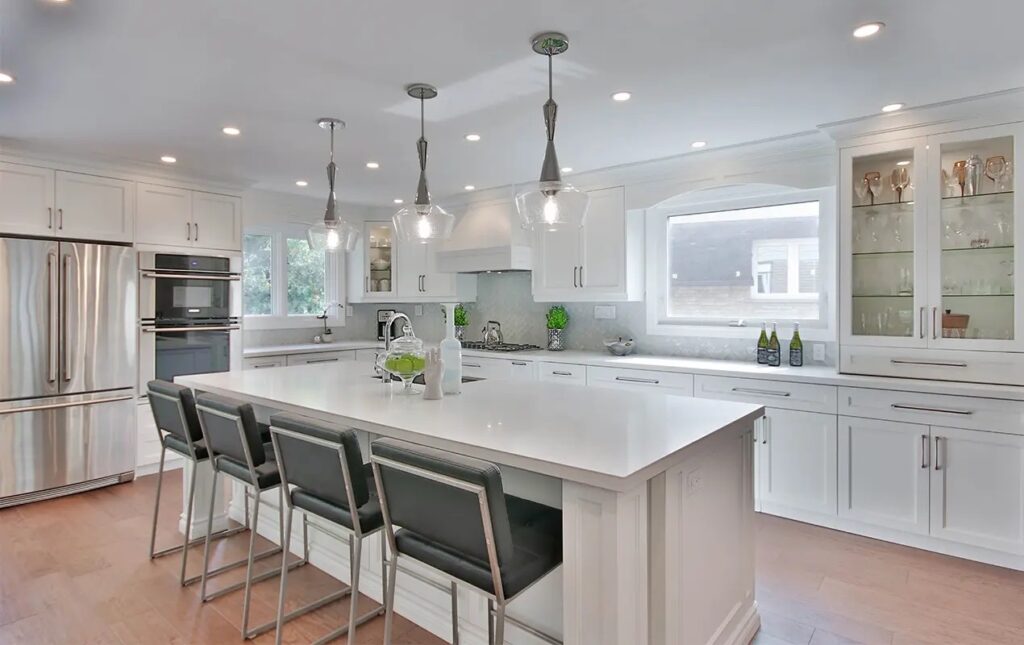
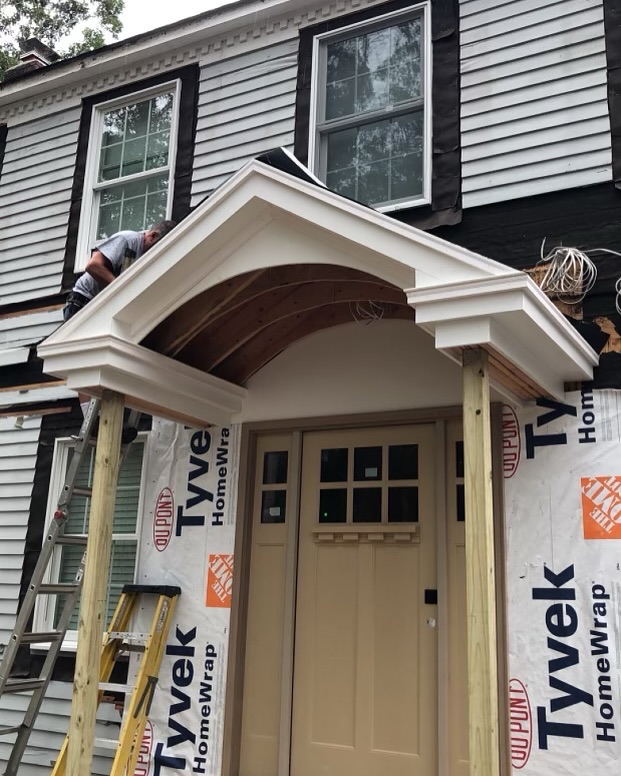
We’ve been transforming kitchens and bathrooms throughout Holbrook for years, and we understand what homeowners in neighborhoods like Springmeadow and near Holbrook Road are looking for when it comes to quality remodeling. At Meigel Home Improvements, we treat every project with the care and attention it deserves, whether you’re updating a tired kitchen or creating a more functional bathroom. Our team brings honest craftsmanship and reliable service to each job, and we work closely with you from the initial design through the final walkthrough. Families around Timber Ridge and throughout Holbrook trust us because we show up on time, communicate clearly, and stand behind our work. If you’re ready to start your remodeling project, call us at (631) 430-5995 for a free estimate.
Remodeling Solutions for Holbrook
Remodeling Homes in Holbrook
**Body Copy:**
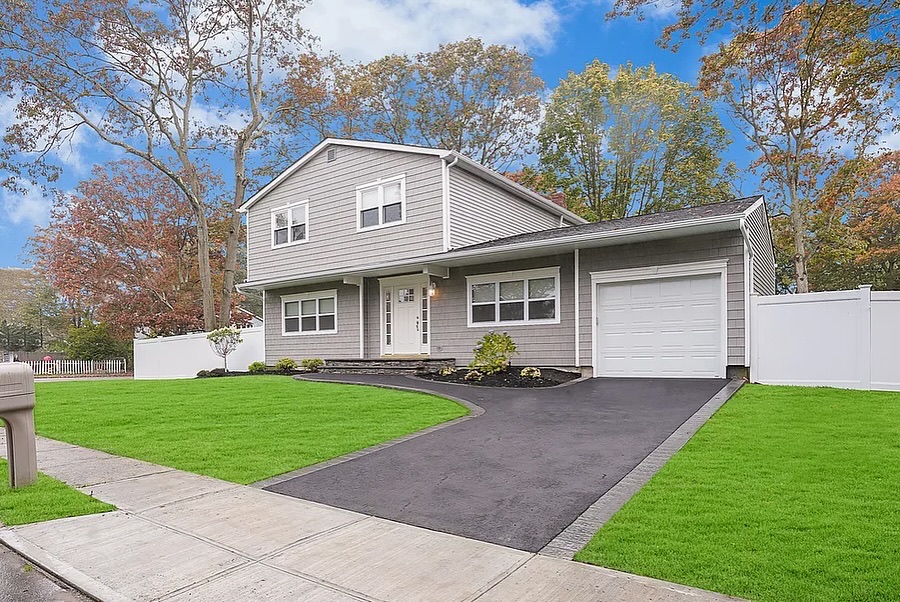
We’ve completed kitchen and bathroom remodels throughout Holbrook for over two decades, and we understand what makes homes in this community unique. The neighborhoods around Springmeadow and Furrows Road feature primarily ranch and split-level homes built during the post-war housing boom of the 1950s and 1960s. These well-built homes have solid foundations, but their original kitchens and bathrooms often show their age with outdated layouts, worn cabinetry, and inefficient plumbing fixtures.
Homeowners near Holbrook Road and in the tree-lined streets south of Veteran’s Memorial Highway consistently turn to us when they’re ready to modernize these spaces. The ranch homes common throughout Holbrook benefit tremendously from kitchen remodels that open up compartmentalized floor plans and improve flow between living areas. Bathroom updates in these homes typically address small vanities, limited storage, and aging tile work that no longer meets current standards.
Remodeling your kitchen or bathroom in Holbrook isn’t just about aesthetics. It’s about making a practical investment in a home that has decades of life ahead of it. We bring the right combination of craftsmanship and local knowledge to every project we take on.
—
**Meta Description:**
Kitchen and bathroom remodeling in Holbrook, NY. Meigel Home Improvements updates ranch and split-level homes. Call for your free estimate.
What does a kitchen remodel cost in Holbrook, NY?
Kitchen remodeling costs in Holbrook typically range from $25,000 to $75,000 depending on the scope of work, materials selected, and the size of your kitchen. A minor refresh with new cabinets, countertops, and appliances usually falls on the lower end, while a full gut renovation with custom cabinetry, high-end finishes, and layout changes will be higher. We provide detailed estimates after visiting your home to understand your specific goals and the condition of your existing space.
How long does a bathroom remodel take in Holbrook?
Most bathroom remodels in Holbrook take between two to four weeks from start to finish, though this timeline depends on the project’s complexity and whether we’re working with the existing layout or reconfiguring plumbing and electrical. A straightforward update with new fixtures, tile, and vanity can be completed in about two weeks, while a complete renovation involving moving walls or upgrading all systems may take closer to a month. We establish a clear timeline during our planning phase and keep you informed throughout the process.
Do I need permits for kitchen or bathroom remodeling in Holbrook, NY?
Permits are required in Holbrook for most kitchen and bathroom remodels that involve plumbing, electrical work, or structural changes, and they must be obtained through the Town of Islip Building Department. Simple cosmetic updates like painting or replacing cabinets without altering utilities typically don’t require permits, but any work involving moving walls, relocating fixtures, or upgrading electrical panels does. We handle all permit applications and inspections as part of our service, ensuring your project meets all local building codes and New York State regulations.
How do I verify a contractor is licensed in Suffolk County?
In Suffolk County, home improvement contractors must be licensed through the Suffolk County Department of Consumer Affairs, and you can verify their license status by visiting the county’s online license lookup tool or calling their office directly. You should also confirm that any contractor you hire carries current workers’ compensation and liability insurance, which protects you from liability if something goes wrong during your project. We maintain all required licenses and insurance coverage, and we’re happy to provide documentation before we begin any work on your Holbrook home.
Also Serving Near Holbrook
Project Gallery



Why Choose US
Why Work With Meigel Home Improvements?
Expert Craftsmanship You Can Trust
Choosing the right remodeling contractor is essential for a successful project, and Meigel Home Improvements is proud to be a trusted name in the Hauppauge community. Our experienced team brings a keen eye for detail, ensuring that every project is completed to the highest standard. We combine timeless design with modern functionality to create spaces that truly enhance your home and lifestyle.
Reliable, Transparent, and Customer-Focused
When you work with Meigel Home Improvements, you can expect honesty, integrity, and clear communication every step of the way. We pride ourselves on delivering exceptional service and making the remodeling process as seamless as possible for our clients. From the initial consultation to the final walkthrough, we treat your home as if it were our own, ensuring you feel confident and comfortable throughout the project.
Check Out Our Recent Blogs
Occupying approximately 9.4 square miles in central Suffolk County within the Town of Islip roughly 50 miles east of Manhattan, Holbrook represents something genuinely ordinary in Long Island’s suburban landscape—a hamlet of approximately 27,000-28,000 residents whose character as solidly working-class to lower-middle-class community developed through post-war suburban expansion creating dense subdivisions on small lots, whose identity derives from neither civic institutions nor cultural distinctiveness nor waterfront amenity nor educational excellence but from the functional utility of affordable housing enabling working-class families to establish Long Island residence within reasonable commuting distance of regional employment, whose commercial development along Sunrise Highway and Patchogue-Holbrook Road creates strip commercial environment serving neighborhood needs without aesthetic distinction, and whose particular position within central Suffolk County—lacking the North Shore cachet suggesting affluence, the South Shore waterfront creating property premiums, or the proximity to Manhattan enabling commuter identity—creates community defined primarily by what it lacks rather than what it possesses, making Holbrook the quintessential Long Island working-class hamlet that exists primarily as residential backdrop for populations serving regional economy while receiving neither recognition nor resources that more desirable communities command.
The name “Holbrook” honors Josiah Holbrook, 19th-century educator and founder of the American Lyceum movement promoting adult education through public lectures—an ironic designation given that contemporary Holbrook demonstrates limited educational distinction and minimal connection to the intellectual culture that the namesake championed. The area remained agricultural through the early 20th century, with farming operations and rural character persisting until post-war suburban development reached central Suffolk County.
The post-war suburban boom transformed Holbrook through residential subdivision development creating the modest ranch, cape, and split-level homes on small lots (typically 0.1-0.15 acres) that would house working-class families pursuing suburban homeownership through the 1950s-1970s. The construction of Long Island Expressway (I-495) and Sunrise Highway created transportation infrastructure enabling commuter access to regional employment while creating commercial corridors that strip development followed.
Holbrook’s status as unincorporated hamlet within Islip township limits governance capacity, preventing the zoning controls, design standards, and service quality that incorporated villages exercise. This governance limitation contributed to strip commercial development patterns, modest housing stock without architectural standards, and the generic suburban character that planning controls might have moderated.
Contemporary Holbrook presents working-class suburban reality—functional affordability enabling residence for populations without economic alternatives, adequate though unremarkable schools, modest commercial amenities, and the particular ordinariness that characterizes communities serving essential metropolitan functions without receiving recognition or investment that desirable communities command.
Demographics
Holbrook’s demographic profile reveals working-class to lower-middle-class population experiencing gradual demographic change through Hispanic immigration while maintaining predominantly white character typical of central Suffolk County.
The population of approximately 27,000-28,000 residents has remained relatively stable over recent decades, with modest demographic changes reflecting gradual diversification and household turnover as economically mobile families depart for more desirable communities while working-class newcomers arrive.
Population density approaches 2,872-2,979 persons per square mile—moderate suburban density reflecting small lot sizes and dense post-war development creating neighborhood character more compact than typical suburban sprawl.
Racial and ethnic composition shows white majority with modest diversity. White residents comprise approximately 78-82% of the population—substantial majority declining gradually from near-total homogeneity. Hispanic or Latino residents represent approximately 12-15%—meaningful presence reflecting immigration attracted by affordable housing. Black or African American residents comprise approximately 4-5%, Asian residents approximately 2-3%, demonstrating modest diversity typical of working-class central Suffolk communities.
Age distribution shows mature suburban profile. Median age approaches 40-43 years—above national averages reflecting aging demographics where longtime residents age in place while younger families face affordability challenges despite relatively modest housing costs.
Household income statistics reveal working-class to lower-middle-class character. Median household income approaches $72,000-82,000 annually—below Long Island averages ($100,000-115,000) and reflecting concentration of service sector, trades, retail, transportation, and modest professional employment. Many households require dual incomes to maintain suburban residence despite Holbrook’s relative affordability within Long Island context.
Poverty rates reach 8-11%—above Long Island averages indicating meaningful economic distress. Housing costs demonstrate Holbrook’s comparative affordability. Single-family homes typically range from $280,000-370,000 for modest ranch and cape properties to $400,000-500,000 for larger split-levels and colonials—below Long Island averages creating accessibility for working-class families.
Property taxes typically range from $8,000-12,000 annually—below Long Island averages reflecting modest property values though still consuming substantial portions of working-class income. Educational attainment shows working-class patterns with bachelor’s degree attainment approaching 24-28%—below national averages (33%) and Long Island norms reflecting populations where immediate employment and financial constraints limit credential pursuit.
Education
Education in Holbrook operates through Sachem Central School District, one of Suffolk County’s largest districts serving Holbrook alongside Lake Ronkonkoma, Ronkonkoma portions, Farmingville, and surrounding communities. The district operates numerous elementary schools, middle schools, and high schools (Sachem High School North and East), enrolling approximately 12,000-13,000 students—Suffolk County’s largest district by geographic area served.
Student demographics show approximately 70-74% white enrollment, 18-21% Hispanic enrollment, 4-5% Black enrollment, 3-4% Asian enrollment—modest diversity reflecting the working-class communities served. Free and reduced-price lunch eligibility approaches 32-37%—substantial percentage indicating significant economic diversity with meaningful working-class and lower-income student populations.
Academic performance shows below-average results by Long Island standards. SAT scores average approximately 1030-1060—near national averages (1050) but substantially below Long Island’s stronger performers. Graduation rates approach 88-91%—below Long Island averages indicating meaningful completion challenges. New York State accountability ratings reflect adequate but below-standard performance.
Per-pupil spending approximates $21,000-23,000 annually—below Long Island averages reflecting the more modest property tax base from working-class housing values spread across large geographic area. The spending enables basic operations without comprehensive programming, extensive support services, or resources characterizing well-funded districts.
The district’s large size creates bureaucratic challenges where individual student needs get lost in institutional scale, where resource allocation across numerous schools creates inconsistency, and where administrative overhead consumes resources that smaller districts direct more efficiently toward instruction. Teachers navigate large class sizes, diverse student needs, and constrained resources creating challenging conditions.
Advanced Placement offerings remain limited compared to affluent districts, with core subject courses available but lacking comprehensive menus. College preparatory curriculum exists alongside practical pathways serving students whose post-graduation trajectories include trades, community college, and immediate workforce entry. The district serves genuinely diverse economic populations requiring varied support while operating with budgets insufficient for comprehensive service provision.
College attendance among graduates likely approaches 62-67%—below Long Island averages, with students predominantly attending Suffolk County Community College, SUNY schools, and regional institutions. Trade and vocational pathways represent meaningful options for students pursuing skilled trades providing stable employment without four-year degree requirements.
Tourism
Tourism in Holbrook operates at zero—the hamlet possesses no attractions, cultural institutions, historic sites, waterfront access, distinctive character, or features generating outside visitation. The residential subdivisions, commercial strips along Sunrise Highway, and working-class character create community functioning purely for residents without visitor appeal.
For Holbrook’s approximately 27,000-28,000 residents, the hamlet provides working-class Long Island suburban existence—housing costs below surrounding community averages enabling homeownership for families without economic alternatives, adequate though unremarkable schools providing educational foundation without excellence characterizing stronger districts, safe neighborhoods generally avoiding severe social dysfunction concentrating in more distressed communities, convenient commercial services meeting functional needs, and the particular dignity of working-class suburban homeownership representing genuine achievement for families building stability despite financial constraints, though confronting ongoing challenges of property taxes consuming substantial working-class income portions despite modest home values, dual-income requirements for maintaining suburban residence, schools serving economically diverse populations with limited resources creating below-average outcomes, aging demographics creating community stability but limiting vitality, automobile dependence requiring vehicle ownership for all activities, commercial strip character lacking pedestrian appeal or community gathering spaces, limited LIRR access (nearest station requires driving) creating commuting challenges, and the fundamental invisibility of working-class communities in metropolitan geography where recognition, investment, and attention concentrate in affluent communities while unglamorous hamlets like Holbrook bear essential metropolitan functions housing the workforce that regional economy requires while remaining perpetually overlooked in the civic imagination that celebrates suburban success stories while ignoring the working-class foundations enabling those successes.
- Bohemia NY
- Brentwood NY
- Centereach NY
- Center Islip NY
- Commack NY
- Deer Park NY
- Dix Hills NY
- East Islip NY
- East Meadow NY
- East Northport NY
- East Norwich NY
- East Patchogue NY
- East Setauket NY
- Farmingdale NY
- Farmingville NY
- Freeport NY
- Glen Head NY
- Great River NY
- Greenlawn NY
- Hauppauge NY
- Hicksville NY
- Holbrook NY
- Holtsville NY
- Huntington NY
- Huntington Station NY
- Islandia NY
- Islip NY
- Islip Terrace NY
- Jericho NY
- Kings Park NY
- Lake Grove NY
- Levittown NY
- Lindenhurst NY
- Massapequa NY
- Massapequa Park NY
- Mastic Beach NY
- Mastic NY
- Medford NY
- Melville NY
- Merrick NY
- Mid Island NY
- Middle Island NY
- Mill Neck NY
- Miller Place NY
- Mount Sinai NY
- Nesconset NY
- North Babylon NY
- North Bellmore NY
- Northport NY
- Oakdale NY
- Ocean Beach NY
- Old Bethpage NY
- Oyster Bay NY
- Patchogue NY
- Plainview NY
- Point Lookout NY
- Port Jefferson NY
- Port Jefferson Station NY
- Rocky Point NY
- Ronkonkoma NY
- Roosevelt NY
- Saint James NY
- Sayville NY
- Seaford NY
- Selden NY
- Shirley NY
- Shoreham NY
- Smithtown NY
- Sound Beach NY
- Stony Brook NY
- Syosset NY
- Uniondale NY
- Wantagh NY
- West Babylon NY
- West Islip NY
- West Sayville NY
- Westbury NY
- Woodbury NY
- Wyandanch NY
- Yaphank NY