
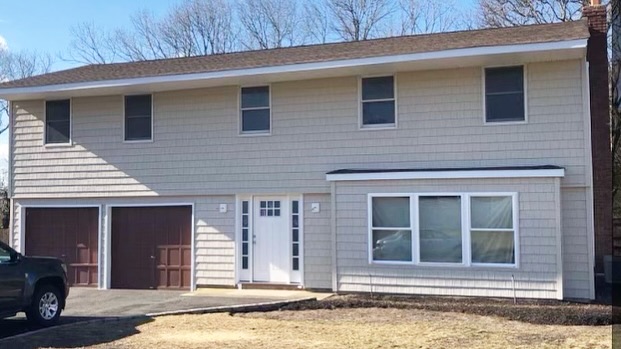
Multi-generational living is accelerating on Long Island. Aging parents who need daily support, adult children returning home, and families who want to keep grandparents close without sacrificing anyone’s independence — these scenarios drive one of the most requested home addition types: the in-law suite.
Building a self-contained living space within or attached to an existing home involves zoning regulations, construction considerations, and design decisions that differ from a standard room addition. This guide covers the zoning landscape in Suffolk County, realistic cost ranges, and the practical details that determine whether an in-law suite will work on your property.
What Qualifies as an In-Law Suite
An in-law suite (also called an accessory dwelling unit or ADU in zoning language) is a self-contained living space with a private bedroom, bathroom, and kitchenette or full kitchen. Most in-law suites include a separate entrance so the occupant can come and go independently.
Common configurations:
- Attached addition: A new wing built onto the existing home with its own entrance, bedroom, bathroom, kitchenette, and small living area
- Above-garage conversion: Converting space above an attached or detached garage into a finished apartment
- Basement conversion: Finishing a walkout or garden-level basement into a self-contained unit with egress windows and a separate entrance
- Interior conversion: Repurposing existing rooms (a ground-floor bedroom, den, and half bath) into a connected suite with a kitchenette addition
Each configuration carries different cost implications, zoning treatment, and construction complexity.
Zoning Rules for In-Law Suites in Suffolk County
Zoning is the single biggest variable in whether an in-law suite project moves forward. Suffolk County towns regulate accessory dwelling units through their individual zoning codes, and the rules vary significantly from one municipality to the next.
Town-by-Town Variation
Some Suffolk County towns allow accessory apartments by right in certain zoning districts, while others require a special use permit or conditional use approval. A few restrict accessory apartments to family members only or impose owner-occupancy requirements (the homeowner must live in either the primary home or the accessory unit).
General zoning requirements across most Suffolk County towns:
- The property must be in a residential zoning district
- The primary dwelling must remain the larger unit
- The accessory unit typically cannot exceed 33% to 40% of the primary home’s habitable area (or a fixed cap, often 600 to 800 square feet)
- Adequate off-street parking must be provided (usually one to two additional spaces)
- The lot must meet minimum size requirements (varies by town and zoning district)
- The unit must comply with all setback, lot coverage, and building code requirements
New York State ADU Legislation
New York State has been expanding ADU-friendly legislation in recent years, pushing municipalities to relax restrictions that previously made accessory dwelling units difficult to build. Homeowners should check with their town’s building department for the most current regulations, as rules adopted even within the past 12 months may have changed what is permissible on your lot.
The Permit Process
Typical steps for permitting an in-law suite:
- Zoning pre-check with the building department to confirm the project is allowed on your lot
- Architectural plans prepared showing the suite layout, egress, ventilation, and separation from the primary dwelling
- Building permit application with structural, electrical, and plumbing plans
- Health department review if a separate septic connection or additional septic capacity is required (common in non-sewered areas of Suffolk County)
- Inspections during construction at standard milestones (foundation, framing, mechanical rough-in, final)
- Certificate of occupancy issued upon passing final inspection
Septic capacity is a frequently overlooked constraint on Long Island. In areas without municipal sewer service, the existing septic system may not have capacity for an additional dwelling unit. A septic engineer can evaluate the system and determine whether an upgrade or expansion is required — adding $10,000 to $30,000 to the project cost if a new system is needed.
Realistic Cost Ranges
In-law suite costs on Long Island vary widely based on configuration, finish level, and whether the space requires new foundation work or builds within the existing structure.
| Configuration | Typical Cost Range (Long Island) | Square Footage |
| Basement conversion (walkout) | $50,000–$100,000 | 400–800 sq ft |
| Interior conversion (existing rooms) | $30,000–$75,000 | 300–600 sq ft |
| Above-garage conversion | $60,000–$120,000 | 400–700 sq ft |
| Attached ground-floor addition | $120,000–$250,000 | 500–900 sq ft |
Cost drivers that push toward the higher end:
- New foundation and slab work (attached additions)
- Full kitchen installation versus a kitchenette (adds $15,000 to $30,000)
- Separate HVAC system (mini-split or dedicated zone): $4,000 to $12,000
- Separate electrical panel and utility metering: $3,000 to $6,000
- Accessible design features (wider doorways, roll-in shower, grab bars): $5,000 to $15,000 above standard construction
- Septic system expansion: $10,000 to $30,000
Aging-in-Place Design Considerations
Many in-law suites are built specifically to support an aging parent, which means the design should anticipate mobility changes over the next 10 to 20 years — even if the parent is currently mobile and independent.
Aging-in-place features worth building in from the start:
- Zero-threshold entries at the exterior door and shower — no step-ups or curbs to navigate
- 36-inch minimum doorways throughout the suite (standard interior doors are 30 to 32 inches, which does not accommodate walkers or wheelchairs)
- Blocking in bathroom walls for future grab bar installation — even if bars are not installed at move-in, the reinforced backing is ready when needed
- Lever-style door handles and faucets that do not require grip strength to operate
- Non-slip flooring throughout, particularly in the bathroom and kitchen
- Adequate lighting with rocker switches at accessible heights (42 to 48 inches vs. standard 48 to 52 inches)
- First-floor location with no stairs required to access any part of the suite
Building these features during initial construction adds minimal cost compared to retrofitting them later. Widening a doorway during framing costs a few hundred dollars; widening it after drywall, trim, and flooring are installed costs several thousand.
What a Self-Contained Suite Needs
Minimum components for a functional in-law suite:
- Private bedroom (minimum 100 square feet per building code, 120+ preferred)
- Full bathroom with shower or tub (walk-in shower strongly recommended for aging-in-place)
- Kitchenette with sink, refrigerator, microwave, and two-burner cooktop — or a full kitchen if space and budget allow
- Living/sitting area (can be combined with the bedroom in smaller configurations)
- Separate exterior entrance (required by most zoning codes for ADUs, and essential for the occupant’s sense of independence)
- Adequate closet and storage space
- Independent heating and cooling (mini-split systems are the most cost-effective option for additions)
- Smoke detectors, carbon monoxide detectors, and egress windows per building code
Red Flags During Planning
Be cautious if:
- A contractor proposes building the suite without confirming zoning approval first — discovering the project is not permitted after construction begins creates serious legal and financial exposure
- The proposal does not address septic capacity on properties without sewer connections
- No fire separation is included between the suite and the primary dwelling (building codes require specific fire-rated assemblies depending on configuration)
- The design relies entirely on shared HVAC with the primary home, which often leaves the suite uncomfortable and creates thermostat conflicts
- Aging-in-place features are described as “easy to add later” — they are always cheaper and more effective when incorporated during construction
The Bottom Line
An in-law suite on Long Island typically costs between $50,000 and $250,000 depending on whether you are converting existing space or building a new addition. Zoning approval is the first gate — confirm what your town allows before investing in architectural plans. Septic capacity is the second gate for properties without sewer service. After those two variables are resolved, the project follows a predictable path through design, permitting, and construction.
The investment pays dividends beyond resale value. Keeping a parent close while preserving independence for both households is the primary motivation for most families pursuing this project — and the return on that decision compounds with every year of proximity and support.
Next Steps
Call your town’s building department and ask two specific questions: Does my zoning district allow an accessory dwelling unit? What are the size and occupancy restrictions? Those answers determine feasibility before any other planning begins.
Meigel Home Improvements builds in-law suites and home additions for Long Island families who want to keep everyone close without compromising anyone’s space. Call (631) 430-5995 or visit meigelhomeimprovements.com to discuss what works for your property and your family.